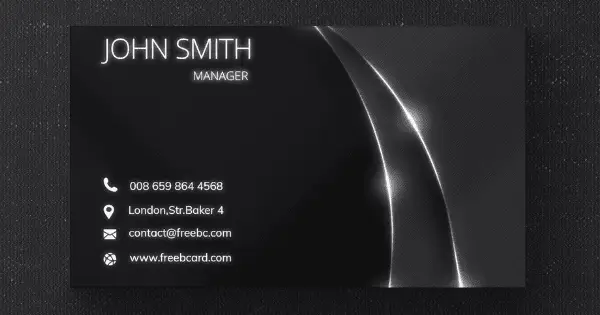
A good business card does three things in a few seconds: it tells people who you are, shows that you look after details, and makes it easy to contact you. To design one that matches your brand, use the same logo, colours and fonts as your website and company profile, keep the layout simple, include only the contact details people will actually use, and choose a paper and finish that suit your business.
This guide covers each decision, from layout to printing.
Do business cards still matter?
In Malaysia, business cards are still exchanged at meetings, trade shows, networking events and client visits, especially in B2B, property, finance and manufacturing. Many people now save contacts to their phone straight away, so the card’s job has changed: it needs to be quick to read and quick to scan, not packed with information.
Start with your brand, not the card
A card is a small piece of your brand. Before you design it, gather:
- Your logo files, including a version that works on a dark background
- Your brand colours as CMYK values for print
- Your brand fonts, or the fonts used on your website
- A short line that says what you do, if your company name does not
If these do not exist yet, sort them out first. A card designed on its own often clashes with the website and company profile later. Our guide to logo design files and rights explains which files you should have.
The design elements that matter most
Logo. Give it space and place it where the eye lands first, usually the top or centre of the front. Do not squeeze it into a corner to make room for text.
Colour. Use your brand colours, but keep contrast high so text is easy to read. Light grey text on white, or dark blue on black, is hard to read in dim rooms.
Typography. Use one or two fonts from your brand. Keep names and phone numbers large enough to read at arm’s length. Very thin or decorative fonts often print poorly at small sizes.
Layout. Leave white space. A crowded card looks cheap and is slow to read. Many businesses put the logo and one short line on the front, and the contact details on the back.
Tone. The design should match how you speak to customers. A law firm and a café can both have good cards, but they should not look alike.
What contact details to include
Include only what people will use:
- Name and job title
- Company name
- Mobile or office number (with WhatsApp if that is how clients reach you)
- Email address
- Website
- Office address, if clients visit you
Leave out outdated fax numbers and every social account you own. One or two main channels are enough.
Should you add a QR code?
A QR code is useful when it leads somewhere helpful: a digital contact card (vCard) that saves your details in one scan, your WhatsApp, or a page with your portfolio. Test the code with several phones before printing, keep it large enough to scan (around 2 cm wide is a common minimum), and make sure the link will not change later.
Paper, finishes and shape
| Choice | Options | Good for |
|---|---|---|
| Paper weight | Standard, thick or extra thick card stock | Thicker card feels more premium and lasts longer in wallets |
| Finish | Matte, gloss, soft-touch lamination | Matte is easy to write on; gloss makes colours brighter |
| Special effects | Spot UV, foil stamping, embossing, debossing | Highlighting a logo or name, used sparingly |
| Shape | Standard rectangle, rounded corners, square | Standard sizes fit card holders; unusual shapes stand out but may not |
The standard card size used in Malaysia is 90 × 54 mm. Ask your printer for their exact size, bleed and file requirements before you finalise the design.
Before you print: a checklist
- Spell-check every name, title, email and number, then ask someone else to check again.
- Make sure the file is in CMYK, with 3 mm bleed and important text away from the edges.
- Print one copy on an office printer at actual size to check readability.
- Test the QR code on at least two phones.
- Order a small first batch if you are unsure about the paper or finish.
Keep it consistent with everything else
Your business card, website, company profile and signage should look like they come from the same company. When a client meets you, then visits your website, the brand should feel familiar. If you are updating several pieces at once, our guide to the company profile template uses the same planning approach, and our branding services cover the full identity.
Frequently Asked Questions
What size is a business card in Malaysia?
The common size is 90 × 54 mm. Check with your printer, because some use slightly different sizes and each has its own bleed requirements.
What should be on a business card?
Your name, job title, company name, phone number, email and website, plus an address if clients visit you. Keep it to the details people will actually use.
Is it worth putting a QR code on a business card?
Yes, if it leads to something useful such as a digital contact card or your WhatsApp. Test it on several phones and make sure the link will not change.
Should a business card match my website?
Yes. Use the same logo, colours and fonts so people recognise your brand across your card, website and company profile.