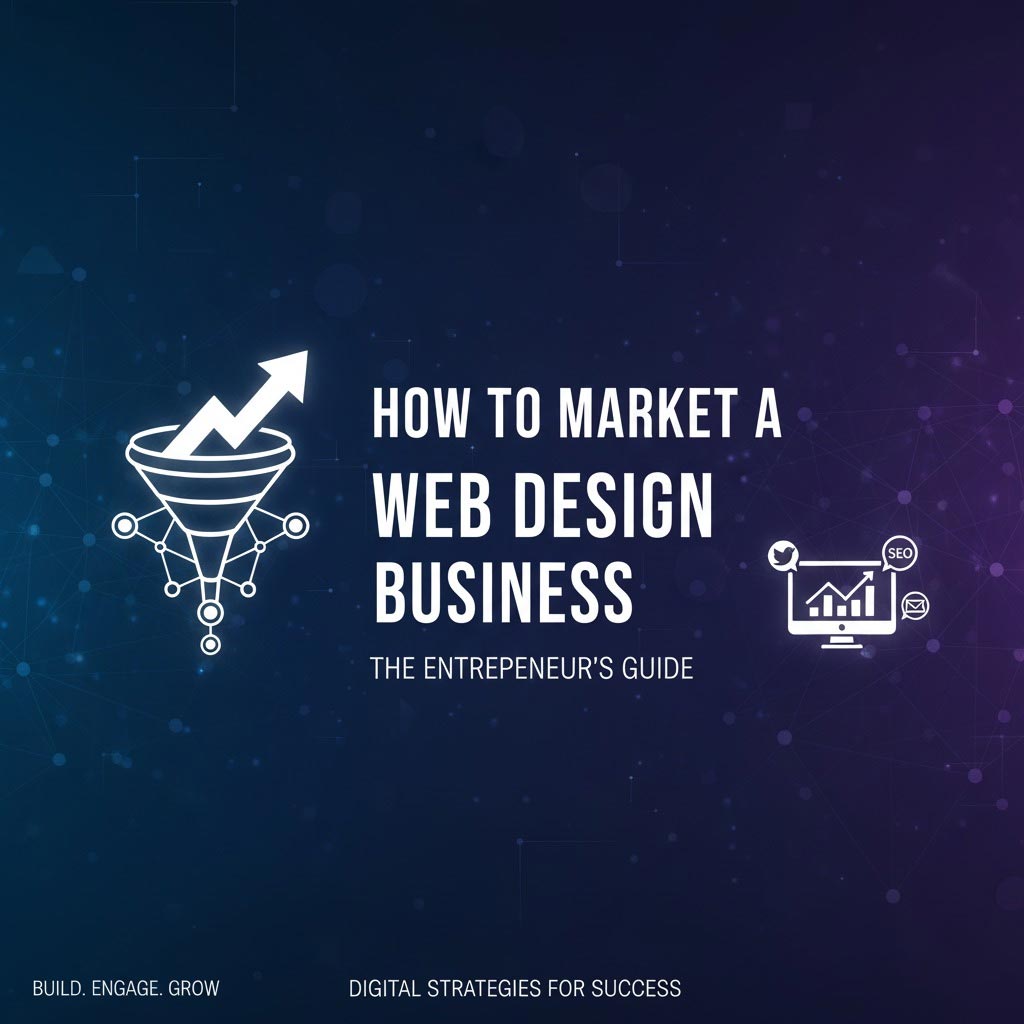
Why Most Web Designers Struggle With Marketing
Let’s get real for a second. You can design stunning websites that would make any creative director weep with joy, but if your phone isn’t ringing and your inbox looks like a ghost town, none of that matters. I’ve seen incredibly talented designers struggle to pay rent while mediocre ones book out months in advance. The difference? Marketing.
Here’s the hard truth nobody tells you in design school: being good at web design has almost nothing to do with getting clients. Your Figma skills won’t bring in leads. Your perfect understanding of typography hierarchy won’t fill your calendar. That portfolio you spent three weeks perfecting? It’s gathering digital dust because nobody’s seeing it.
Most designers fall into the same traps. They build a beautiful website, launch it into the void, and wait for clients to magically appear. Spoiler alert: they don’t. Or they rely entirely on word-of-mouth referrals, which works great until it doesn’t, and suddenly you’re having a panic attack because you haven’t landed a new client in two months. Some designers race to the bottom on price, thinking they’ll compete by being the cheapest option, only to attract nightmare clients who nickel-and-dime them to death.
The worst part? Many designers try everything at once. They’re posting on Instagram, running Facebook ads, cold emailing, networking, blogging, and burning themselves out while getting zero results. It’s like throwing spaghetti at the wall, except the spaghetti costs money and your mental health.
This guide is different. I’m going to show you how to build a predictable marketing system that brings in clients consistently. Not just any clients—better clients who respect your work, pay your rates, and don’t make you question your life choices. You’ll learn how to market yourself without feeling like a sleazy used car salesman. Because here’s the thing: marketing isn’t about tricking people or being pushy. It’s about making sure the right people know you exist and understand how you can help them.
Ready? Let’s fix your client problem.
Get the Foundation Right Before Marketing
Before you spend a single dollar or post one piece of content, we need to talk about why your marketing probably isn’t working. And I’m going to tell you something you might not want to hear: the problem isn’t your marketing tactics. It’s your positioning.
Why Marketing Fails Without Positioning
When someone asks what you do and you say “I’m a web designer,” you’ve already lost. You sound exactly like the ten thousand other web designers out there. You’re a commodity. And commodities compete on price, which means you’re setting yourself up for a race to the bottom that you cannot win.
Think about it from a client’s perspective. If you’re a generic web designer, they have no reason to choose you over anyone else except price. But if you’re “the web designer who specializes in Shopify stores for sustainable fashion brands” or “the designer who helps SaaS companies reduce their trial-to-paid conversion by redesigning their onboarding,” suddenly you’re not competing with everyone. You’re in a category of one.
The cost of being generic is enormous. You’ll spend twice as long trying to land half as many clients, and they’ll all expect you to charge less because they’re comparing you to everyone else.
Choosing a Profitable Niche
I know what you’re thinking: “But if I niche down, I’ll lose opportunities!” Here’s what actually happens—you’ll lose bad opportunities and gain good ones. When you specialize, the right clients come to you specifically because of your expertise.
You can niche down in several ways. Industry-based niches work well: real estate agents, fitness coaches, law firms, restaurants, therapists. Pick an industry you understand or find interesting. Platform-based niches are another route: Shopify experts, WordPress specialists, Webflow designers, Squarespace consultants. Or you can go with problem-based niches: “I fix slow websites” or “I design high-converting landing pages for paid ads.”
The key is choosing something specific enough that you stand out, but broad enough that there’s actual demand. “Web designer for left-handed accountants in Idaho” is too narrow. “Web designer for financial services professionals” works.
Defining Your Ideal Client
Getting specific about who you want to work with changes everything. Stop trying to serve everyone and get crystal clear on your ideal client.
What’s their budget range? If you want to charge $5,000 per project, stop marketing to people with $500 budgets. What’s their business size? Solo entrepreneurs need different solutions than companies with 50 employees. What are their actual pain points? “I need a website” isn’t a pain point. “My website looks outdated and I’m losing clients to competitors” is.
When you know exactly who you’re targeting, your marketing becomes ten times easier. Your messaging gets sharper. Your outreach gets more effective. Your content speaks directly to the people you want to attract.
Crafting a Clear Value Proposition
Your value proposition is the answer to “Why should I hire you instead of literally anyone else?” And “I make beautiful websites” isn’t an answer.
Get specific about what problem you solve. Not “I design websites” but “I help real estate agents get more listing inquiries from their website.” State clearly who you solve it for. And explain why you’re different—maybe you’ve worked with 20 real estate agents and know exactly what converts, or you have a proprietary process that delivers websites in two weeks instead of two months.
Your value proposition should make someone think “Oh, that’s exactly what I need” not “That’s nice, I guess.”
Build a Website That Converts Visitors Into Leads
Here’s the irony: many web designers have terrible websites. They either overthink it and never launch, or they slap something together that doesn’t actually convert visitors into leads. Your website is your most important marketing asset, and if it’s not working hard for you, you’re leaving money on the table.
Why Your Own Website Is Your #1 Marketing Asset
Your website proves you can do what you claim. If you design websites for a living but yours looks like it was built in 2010, what does that tell potential clients? If your site is confusing, slow, or doesn’t work on mobile, you’ve just demonstrated exactly what they’ll get if they hire you.
First impressions matter enormously. Someone lands on your site and makes a judgment in about three seconds. Are you professional? Do you understand their problems? Can you help them? Your website needs to answer “yes” to all three immediately.
Must-Have Pages for a Web Design Business
Stop overthinking this. You need five core pages, and they all serve specific purposes.
Your homepage should immediately clarify who you help and how. Lead with the client’s problem, not your design process. Your services page needs to explain what you offer and what results clients can expect—focus on outcomes, not deliverables. The portfolio or case studies page is where you show, don’t tell. Don’t just display pretty screenshots; explain the problem, your solution, and the results. Your about page should build trust and show you’re a real human they’d want to work with. And your contact page needs to make getting in touch completely frictionless—use a calendar booking tool if possible, not just a form.
Every page should have a clear next step. Don’t make people hunt for how to contact you.
Writing Copy That Attracts Clients
Here’s where most designers screw up: they write copy about themselves instead of their clients. Your website copy shouldn’t read like a design school portfolio review. It should speak directly to the problems your ideal clients are losing sleep over.
Instead of “I’m passionate about creating pixel-perfect designs,” try “Your website should bring in leads while you sleep—not gather dust while your competitors steal your clients.” See the difference? One is about you, one is about them.
Avoid design-centric language unless you’re marketing to other designers. Your clients don’t care about your grid system or your color theory knowledge. They care about results. Talk about benefits, not features. “Mobile-responsive design” is a feature. “Works perfectly on any device so you never lose a mobile customer” is a benefit.
Lead Generation Essentials
Make it stupid easy for people to contact you. I’m serious about this. Every additional step between “I’m interested” and “I’m talking to this designer” is a place where you lose potential clients.
Use a calendar booking tool like Calendly or SavvyCal so people can schedule calls immediately. If you use a contact form, keep it short—name, email, and a brief message about their project. That’s it. Don’t ask for their life story.
Your calls-to-action need to be clear and compelling. “Contact me” is weak. “Schedule a free website strategy call” or “Get a custom proposal” works better. Place CTAs everywhere: your homepage, the end of every service description, after case studies, in your navigation.
Use Content Marketing to Attract Inbound Clients
Content marketing is the long game, but it’s the game worth playing. When done right, it brings qualified leads to you instead of you having to chase them. Plus, it positions you as an expert before you ever jump on a call.
Why Content Works So Well for Web Designers
When you create helpful content, you’re demonstrating expertise in real-time. A potential client reads your blog post about “5 Website Mistakes That Are Costing You Clients” and thinks “Wow, they actually know what they’re talking about.” That’s positioning you’ve just earned without pitching anything.
Content also builds trust before the sales conversation. By the time someone books a call with you, they’ve already consumed your content, understand your approach, and are halfway to convinced. Your sales process becomes easier because you’ve already done the hard work of establishing credibility.
Blog Content That Attracts Buyers
Not all content is created equal. Writing “10 Web Design Trends for 2025” might get traffic, but it won’t bring clients. You need to create content for people who have problems you can solve.
Focus on problem-aware and solution-aware content. Problem-aware means your ideal clients know they have a problem but aren’t sure how to fix it: “Why Your Website Isn’t Getting Any Leads.” Solution-aware means they know they need help and are evaluating options: “How to Choose a Web Designer for Your Real Estate Business.”
Write about topics with high commercial intent. “Web design portfolio examples” is informational—they’re just looking. “How much does a custom website cost” or “Shopify vs custom website for online stores” means they’re close to making a buying decision.
SEO Basics for Web Designers
You don’t need to become an SEO guru, but you should understand the basics. Start with simple keyword research—use Google’s autocomplete, check “People also ask” sections, and see what questions your ideal clients are actually typing into search engines.
If you’re targeting local clients, local SEO is your friend. Optimize for “[your service] + [your city]” keywords. Claim your Google Business Profile. Get listed in local directories. If you’re targeting clients anywhere, focus on specific problems and solutions rather than competing for impossible terms like “web design.”
Create content around the questions people ask before hiring a designer. What do websites cost? How long does the process take? What do you need from them? Answer these questions better than anyone else, and Google will send you traffic.
Repurposing Content Across Platforms
Write one good blog post and turn it into five pieces of content. Post the key insights on LinkedIn. Send it to your email newsletter with a personal intro. Turn the main points into a Twitter thread. Record yourself talking through it for YouTube or a podcast.
You’re not being repetitive; you’re meeting your audience where they already are. Most people won’t see your content the first time, and different people prefer different platforms.
Get Clients Through Outreach (Without Being Spammy)
Content marketing is great, but it’s slow. If you need clients now, outreach is your answer. And before you groan about cold emailing being dead or sleazy, let me tell you: it works when done right.
Why Outreach Still Works in 2025
The biggest advantage of outreach is control. You’re not waiting for Google to rank your content or hoping the algorithm shows your posts. You’re actively identifying potential clients and reaching out. It’s faster than SEO and more predictable than social media.
Yes, most cold outreach is terrible. But that’s good news for you—it means the bar is low, and you can stand out easily by not being terrible.
Choosing the Right Outreach Channel
You have options, and the best one depends on who you’re targeting and where they hang out.
Cold email works great for reaching business owners and decision-makers. It’s direct, professional, and if they’re interested, they can reply on their own time. LinkedIn is perfect for reaching corporate clients, agency owners, and professional service providers. It’s less formal than email but still business-focused. And partnerships—reaching out to complementary service providers—can create ongoing referral relationships.
Don’t try all three at once. Pick one channel, master it, then expand if you want.
How to Find Qualified Leads
Stop spray-and-praying. Get strategic about who you’re contacting.
Local businesses are low-hanging fruit. Search Google Maps for businesses in your area with outdated websites. Visit their sites and note specific issues you could fix. SaaS companies often have marketing budgets and appreciate good design. Look for growing startups that might need help. Service providers like accountants, lawyers, consultants, and coaches need professional websites but often don’t know where to start.
Build a list of 50 qualified prospects before you write a single message. Quality over quantity always wins.
Writing Outreach Messages That Get Replies
The secret to outreach that works is making it about them, not you. Nobody cares that you’re a web designer looking for clients. They care about their problems.
Start with real personalization. Not “Hi [FIRST_NAME],” but actual specific observations about their business or website. Lead with value or a genuine insight: “I noticed your website doesn’t have clear calls-to-action on your service pages—I ran some tests and you might be losing 30-40% of potential leads because of this.”
Keep it short. Three to four sentences max. One clear question or call-to-action. That’s it.
Common mistakes to avoid: Don’t apologize for reaching out. Don’t write a novel about your background. Don’t be vague with “let me know if you’re interested.” Give them a specific, low-commitment next step: “Would a 15-minute call next week work to discuss this?”
Leverage Social Proof to Increase Trust
Even if everything else about your marketing is perfect, potential clients will hesitate to hire you if they can’t see proof that you’ve delivered results for others. Trust is currency in service businesses, and social proof is how you earn it.
Why Clients Don’t Trust Designers Easily
Put yourself in their shoes. Hiring a web designer is risky. They’re spending thousands of dollars and trusting you with something that represents their business online. They’ve probably heard horror stories about designers who disappeared mid-project, delivered terrible work, or charged hidden fees.
Past bad experiences make people cautious. Your job is to overcome that skepticism with evidence that you’re different.
Types of Social Proof That Work
Testimonials are the baseline. Get specific quotes from clients about the results you delivered and the experience of working with you. Video testimonials are worth ten times more than text because they feel more real.
Case studies tell the complete story. Show the problem the client came to you with, walk through your process, and showcase the concrete results. Numbers make case studies powerful: “Increased conversion rate by 42%” or “Generated 60 qualified leads in the first month” beats “They were really happy with the design.”
Before-and-after comparisons are visceral proof of transformation. Show the old website next to the new one. The contrast tells the story instantly.
How to Get Testimonials (Even as a Beginner)
If you’re just starting out, you might not have a stack of glowing testimonials yet. Here’s how to fix that.
First, reach out to every past client—even if it wasn’t a web design project. If you’ve done any kind of work for people, ask for testimonials about your work ethic, communication, and professionalism. These count.
Second, offer discounted projects specifically to build your portfolio and gather testimonials. Be upfront: “I’m building my web design business and offering discounted projects in exchange for a detailed testimonial and case study if you’re happy with the work.”
Third, ask for testimonials immediately after delivering work while the client is excited. Don’t wait months. Strike while the iron is hot.
Use Freelance Platforms Strategically (Not Desperately)
Upwork, Fiverr, and similar platforms get a bad rap in the design community, and some of it is deserved. But here’s the nuanced take: these platforms can be useful stepping stones when used strategically.
The Truth About Upwork, Fiverr, and Similar Platforms
Let’s be honest about the pros and cons. The advantages: instant access to clients actively looking for designers, no need to build an audience first, and predictable payment systems. The downsides: intense price competition, platform fees eating into your earnings, and a constant race to the bottom.
Most designers fail on these platforms because they treat them like job boards instead of marketing channels. They create generic profiles, send generic proposals, and wonder why they only attract clients who want $200 websites.
How to Stand Out on Platforms
Your profile needs positioning. Don’t be “I do web design.” Be “I specialize in [specific thing] for [specific clients].” Show results in your portfolio, not just pretty pictures.
Your proposals should be value-focused mini-consultations. Instead of “I read your job post and I’m interested,” write something like: “I noticed you mentioned needing faster load times—slow websites typically lose 40% of visitors before they even load, which might be costing you [specific estimate based on their business]. Here’s how I’d approach fixing that…”
See the difference? You’re demonstrating expertise and showing you understand their problem before they’ve even hired you.
When to Leave Platforms Behind
Freelance platforms are training wheels, not a career. You should be actively working to outgrow them.
Signs it’s time to move on: you’re consistently booking clients, you have a portfolio of work you’re proud of, you’ve learned how to sell your services, and you’re confident in your pricing. At that point, the platform fees and race-to-the-bottom pricing become more burden than benefit.
Use platforms to build experience and testimonials, then graduate to marketing yourself directly where you keep 100% of your fees and attract better clients.
Build Partnerships That Bring Referral Clients
One of the most overlooked but powerful marketing strategies is building strategic partnerships. When done right, partnerships can become your most consistent source of quality leads—and they cost you nothing but relationship-building.
Strategic Partners for Web Designers
Think about who serves your ideal clients but doesn’t compete with you. Marketing agencies often need reliable designers for client work but don’t want to hire full-time staff. They’re perfect partners. SEO consultants frequently work with clients who need website overhauls to implement their recommendations. Copywriters are constantly meeting clients who need their words turned into beautiful, functional websites.
Other smart partnership options: branding designers, photographers, videographers, business coaches, and consultants. Anyone who works with your ideal client profile and doesn’t offer web design is a potential partner.
How to Approach Potential Partners
The key is thinking value-exchange, not “can you send me clients?” That’s needy and transactional.
Instead, approach with collaboration in mind: “I work with a lot of [target audience], and I’m often asked for recommendations for [their service]. I’d love to learn more about your work so I can confidently refer clients when it’s a good fit. Also happy to explore how we might collaborate on projects.”
Keep it simple and genuine. Most people are open to partnerships that could benefit both sides.
Turning Partnerships Into a Lead Channel
Successful partnerships need structure. Discuss revenue sharing or referral fees upfront so everyone’s clear on the arrangement. A typical referral fee is 10-20% of the project value, but you can also do flat fees or reciprocal referrals with no money changing hands.
Focus on long-term collaboration, not one-off referrals. Regular check-ins, sharing updates about your business, and genuinely trying to send work their way builds relationships that consistently generate leads.
The best part about partnership-generated leads? They come pre-sold because someone they trust recommended you.
Pricing, Packaging, and Positioning Your Services
Here’s something nobody tells you: pricing is one of your most powerful marketing tools. How you price your services doesn’t just determine how much you earn—it determines which clients you attract.
Why Pricing Is a Marketing Tool
Cheap pricing attracts bad clients. That’s not elitism, it’s pattern recognition. Clients who choose based purely on price tend to be demanding, difficult, and unlikely to respect your expertise. They’ll request endless revisions, question every decision, and leave bad reviews if you don’t bend over backward.
Premium pricing filters for better clients. People who invest more tend to take the project seriously, respect your recommendations, and be easier to work with. They’re hiring you for your expertise, not shopping for the cheapest option.
Your pricing signals your positioning. Charge $500 and you’re positioning yourself as a budget option. Charge $5,000 and you’re positioning yourself as a professional who delivers results. Same work, completely different perception.
Productized Services vs Custom Projects
You have two basic approaches to structuring your services, and each has its place.
Custom projects give you maximum flexibility. Every project is unique, scoped individually, priced based on complexity. The upside is you can serve a variety of needs. The downside is every sale requires custom proposals, scoping calls, and negotiation.
Productized services are standardized packages with clear deliverables and fixed pricing. “Website Starter Package: 5-page website, mobile-responsive, delivered in 3 weeks – $4,500.” The benefit is it’s easier to market, easier to sell, and easier to deliver consistently. The limitation is less flexibility.
Many designers start with custom projects to learn what clients need, then develop productized offerings based on patterns they see. That’s a smart progression.
Communicating Value (Not Just Deliverables)
Stop selling websites. Websites are commodities. Sell outcomes.
Instead of “You’ll get a 7-page custom website with mobile-responsive design and a contact form,” talk about what that website will do: “Your new website will position you as the go-to expert in your field, generate qualified leads 24/7, and convert visitors into clients at a higher rate than your competitors.”
Frame conversations around ROI. If your client typically converts 5% of website visitors into customers worth $2,000 each, and you can improve that to 7% through better design, that’s measurable value you’ve created. You’re not spending money on design; you’re investing in revenue growth.
This shift in language changes everything about how clients perceive your value.
Simple Sales Process for Web Designers
Marketing gets people interested. Sales turns interest into clients. Many designers are great at marketing but terrible at closing because they treat sales calls like design consultations instead of strategic conversations.
From Inquiry to Client
When someone books a discovery call, they’re already interested. Your job isn’t to convince them you’re good—it’s to determine if you’re a good fit for each other.
Structure your discovery calls around understanding their situation. Start with their business and goals: “Tell me about your business and what you’re trying to achieve.” Then move to their specific challenges: “What’s not working with your current website?” Finally, discuss their timeline and budget: “What’s driving the timeline on this project, and what budget range are you working with?”
Ask more than you talk. Good salespeople listen. You’re gathering information to determine if you can genuinely help them and whether they can afford your services.
Avoiding Time-Wasters
Learn to spot red flags early and politely disengage if it’s not a fit. Someone who won’t discuss budget is wasting your time. Someone who says “I need this done by next week” for a complex project doesn’t understand what they’re asking. Someone who’s talking to ten other designers and going with the cheapest is not your client.
Budget mismatches are the most common issue. If you charge $5,000 and they have $1,000, you can’t help them. Don’t try to make it work by discounting—you’ll resent the project and deliver mediocre work.
It’s better to gracefully bow out of bad-fit opportunities than to take on projects that will make you miserable.
Closing Without Pressure
Here’s the secret to closing: if you’ve done everything else right, closing is easy. You’ve demonstrated expertise through your content. You’ve understood their problem deeply on the call. You’ve confirmed you can help and they can afford it. At that point, closing is just the natural next step.
Send proposals that clearly outline the problem, your solution, deliverables, timeline, and investment. Keep it simple and scannable. Include a clear call-to-action: “Reply to this email to move forward” or “Sign here to get started.”
For follow-up, be persistent without being pushy. Send a follow-up email after three days if you haven’t heard back. Follow up again after a week. After that, send a “closing the loop” email: “Haven’t heard from you so I’m assuming the timing isn’t right—feel free to reach out if that changes.” Then move on.
Tracking What’s Working (And What’s Not)
Most designers approach marketing like they’re throwing darts blindfolded. They try random tactics, can’t tell what’s working, and waste time on channels that aren’t bringing results. Stop guessing. Start measuring.
Why Most Designers Guess Instead of Measure
It feels easier to just “do marketing” than to track results, but that’s exactly why so many designers struggle. Without data, you’re flying blind. You can’t improve what you don’t measure.
Random marketing activities feel productive but rarely produce results. Posting on social media feels like marketing. Writing blog posts feels like marketing. But if none of it leads to actual client conversations, it’s just busy work.
Key Metrics to Track
You don’t need complex analytics dashboards. Track three simple metrics and you’ll know more than 90% of designers.
First, leads per channel. How many potential clients came from your website? From LinkedIn? From referrals? From outreach? If you’re spending hours on Instagram but all your leads come from LinkedIn, you have a clear decision to make.
Second, conversion rates. What percentage of website visitors book a call? What percentage of discovery calls turn into proposals? What percentage of proposals become clients? These numbers tell you where your process is breaking down.
Third, cost per lead. If you’re running ads or using paid tools, what does each lead cost you? A $200 lead that converts at 50% and pays you $5,000 is a great deal. A $200 lead that never converts is wasted money.
Doubling Down on What Works
Once you know what’s working, do more of it. This sounds obvious, but designers constantly ignore their own data. They get three clients from outreach and one from social media, then spend more time on social media because it’s more fun.
Focus beats diversification. If LinkedIn is bringing you clients, go all-in on LinkedIn until it stops working. If SEO is bringing leads, write more content. Don’t diversify until you’ve maxed out your current winning channel.
Common Marketing Mistakes Web Designers Should Avoid
Let’s talk about the mistakes that are silently killing your marketing efforts. These are patterns I see constantly, and fixing them can dramatically change your results.
Trying every channel at once. You can’t do content marketing AND outreach AND networking AND social media AND paid ads all at the same time, especially as a solo designer. You’ll do all of them poorly instead of one of them well. Pick one channel, commit to it for 90 days minimum, and actually give it a fair shot.
Copying competitors blindly. Just because another designer has a podcast or posts design memes on Instagram doesn’t mean you should. They might have different goals, different audiences, or different strengths. What works for them might be completely wrong for you.
Ignoring positioning. I can’t stress this enough—if you’re “just a web designer,” you’re invisible. Positioning is the difference between feast and famine. Get specific about who you serve and what makes you different.
Not following up with leads. Someone asks about your services, you send them information, they don’t respond, and you just… give up? Most clients need multiple touch points before they’re ready to move forward. Follow up. Then follow up again. You’re not being annoying; you’re being professional.
These mistakes are easy to fix once you’re aware of them.
Putting It All Together: Your 90-Day Marketing Plan
Theory is useless without execution. Here’s your roadmap for the next 90 days to go from scattered marketing to a system that actually brings in clients.
Month 1: Foundation
Week 1-2: Nail down your positioning. Choose your niche. Define your ideal client. Write your value proposition. This might feel like busywork, but it’s the foundation everything else is built on.
Week 3-4: Optimize your website. Rewrite your homepage to speak to your ideal client’s problems. Update your services page to focus on outcomes. Add compelling calls-to-action everywhere. Make sure your portfolio includes case studies with results, not just pretty pictures.
End of Month 1 goal: You should be able to clearly articulate who you help and how, and your website should reflect that clarity.
Month 2: Lead Generation
Choose ONE lead generation channel based on your strengths and where your ideal clients hang out.
If you choose content, commit to publishing one high-quality blog post per week that targets commercial-intent keywords. Optimize for SEO basics. Share on LinkedIn and in relevant communities.
If you choose outreach, build a list of 50 qualified prospects. Send 5 personalized outreach messages per day. Refine your messaging based on what gets responses.
If you choose partnerships, identify 10 potential strategic partners. Reach out to start conversations. Have coffee chats or calls to explore collaboration.
End of Month 2 goal: You should have a lead generation system in motion and early signs of traction—website traffic, email responses, or partnership conversations.
Month 3: Optimization
Now that you have a system running, it’s time to improve it.
Review your metrics. What’s your conversion rate from visitor to lead? From lead to call? From call to client? Find the biggest bottleneck and fix it.
Refine your messaging based on actual conversations with prospects. What questions do they ask repeatedly? What objections come up? Update your website and outreach to address these preemptively.
Start gathering testimonials and case studies from any clients you’ve closed. Social proof will make the next 90 days even more effective.
End of Month 3 goal: You should have a functioning marketing system that’s bringing in leads consistently, and you should understand which parts of your process need improvement.
Final Thoughts: Marketing Is a Skill—Not a Talent
If you’re still reading, you’re ahead of most designers. Most give up before they start because marketing feels uncomfortable or overwhelming.
Here’s what I need you to understand: designers don’t fail at marketing because they’re bad at it. They fail because they never actually commit to learning it. Marketing isn’t some mysterious talent you’re either born with or not. It’s a skill you can learn, just like you learned design.
You weren’t born knowing how to use Figma or how to structure a layout. You learned those skills through practice, repetition, and making a lot of mistakes. Marketing is exactly the same. Your first outreach messages will be awkward. Your first blog posts will be clunky. Your first discovery calls will feel uncomfortable. That’s normal. That’s the learning process.
The designers who succeed at marketing aren’t naturally gifted marketers. They’re simply the ones who kept going when it got uncomfortable. They sent outreach messages even when they hated doing it. They published content even when nobody was reading. They kept showing up consistently until they figured it out.
Consistency beats complexity every single time. One marketing channel done consistently will outperform five channels done sporadically. One blog post per week for a year beats ten posts published in a burst of enthusiasm then nothing for months.
You don’t need a massive social media following. You don’t need expensive ads. You don’t need to be an extrovert or a natural salesperson. You just need to pick a system that fits your strengths, commit to it genuinely, and give it enough time to work.
Most designers give up after a few weeks because they don’t see immediate results. Don’t be most designers. Trust the process. Do the work. Stay consistent.
Your Next Step
You’ve got the knowledge. Now you need to take action.
Here’s your assignment: choose one marketing channel from this guide. Just one. Not three, not five—one. Maybe it’s content marketing because you like writing. Maybe it’s outreach because you want faster results. Maybe it’s partnerships because you already know people you could collaborate with.
Commit to that channel for 90 days minimum. That’s roughly 13 weeks. No jumping to something else when you get impatient. No adding more channels because you’re worried you’re missing out. Go deep on one thing.
Build momentum, not noise. The designers with full calendars aren’t the ones doing everything—they’re the ones who mastered one or two channels and do them exceptionally well.
You don’t have a skills problem. You have a consistency problem. Fix that, and the clients will come.
Now stop reading and go do something that brings you closer to your next client. Your future self will thank you.