
In Malaysia, Patients Decide in Seconds
Before stepping foot in your clinic or hospital, most Malaysian patients have already made up their minds. They searched on Google or Google Maps, skimmed your website on their phone, and either booked an appointment — or moved on to a competitor. That decision happens in under three seconds.
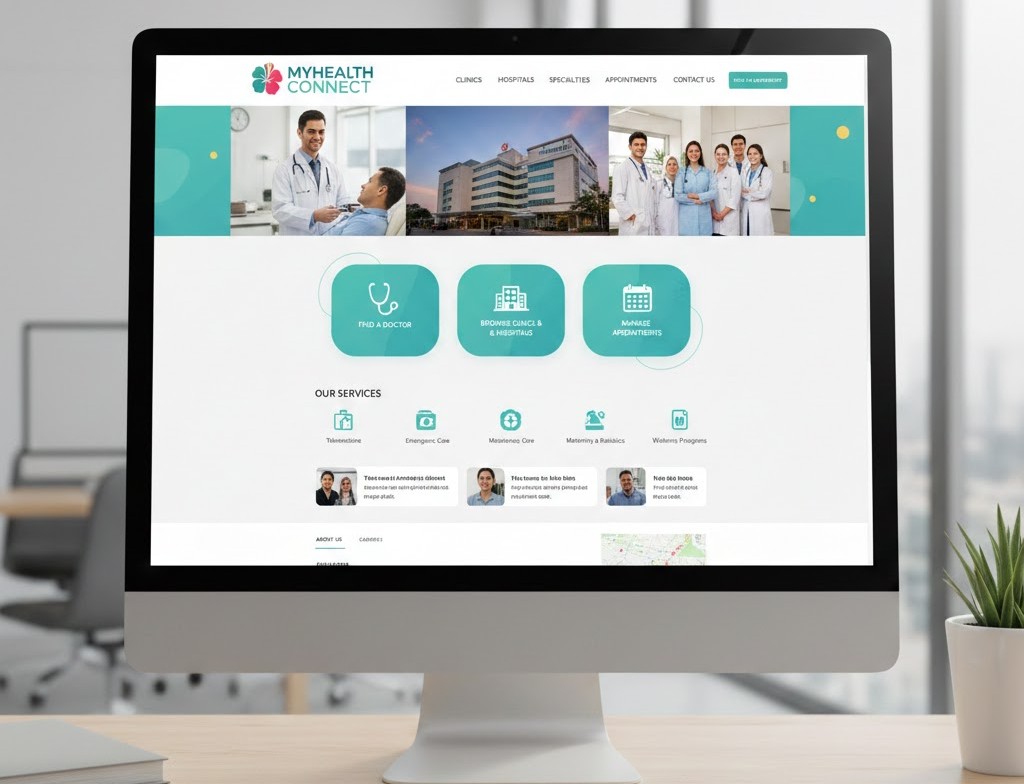
Your website is no longer just a digital brochure. It is your front desk: the first point of contact that communicates trust, provides clear information, enables booking, and gives directions. A modern healthcare website does not just look professional — it functions as a patient experience tool that drives real-world outcomes.
This guide covers everything Malaysian clinics and hospitals need to build an effective online presence: must-have features, UX best practices, appointment booking flows, local SEO, compliance under PDPA, and a practical buyer checklist for choosing the right web agency.
What Malaysian Patients Expect from a Clinic or Hospital Website Today?
Patient expectations have shifted dramatically. When someone visits your site, they are not browsing — they are searching for specific answers, and they want them fast. The five questions most Malaysian patients are silently asking are:
- Are you open now, and on public holidays?
- Where are you located, and is there parking?
- Do you accept my insurance panel or corporate billing?
- Which doctor treats my condition?
- How do I book an appointment?
Malaysian patients are predominantly mobile-first. They have low patience for slow-loading pages and confusing navigation. And because healthcare involves trust at a deeply personal level, credibility signals matter more here than in almost any other industry. A clean, reassuring, and informative website is not a luxury — it is a business necessity.
The Must-Include Elements for Clinics and Hospitals
Use the following as your website checklist. Whether you are building from scratch or auditing an existing site, these elements are the difference between a site that converts visitors into patients and one that drives them away.
1. Clear “Find Care” Navigation
Confused visitors leave. Your navigation must immediately signal to patients how to find what they need. For clinics, the core menu items should be Services, Doctors, Book Appointment, and Location/Contact. For hospitals, expand this to include Departments, Specialists, Facilities, Patient Guide, and Contact. Group logically, keep labels plain, and avoid internal jargon that patients would not recognise.
2. Service Pages Built Around Patient Intent
Do not write service pages for other doctors — write them for your patients. Each service page should clearly explain who the service is for (using symptoms and conditions, not medical codes), what to expect during the appointment, when to seek urgent care, which doctors are available, and price guidance such as “consultation starts from RM 80.” Close every service page with a clear call-to-action: Book Now, WhatsApp Us, or Call.
3. Doctor Profiles That Build Trust Fast
Patients choose doctors, not institutions. A compelling doctor profile should include qualifications stated in plain language, MMC registration context, special clinical interests, languages spoken, current clinic hours, and a professional photograph. Optionally, include publications or awards — but only factual, verifiable ones. Avoid vague superlatives. Profiles with photos and clear specialties consistently improve booking rates because patients feel they already know the doctor before arriving.
4. Appointment Booking That Works Without Frustrating Staff
Offer multiple booking channels: a simple online form, a pre-filled WhatsApp message, and a visible phone number. The form should ask only what is necessary — name, phone number, preferred date and time, and the nature of the concern. Anything beyond this increases drop-off. Include a booking confirmation message that sets expectations. For hospitals, distinguish between department-specific triage forms and general enquiries. And always include basic anti-spam protection to protect your staff from noise.
5. Practical Patient Information Pages
Every piece of information you provide on your website is one fewer repetitive phone call your staff has to field. Build out pages or sections that cover operating hours including public holiday schedules, location with parking and public transport directions, what to bring (IC, referral letters, previous reports), insurance panel and corporate billing information, accepted payment methods, and for hospitals, visitor policies and emergency instructions. Make emergency information especially visible and clearly distinct from routine content.
6. Trust and Safety Signals Specific to Healthcare
A clean, calm design signals professionalism before a single word is read. Beyond aesthetics, include any applicable certifications or accreditations, brief and factual hygiene or safety standards statements, and real facility photographs rather than stock images. Patient testimonials can be powerful when used carefully — never make specific medical outcome claims, and always respect patient privacy. In healthcare, trust is the conversion mechanism.
7. Multi-Language Support
Malaysia is a multilingual country and your website should reflect that. English and Bahasa Malaysia are the minimum standard for most practices. Depending on your catchment area, Mandarin or Tamil may be important additions. Ensure the language toggle is prominent, consistent across pages, and that translated content is complete — partial translations erode trust rather than build it.
Modern UI/UX Design Principles for Healthcare (Malaysia Context)
The visual tone of a healthcare website should be calm, clear, and reassuring. Avoid aggressive animations, flashy sliders, and cluttered layouts. These damage credibility in a sector where patients are often anxious before they even arrive.
Accessibility is not optional. Use readable font sizes (minimum 16px body text), high colour contrast, and large touch targets for buttons. Mobile-first design is essential: sticky call, WhatsApp, and book buttons should follow the user down the page. Pages must load quickly — Google’s data shows that over 50% of Malaysian mobile users abandon a site that takes more than 3 seconds to load.
Information hierarchy matters. For clinics, the fold should prioritise operating hours, location, and a booking CTA. For hospitals, the priority shifts to finding a doctor, navigating departments, and emergency contacts. Avoid burying the phone number. It is still the most-used contact method for healthcare in Malaysia, particularly among older patients.
Local SEO for Clinics and Hospitals in Malaysia
Most new patient journeys begin with a Google Maps or local search query. Before any other SEO effort, ensure your Google Business Profile is fully completed, verified, and kept up to date with accurate hours, photos, and services. NAP consistency — your Name, Address, and Phone number — must match exactly across your website, Google Business Profile, and any other directories.
Location targeting in your page titles, headers, and meta descriptions is critical. Think in patient language: “skin specialist in KL,” “dental clinic Petaling Jaya,” or “24-hour clinic Penang.” Each service should have its own dedicated page optimised for the relevant search terms. Doctor profile pages also rank independently and can capture name-based searches.
Add structured data markup using MedicalClinic, Hospital, or Physician schema types. FAQ schema on common question pages also helps capture featured snippets. For reviews, develop an ethical review strategy that respects patient privacy and avoids pressure tactics — Google rewards consistent review volume over time.
Compliance, Privacy, and PDPA: What to Consider
Note: This section provides general guidance only and is not legal advice. Consult a qualified legal professional for advice specific to your practice.
Malaysia’s Personal Data Protection Act (PDPA) applies to any personal data collected through your website, including appointment forms. Keep forms minimal — only collect what is genuinely necessary. Your website must include a clear privacy policy, explicit consent language on data collection forms, and information about how patient data is stored and handled.
All pages collecting personal information must be served over HTTPS (SSL certificate). Use secure hosting with appropriate access controls. Add clear disclaimers that your website is not for emergencies and that general health information on the site does not constitute medical advice.
Aesthetics clinics in particular should exercise extra caution. Before-and-after photos, outcome claims, and language like “guaranteed results” can attract regulatory attention. Stick to factual, restrained language and ensure all visual claims are properly consented and accurately representative.
Website Features That Improve Clinical Operations
Beyond patient-facing features, a well-built healthcare website can meaningfully reduce administrative load. Consider online queue management or appointment reminder integrations that reduce no-shows. Downloadable forms — registration, referral, consent — save staff time and make patient arrivals smoother. A dedicated corporate and insurance information page speeds up B2B billing enquiries and establishes your panel credentials.
Health screening package pages with clear inclusions and pricing convert well when paired with a strong CTA. WhatsApp automation can handle first-response enquiries, appointment confirmations, and reminders — but set appropriate boundaries to avoid over-reliance. For larger hospitals, a careers page for medical and nursing recruitment reduces dependency on external agencies and builds employer brand.
What to Ask Your Web Agency: A Clinic and Hospital Buyer Checklist
Choosing the right web agency is as important as the brief itself. Copy and use the following questions before signing any contract:
- Can you show healthcare-specific examples and evidence of outcomes — calls, bookings, or enquiry growth?
- Do you design based on the patient journey, from symptom awareness through to booking confirmation?
- Will you implement appointment booking, form tracking, and conversion analytics from day one?
- How do you approach speed and mobile optimisation, and what performance benchmarks do you target?
- What is included for SEO — service pages, doctor pages, schema markup, and internal linking structure?
- How do you handle PDPA compliance, privacy policy requirements, and secure form submission?
- Who is responsible for ongoing security updates, CMS maintenance, and content changes after launch?
- Who holds ownership of the domain, hosting account, admin access, and website files?
- What is your process for content collection — doctor bios, service descriptions, insurance panel lists?
- What is the realistic timeline from briefing to launch?
Build for Patients, Not Just for Aesthetics
Modern healthcare website design in Malaysia comes down to four pillars: trust, clarity, booking, and speed. A website that delivers on all four does not just look good — it actively grows your practice by converting curious visitors into confirmed appointments.
Use the checklist in this guide before briefing any agency. It will prevent wasted budget on a site that looks the part but fails to perform. The must-include elements are not optional extras — they are the baseline that Malaysian patients now expect from any healthcare provider worth trusting.
Ready to audit your current website or plan a new one? Start with a site map and booking flow review — the two areas that most often separate high-performing healthcare websites from the rest.