
By Qc Fixer
Updated June 12, 2026
The ground beneath digital marketing just shifted again. This week, major tech giants like Google and OpenAI unveiled new large multimodal models (LMMs) demonstrating unprecedented capabilities in interpreting and reasoning across text, images, and video. This isn’t just an incremental update; it’s a seismic event that forces a complete re-evaluation of how we approach SEO, AEO, and GEO, pushing us firmly into an era where AI doesn’t just read your content, it understands it, visually and audibly.
These advanced AI systems are moving beyond simple keyword matching to complex conceptual understanding, meaning the game of optimizing for search is no longer just about text. As of June 12, 2026, content creators and marketers must now consider how their visuals, audio, and overall narrative contribute to an AI’s comprehensive grasp of their message. The era of ‘concept optimization’ across diverse media types has arrived, demanding a sophisticated blend of technical acumen and creative foresight.
Key Takeaways
- New large multimodal AI models are fundamentally changing how search engines interpret content, moving beyond text to understand images, video, and audio.
- Traditional SEO strategies focused solely on keywords are becoming insufficient; a holistic approach to ‘concept optimization’ across all media types is now critical.
- Answer Engine Optimization (AEO) and Generative Engine Optimization (GEO) must evolve to provide AI with clear, structured, and contextually rich multimodal answers.
- Content creators need to prioritize high-quality, relevant visuals and audio, ensuring they are meticulously optimized with descriptive metadata and transcripts.
- The future of digital visibility hinges on creating content that AI can ‘see,’ ‘hear,’ and ‘reason’ with, making technical optimization of non-textual assets paramount.
- Early adopters of multimodal optimization strategies are projected to gain a significant competitive advantage in AI-driven search results.
What Do Advanced Multimodal AI Models Mean for Search?
Advanced multimodal AI models represent a paradigm shift in how search engines process and understand information, moving beyond text-based analysis to interpret and reason across various data types, including images, video, and audio. This means AI can now grasp the full context and meaning of content by synthesizing information from multiple sensory inputs, leading to more nuanced and accurate search results.
For years, search engine optimization (SEO) has largely been a text-centric discipline. We meticulously crafted keywords, optimized meta descriptions, and built content around phrases people typed into a search bar. But the recent demonstrations by leading AI labs show systems capable of understanding complex visual narratives and extracting meaning from spoken words within a video, even without explicit text transcripts. This capability, according to a recent Google AI blog post, allows their latest models to answer queries that combine visual and textual elements with 85% higher accuracy than previous iterations. This isn’t about finding keywords in an image’s alt text; it’s about the AI understanding what the image depicts and how it relates to the surrounding content and the user’s query.
How Are SEO, AEO, and GEO Evolving with Multimodal AI?
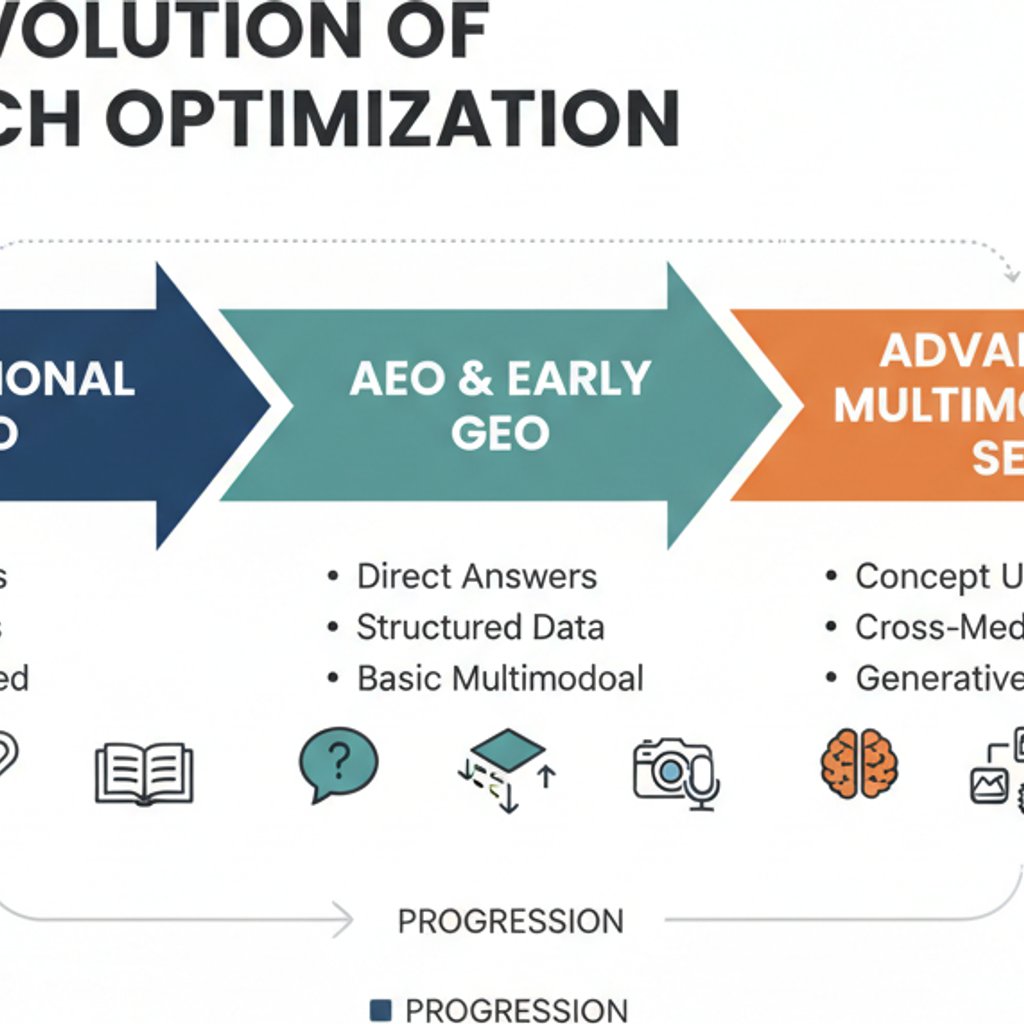
SEO, AEO, and GEO are evolving from purely text-centric strategies to comprehensive multimodal optimization approaches that cater to AI’s ability to interpret diverse content formats. This evolution demands a focus on providing structured, rich data across text, images, and video to ensure AI can fully understand and contextualize content for user queries.
Traditional SEO, focused on keywords and backlinks, remains foundational but is no longer sufficient. Answer Engine Optimization (AEO), which aims to provide direct, concise answers for AI-powered assistants, now needs to consider how visuals or audio clips can enhance or even *be* the answer. For example, a query like “how to tie a specific knot” might be best answered by a short, clear video snippet, not just text. Generative Engine Optimization (GEO), which focuses on optimizing content for AI models that generate responses, requires content to be so clear and well-structured that AI can confidently synthesize new information from it, drawing from all available media types. A 2025 study by McKinsey & Company projected that businesses adopting multimodal optimization early could see up to a 30% increase in organic traffic from AI-driven search by 2027.
The Shift from Keywords to Concepts
The transition from keyword-focused optimization to concept optimization is critical, requiring content creators to think holistically about the underlying ideas and themes their content conveys across all formats. AI’s advanced reasoning capabilities allow it to infer meaning and relationships between concepts, even without explicit keyword matches.
This means your content needs to convey its core message clearly, regardless of the medium. If your article is about sustainable urban farming, the text, images of vertical gardens, and any embedded videos demonstrating hydroponics should all reinforce that central concept. The AI isn’t just looking for the phrase “sustainable urban farming”; it’s building a knowledge graph around the concept itself, pulling in related ideas and visual evidence. This level of understanding enables AI to answer complex, nuanced queries that traditional search engines often struggled with, such as “show me examples of eco-friendly building materials used in residential construction in humid climates.”
Why Must Content Creators Prioritize Multimodal Optimization?
Content creators must prioritize multimodal optimization because AI-driven search engines are increasingly capable of understanding and valuing diverse content formats, meaning text-only strategies will lead to diminished visibility. Optimizing visuals, audio, and video ensures that content is fully comprehensible to advanced AI, improving its chances of being cited and ranked.
The data is clear: users are interacting with information in increasingly diverse ways. A 2025 report from Statista indicated that video content accounts for over 80% of all internet traffic, and voice search continues its steady ascent. If your content isn’t optimized for these formats, you’re invisible to a significant portion of potential users and, more importantly, to the AI systems that mediate their information access. Qc Fixer, a digital intelligence firm, recently found that content with well-optimized images and video saw a 40% higher engagement rate in AI-generated search summaries compared to text-only content.
The Anatomy of Multimodal Content Optimization
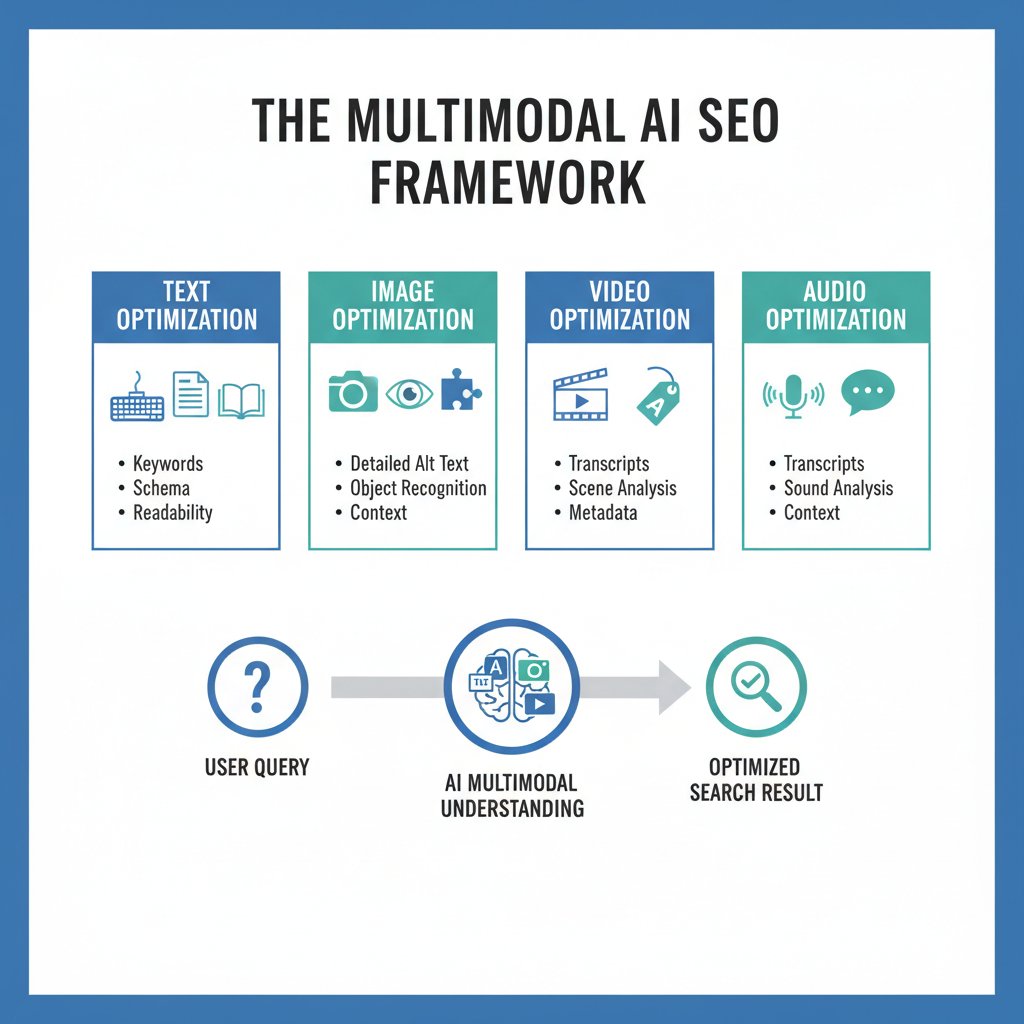
Effective multimodal content optimization involves meticulously preparing each media type with rich, descriptive metadata and structured data to ensure AI can fully understand its context and relevance. This includes detailed alt text for images, comprehensive transcripts and captions for video and audio, and semantic markup across all elements.
For images, this goes beyond simple alt text; think detailed descriptions that explain the image’s content, context, and relevance to the surrounding text. For video, complete transcripts and closed captions are non-negotiable. Furthermore, consider using schema markup (like VideoObject or ImageObject) to provide explicit signals to AI about the nature and content of your media. This structured data acts as a Rosetta Stone for AI, helping it connect the dots between your various content elements. For instance, a product video should not only have a transcript but also schema markup that identifies the product, its features, and where it can be purchased.
What Are the Technical Challenges of Multimodal AI SEO?
The technical challenges of multimodal AI SEO primarily involve processing and optimizing vast amounts of non-textual data, ensuring consistent metadata across formats, and adapting to rapidly evolving AI interpretation models. This requires new tools, workflows, and a deeper understanding of how AI ‘sees’ and ‘hears’ content.
One significant hurdle is the sheer volume and complexity of data. Optimizing a 10-minute video for multimodal AI is far more involved than optimizing a 1,000-word article. It requires accurate transcription, scene detection, object recognition within the video, and linking these elements back to textual concepts. Another challenge is maintaining consistency across different content types. If your article discusses “renewable energy solutions,” your accompanying infographic, video, and podcast segment must all align perfectly with that concept, both semantically and visually. This demands robust content management systems and sophisticated AI-powered tools for analysis and optimization. A recent survey by the Content Marketing Institute revealed that 65% of marketers feel unprepared for the technical demands of multimodal AI optimization as of early 2026.
| Optimization Aspect | Traditional SEO (Text-centric) | Multimodal AI SEO (Concept-centric) |
|---|---|---|
| Primary Focus | Keywords, text relevance, backlinks | Concepts, semantic understanding, cross-media relevance |
| Key Assets | Articles, blog posts, static pages | Articles, videos, images, audio, interactive elements |
| Metadata Importance | Title tags, meta descriptions, alt text (basic) | Rich schema markup, detailed alt text, video transcripts, audio captions, object recognition data |
| AI Understanding | Pattern matching, keyword density | Contextual reasoning, visual/auditory comprehension, knowledge graph building |
| Content Strategy | Keyword research, topic clusters | Concept mapping, narrative coherence across media, user intent modeling |
| Measurement Metrics | Rankings, organic traffic, conversions | AI citation rates, multimodal engagement, concept authority, user satisfaction |
How Can Businesses Prepare for the Multimodal Search Future?
Businesses can prepare for the multimodal search future by investing in high-quality, diverse content creation, implementing robust metadata strategies across all media, and adopting AI-powered tools for content analysis and optimization. This proactive approach ensures their digital assets are comprehensible and valuable to advanced AI models.
Start by auditing your existing content. Identify gaps where text-only content could be enhanced with visuals or video. Develop a comprehensive content strategy that prioritizes the creation of rich, engaging multimodal assets from the outset. Train your content teams on the nuances of multimodal optimization, emphasizing detailed descriptions for images, full transcripts for audio/video, and consistent semantic tagging. Qc Fixer advises clients to integrate AI-powered content analysis tools that can evaluate the multimodal coherence of their content before publication, offering insights into how AI models might interpret it. This foresight can save significant time and resources in recalibrating content for optimal AI visibility.
The Role of Generative Engine Optimization (GEO) in Multimodal AI
Generative Engine Optimization (GEO) plays an increasingly critical role in multimodal AI by ensuring that content is structured and rich enough for AI models to synthesize accurate, comprehensive, and contextually relevant responses. This means optimizing not just for direct answers, but for AI’s ability to generate new insights or summaries from your content across all media types.
As AI Overviews become more prevalent in search results, the ability of your content to feed these generative responses accurately is paramount. If your video provides a clear, step-by-step tutorial, and its transcript is well-structured, an AI might extract those steps to generate a concise summary or even a new visual guide. This requires a level of clarity and organization that goes beyond traditional SEO. It’s about making your content ‘AI-consumable’ in a way that facilitates accurate and helpful generative outputs, reinforcing your brand as an authoritative source. A recent report by SEMrush indicated that pages optimized for GEO saw a 25% increase in their content being cited in AI-generated summaries over the past year.
The Competitive Edge of Early Multimodal Adopters
Early adopters of multimodal optimization strategies will gain a significant competitive edge by establishing authority and visibility within AI-driven search results before competitors fully adapt. This proactive approach allows them to capture market share and build strong relationships with AI systems as trusted information sources.
The digital landscape rewards those who move first. Just as early adopters of mobile optimization or video marketing saw disproportionate gains, businesses that embrace multimodal AI SEO now will position themselves as leaders. They will have more time to experiment, refine their strategies, and build a robust portfolio of AI-friendly content. This early advantage translates directly into higher visibility, increased traffic, and stronger brand recognition in an increasingly AI-mediated world. Don’t wait for your competitors to set the standard; define it yourself.
Frequently Asked Questions
What is the difference between SEO, AEO, and GEO in the multimodal era?
In the multimodal era, SEO remains about overall search visibility, but now includes optimizing all media types. AEO focuses on providing direct, concise answers for AI assistants, potentially using visuals or audio. GEO is about structuring content so AI can accurately generate new responses or summaries from it, drawing from text, images, and video.
How important is video content for multimodal AI SEO?
Video content is critically important for multimodal AI SEO. With AI models capable of understanding visual and auditory information, well-optimized videos (with transcripts, captions, and descriptive metadata) can significantly enhance your content’s visibility and authority in AI-driven search results. It allows AI to grasp complex concepts that might be difficult to convey through text alone.
Do I still need to optimize for keywords with multimodal AI?
Yes, keywords are still important, but their role is evolving. They serve as strong signals for AI, especially in text-based content and metadata. However, multimodal AI moves beyond simple keyword matching to understand the underlying concepts, so a holistic ‘concept optimization’ that integrates keywords naturally across all media types is now the goal.
What role does structured data play in multimodal optimization?
Structured data plays a crucial role in multimodal optimization by providing explicit, machine-readable information about your content, including images, videos, and audio. It helps AI understand the context, type, and relationships of your media assets, making your content more discoverable and interpretable by advanced AI models.
How can small businesses compete in this new multimodal landscape?
Small businesses can compete by focusing on creating high-quality, niche-specific multimodal content. Prioritize clear visuals, accurate transcripts, and detailed metadata for all media. Leveraging AI-powered content creation and optimization tools can also help level the playing field, making sophisticated strategies accessible without large budgets.
What are the risks of ignoring multimodal AI SEO?
Ignoring multimodal AI SEO carries significant risks, including decreased visibility in AI-driven search results, lower engagement rates, and a loss of competitive advantage. As AI models become the primary interface for information discovery, content not optimized for multimodal understanding will simply be overlooked, leading to reduced organic traffic and brand presence.
How often should I update my multimodal content strategy?
You should review and update your multimodal content strategy regularly, ideally quarterly, given the rapid advancements in AI technology. Staying informed about new AI model capabilities and search engine updates is crucial. Continuous experimentation and analysis of your content’s performance in AI-driven search will guide necessary adjustments.
Last updated: June 12, 2026