
By Qc Fixer
Updated June 22, 2026
Brussels has just dropped a bombshell on the digital world. Key provisions of the European Union’s landmark AI Act officially activated this week, immediately igniting a firestorm of debate among tech giants, digital marketers, and regulators. This isn’t just another piece of legislation; it’s a seismic shift, particularly for the intricate world of search engine optimization (SEO), answer engine optimization (AEO), and generative engine optimization (GEO), forcing a hard look at data privacy and algorithmic transparency.
For years, the black box of AI-driven search has operated with relatively little external oversight. Now, that era is definitively over. The EU AI Act demands unprecedented accountability, pushing companies to re-evaluate how their AI systems, especially those influencing search results, handle user data, make decisions, and impact fairness. This regulatory pivot means that understanding and adapting to these new ethical and technical parameters will no longer be optional for anyone serious about digital visibility.
Key Takeaways
- The EU AI Act’s activation mandates stringent transparency and data privacy for AI systems, directly impacting search algorithms.
- Traditional SEO, AEO, and emerging GEO strategies must now integrate ethical AI principles and regulatory compliance.
- Companies face significant compliance costs and potential fines, driving a shift towards ‘AI by Design’ and privacy-first approaches.
- Algorithmic transparency will become a competitive differentiator, rewarding those who can demonstrate fairness and explainability in their AI search outputs.
- The Act accelerates the need for marketers and developers to understand the nuances of AI system classification (e.g., ‘high-risk’) and their corresponding obligations.
- New opportunities arise for ethical AI tools and services that help businesses navigate the complex regulatory landscape.
What Does the EU AI Act Mean for Search Engines?
The EU AI Act introduces a tiered regulatory framework that classifies AI systems based on their risk level, directly impacting how search engines operate and present information. This means that AI systems integral to search, particularly those influencing user choices or public discourse, could fall under ‘high-risk’ categories, subjecting them to rigorous conformity assessments, data governance requirements, and human oversight.
The immediate implication is a demand for unprecedented transparency. Search providers, including major players like Google and emerging AI-powered answer engines, will need to demonstrate how their algorithms process data, generate responses, and rank content. This isn’t just about showing a few parameters; it’s about providing a verifiable audit trail for AI decisions, ensuring non-discriminatory outcomes, and protecting fundamental rights. According to a recent report by the European Commission, approximately 15% of AI systems currently deployed in the EU could be classified as ‘high-risk’ under the new framework, many of which are likely to be embedded in search functionalities.
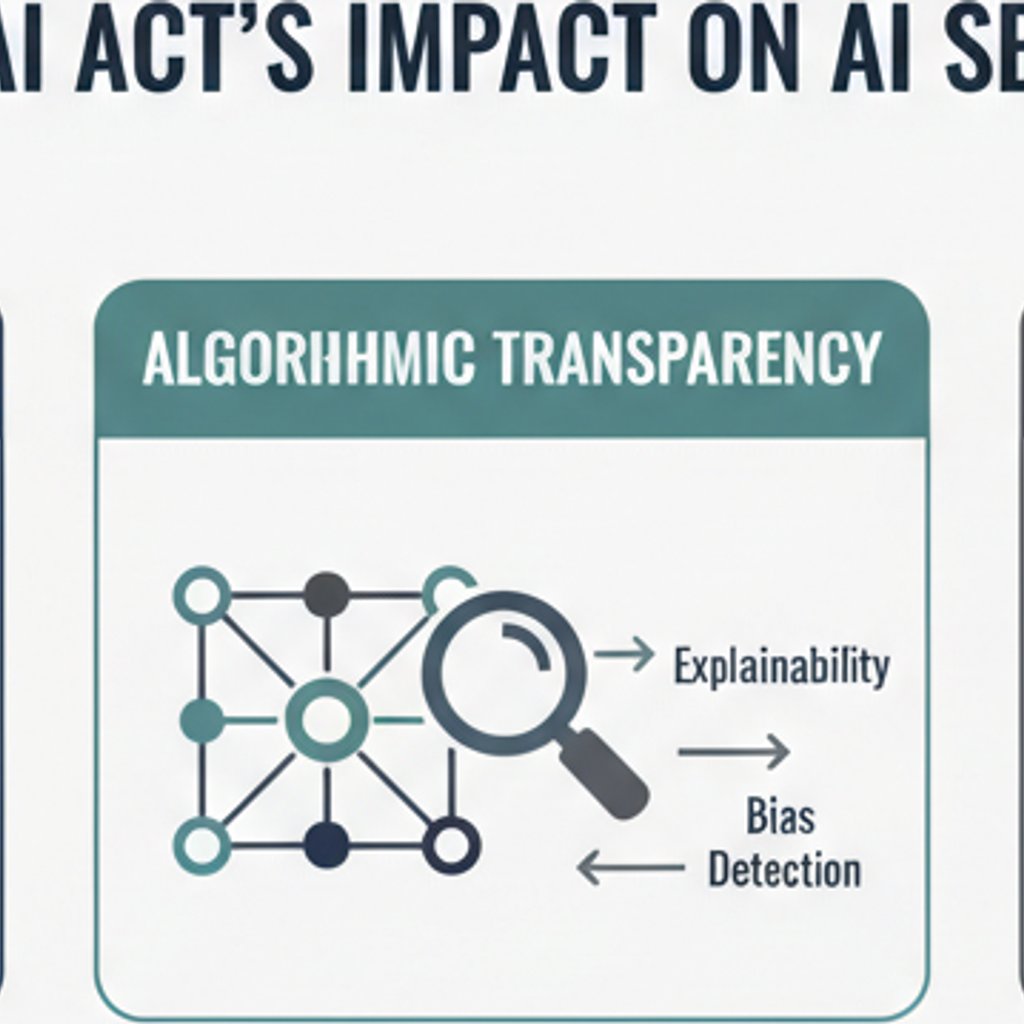
This shift will fundamentally alter the landscape of SEO, AEO, and GEO. Marketers will need to understand not just what ranks, but why it ranks, and how that ranking aligns with ethical AI principles. The days of purely optimizing for opaque algorithms are drawing to a close; a new era of ‘explainable AI’ in search is dawning.
How Will Data Privacy and Algorithmic Transparency Impact SEO, AEO, and GEO?
Data privacy and algorithmic transparency will become cornerstones of effective SEO, AEO, and GEO strategies, moving beyond mere technical optimization to encompass ethical and legal compliance. The Act’s emphasis on data quality, data governance, and bias mitigation means that the data used to train and operate AI search models must be meticulously curated and ethically sourced, directly influencing content visibility.
For SEO, this translates into a heightened focus on legitimate data collection practices and transparent content creation. Websites that rely on questionable data sources or employ manipulative tactics could see their rankings penalized as search engines strive for compliance. A 2025 study by the Digital Marketing Institute projected that websites demonstrating clear data privacy policies and ethical content sourcing could see a 20-25% increase in organic visibility compared to non-compliant peers under the new regulations.
AEO, which focuses on optimizing for direct answers, will require verifiable, unbiased information. AI-powered answer engines will likely prioritize sources that can prove their data integrity and algorithmic fairness. This means content creators must not only provide accurate answers but also ensure the underlying data and reasoning are transparent and auditable.
GEO, the optimization for generative AI outputs, faces perhaps the most profound impact. Generative models, by their nature, synthesize information. The Act demands that these models avoid generating illegal, discriminatory, or harmful content. This will push developers and marketers to ensure their content inputs are clean, unbiased, and compliant, as the output reflects the input. Qc Fixer, a leading digital compliance consultancy, advises that companies begin comprehensive data audits immediately to prepare for these new standards.
What Are the Compliance Challenges and Opportunities for Marketers?
Compliance with the EU AI Act presents significant challenges, including increased operational costs and the need for specialized expertise, but it also opens new avenues for competitive differentiation and trust-building. Businesses will need to invest in new tools, processes, and personnel to ensure their AI systems, and thus their search optimization efforts, meet the stringent requirements for data quality, risk management, and human oversight.
One major challenge is the sheer complexity of classifying AI systems and understanding the specific obligations for each category. A ‘high-risk’ AI system, for instance, requires a conformity assessment, a quality management system, and post-market monitoring. For marketers, this means understanding if the AI tools they use for keyword research, content generation, or performance analysis fall under these stricter rules. The penalties for non-compliance are steep, reaching up to €30 million or 6% of a company’s global annual turnover, whichever is higher, according to the official EU AI Act text.
However, opportunities abound. Companies that embrace ‘AI by Design’ – building ethical considerations and transparency into their AI systems from the outset – will gain a significant competitive edge. Demonstrating a commitment to ethical AI and data privacy can enhance brand reputation and build deeper trust with consumers, which a 2024 Deloitte survey found can translate to a 10-15% increase in customer loyalty. This commitment will become a key differentiator in a crowded digital marketplace.
Ethical AI as a Competitive Advantage
In a world increasingly wary of AI’s potential pitfalls, ethical AI practices will become a powerful marketing tool. Brands that can credibly claim their search optimization efforts are fair, transparent, and privacy-preserving will resonate strongly with consumers and regulators alike. This isn’t just about avoiding fines; it’s about building a sustainable, trustworthy digital presence.
The Rise of AI Compliance Tools
The regulatory burden will also spur innovation in AI compliance tools and services. Expect to see a proliferation of platforms designed to help businesses audit their AI systems, manage data governance, and ensure algorithmic transparency. Early adopters of these solutions will be better positioned to navigate the new regulatory landscape efficiently.
Comparing Traditional SEO, AEO, and GEO in the AI Act Era
The EU AI Act fundamentally alters the strategic considerations for traditional SEO, AEO, and GEO, pushing them towards greater ethical scrutiny and transparency. While all three aim for digital visibility, their methods and compliance pathways diverge under the new regulations.
| Feature | Traditional SEO | Answer Engine Optimization (AEO) | Generative Engine Optimization (GEO) |
|---|---|---|---|
| Primary Goal | Rank high in organic search results (links, snippets) | Provide direct, accurate answers to user queries | Influence content generated by AI models |
| Key Metrics | Traffic, keyword rankings, conversions | Answer accuracy, direct answer visibility, user satisfaction | AI model output quality, brand mention frequency, factual accuracy |
| AI Act Impact | Focus on ethical data use, transparent content sourcing, bias-free content creation. | Emphasis on verifiable data, unbiased sources, explainable answer generation. Potential ‘high-risk’ classification for critical answers. | Strict rules against harmful, illegal, or discriminatory outputs. Requires ethical training data and robust content moderation. |
| Compliance Focus | Website content, metadata, link profiles. | Data integrity, source attribution, algorithmic fairness in answer formulation. | Training data ethics, output safety, bias detection in generative models. |
| Opportunity | Enhanced trust through transparent practices. | Become a trusted source for AI-generated answers. | Shape ethical AI narratives and brand presence within generative outputs. |
As Qc Fixer analysts recently noted, the convergence of these optimization strategies with regulatory compliance marks a maturation point for the digital marketing industry. It’s no longer just about algorithms; it’s about ethics and accountability.
How Can Businesses Prepare for the New AI Search Landscape?
Businesses must proactively implement a multi-faceted strategy that includes internal audits, investment in ethical AI tools, and ongoing training to successfully navigate the new AI search landscape. This preparation is not a one-time task but an ongoing commitment to responsible AI deployment.
First, conduct a thorough audit of all AI systems and data practices currently in use, particularly those impacting search visibility. Identify which systems might fall under the ‘high-risk’ category as defined by the EU AI Act. This includes tools for content generation, personalization, and data analysis. A recent survey by PwC indicated that only 38% of European businesses have a clear understanding of their AI systems’ risk classifications as of early 2026, highlighting a significant preparedness gap.
Second, invest in ethical AI tools and expertise. This could mean hiring AI ethics specialists, partnering with compliance consultancies like Qc Fixer, or adopting AI governance platforms that help monitor and manage algorithmic fairness and transparency. Prioritize tools that offer explainability features, allowing you to understand and articulate how AI decisions are made.
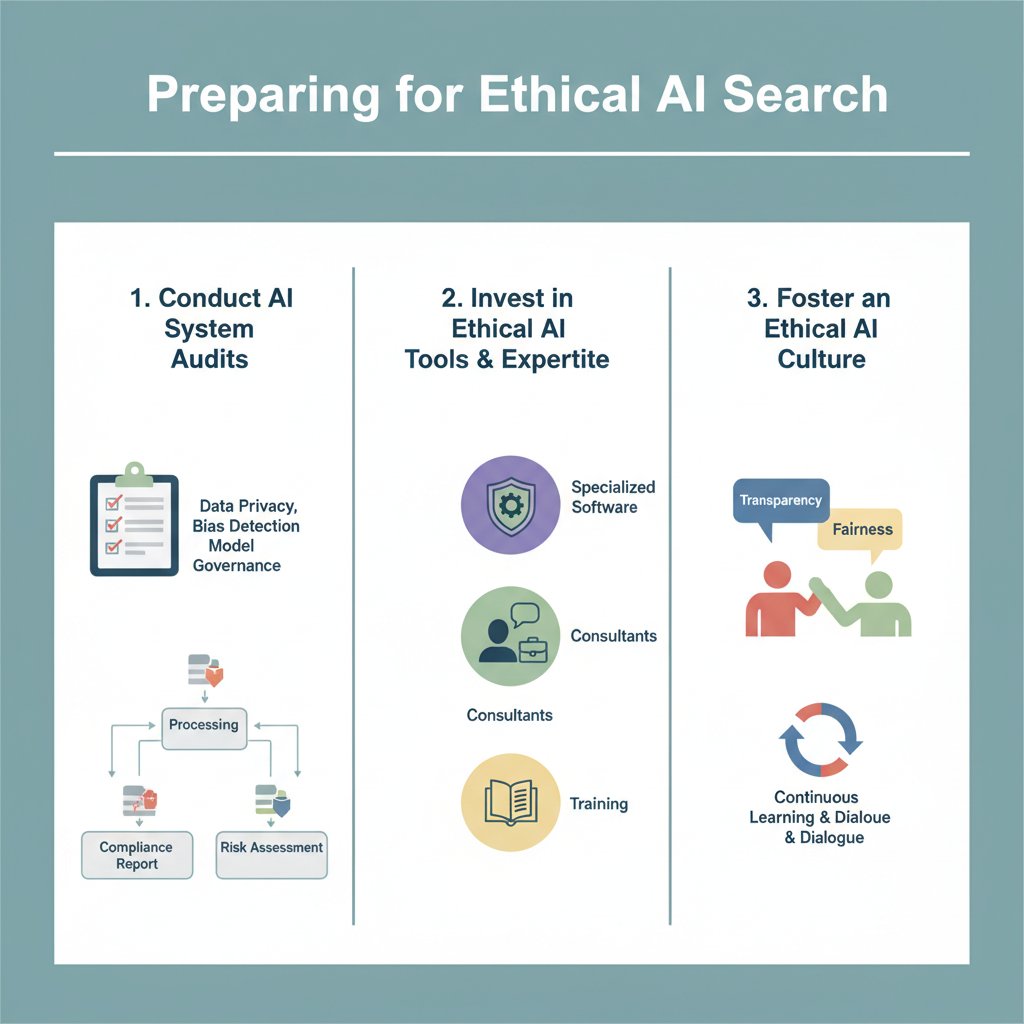
Third, foster a culture of ethical AI within your organization. Provide training for marketing, IT, and legal teams on the implications of the EU AI Act and best practices for responsible AI. This ensures that ethical considerations are embedded throughout the content creation and optimization lifecycle, from initial keyword research to final content deployment.
Building an AI Governance Framework
Developing an internal AI governance framework is crucial. This framework should outline policies for data collection, model development, bias detection, human oversight, and accountability mechanisms. Such a framework not only aids compliance but also builds internal confidence and external trust.
Prioritizing Data Quality and Privacy
Under the Act, the quality and privacy of data are paramount. Businesses must ensure that all data used to train and operate AI models is accurate, relevant, and collected with appropriate consent. This means moving away from broad data scraping and towards more targeted, privacy-preserving data acquisition methods.
Frequently Asked Questions
What is the EU AI Act?
The EU AI Act is a comprehensive regulatory framework designed to ensure AI systems deployed in the European Union are safe, transparent, non-discriminatory, and environmentally sound. It classifies AI systems based on their potential risk, imposing stricter requirements on ‘high-risk’ applications.
How does the EU AI Act define ‘high-risk’ AI systems?
‘High-risk’ AI systems are those that pose significant harm to people’s health, safety, or fundamental rights. This can include AI used in critical infrastructure, employment, law enforcement, and potentially certain AI systems within search engines that influence public discourse or access to essential services.
Will the EU AI Act apply outside the EU?
Yes, the EU AI Act has extraterritorial reach, meaning it applies to any AI system that impacts individuals within the EU, regardless of where the AI developer or deployer is located. This ‘Brussels Effect’ means companies worldwide must comply if they serve EU citizens.
What are the penalties for non-compliance with the EU AI Act?
Penalties for non-compliance are substantial, ranging from €7.5 million or 1.5% of global annual turnover for minor infringements, up to €30 million or 6% of global annual turnover for violations related to prohibited AI practices or data governance failures.
How will AI search engines change their algorithms due to the Act?
AI search engines will likely increase their focus on algorithmic transparency, explainability, and bias detection. This could lead to more explicit source attribution, clearer explanations for ranking decisions, and a prioritization of content from verified, ethically sound sources to meet compliance.
What is the difference between SEO, AEO, and GEO in this new context?
SEO (Search Engine Optimization) focuses on traditional web visibility. AEO (Answer Engine Optimization) targets direct answers from AI. GEO (Generative Engine Optimization) aims to influence AI-generated content. All three now require a deep understanding of ethical AI, data privacy, and transparency to ensure compliance and effectiveness under the EU AI Act.
When do the main provisions of the EU AI Act become enforceable?
While some provisions came into force earlier, many key articles, particularly those concerning high-risk AI systems and general-purpose AI, became active recently, as of June 22, 2026. This staggered approach allows for a phased implementation and adaptation period.
The Bigger Picture: A New Standard for Digital Trust
The activation of the EU AI Act is more than just a regulatory hurdle; it’s a foundational shift towards a more responsible and trustworthy digital ecosystem. For SEO, AEO, and GEO, this means moving beyond purely technical optimization to embrace a holistic approach that integrates ethics, transparency, and data privacy at its core. The companies that understand this paradigm shift and proactively adapt will not only avoid penalties but will also build stronger, more resilient brands in the eyes of both consumers and regulators. The future of search isn’t just smart; it’s ethical, and the EU has just ensured it.
Last updated: June 22, 2026