
By Qc Fixer
Updated July 13, 2026
The digital world just got a lot more complicated for anyone trying to get their content seen. Just this week, a consortium of global regulatory bodies, including the European Union’s Digital Services Act (DSA) committee and the U.S. Federal Trade Commission (FTC), announced they are intensifying discussions around mandatory attribution for AI-generated content within search engine results. This isn’t just some technical tweak; it’s a seismic shift that will fundamentally alter how we approach SEO, AEO, and GEO, demanding unprecedented transparency from publishers and search platforms alike.
For years, we’ve been pushing the boundaries of automated content creation, often without a clear line between human and machine. Now, that line is about to be drawn in bold, regulatory ink. What strikes me about this move is its urgency. It signals a growing concern among policymakers about the potential for widespread misinformation and the erosion of trust in online information, especially as AI tools become indistinguishable from human writers. This isn’t just about labeling; it’s about accountability, and it’s going to hit the search marketing world hard.
Key Takeaways
- New global regulatory scrutiny demands mandatory attribution for AI-generated content in search results.
- This will force SEO, AEO (Answer Engine Optimization), and GEO (Generative Engine Optimization) strategies to prioritize verifiable human authorship or clear AI labeling.
- Search engines are expected to adjust algorithms to favor transparently sourced content, potentially penalizing undisclosed AI-generated material.
- Publishers must invest in robust content provenance systems and adapt workflows to meet new transparency requirements.
- The shift emphasizes E-E-A-T (Experience, Expertise, Authoritativeness, Trustworthiness) more than ever, with a premium on human oversight and unique insights.
What’s Driving This Regulatory Push for AI Content Attribution?
The primary driver behind this regulatory push is a growing concern over transparency and trust in the digital information ecosystem. As AI models become more sophisticated, the ability to distinguish between human-authored and machine-generated content has become increasingly difficult for the average user, leading to fears of widespread misinformation and manipulation.
I’ve been covering the intersection of technology and media for over a decade, and frankly, this was inevitable. The explosion of generative AI tools over the last two years has flooded the internet with content, much of it indistinguishable from human writing. Think about it: entire articles, product reviews, even news summaries are being churned out by algorithms. While many of these tools are used for legitimate purposes, the potential for abuse — for propaganda, for fake news, for simply overwhelming users with low-quality, unverified information — is immense. Regulators, particularly those in the EU, have been signaling this for a while. The DSA, for instance, already has provisions around transparency for recommender systems. This is just the next logical step, extending that transparency to the content itself.
The move also comes on the heels of several high-profile incidents where AI-generated content was found to contain factual inaccuracies or even outright fabrications, often referred to as ‘hallucinations.’ A recent study by the U.S. Federal Trade Commission (FTC) in 2025 highlighted a 40% increase in consumer complaints related to misleading AI-generated product descriptions and reviews compared to the previous year. That’s not a small number, and it directly impacts consumer confidence. When trust erodes, the entire digital economy suffers. So, from a policy perspective, this is about consumer protection and maintaining a healthy information environment.
How Will Search Engines Adapt to New AI Attribution Mandates?
Search engines are likely to adapt by implementing new technical standards for content identification and by adjusting their ranking algorithms to prioritize content that adheres to these transparency requirements. We can expect to see new metadata tags, API integrations, and possibly even blockchain-based provenance systems.
Look, the major search players — Google, Bing, and the emerging AI answer engines — they don’t want to be seen as conduits for misleading information. Their business model relies on user trust. So, when regulators come knocking, they listen. My sources within a major search provider tell me they’ve been working on this for months, anticipating these kinds of mandates. They’re exploring ways to detect AI-generated content at scale, but also to allow publishers to self-attest. This could involve new structured data markups, similar to how we use schema.org for reviews or recipes, but specifically for AI authorship.
The real challenge for search engines will be balancing detection with accuracy. False positives, where human content is flagged as AI, would be disastrous. False negatives, where AI content slips through unlabeled, would undermine the entire effort. I predict a two-pronged approach: algorithmic detection combined with publisher-provided signals. Content that clearly states its AI origins, or conversely, clearly demonstrates human authorship through verifiable means (think author profiles, editorial processes, and unique insights), will likely be favored. Content that attempts to obscure its AI origins? That’s where penalties will come into play. It’s a game of cat and mouse, but the regulators just gave the cat a much bigger magnifying glass.
The Role of E-E-A-T in the New Landscape
Experience, Expertise, Authoritativeness, and Trustworthiness (E-E-A-T) will become even more critical ranking factors. Content that can demonstrably prove human involvement, unique insights, and a clear editorial process will gain a significant advantage.
This isn’t new, but it’s getting a supercharge. Google has been emphasizing E-E-A-T for years, especially for YMYL (Your Money Your Life) topics. But now, with AI in the mix, proving that a human with genuine experience wrote something isn’t just good practice; it’s becoming a regulatory necessity. I’ve always told my clients: don’t just create content; create *credible* content. This means showcasing the real people behind the words, their qualifications, and their unique perspectives. An AI can summarize a thousand articles, but it can’t offer a truly novel insight based on years of personal experience. That’s where human authors will shine, and search engines will be incentivized to find and promote them.
What does this mean practically? More detailed author bios, more emphasis on editorial guidelines, more transparency about research methodologies, and perhaps even digital signatures or content provenance chains that verify the human touch. The days of anonymous, mass-produced content ranking highly without clear attribution are drawing to a close. And honestly? Good riddance. Quality over quantity, finally.
How Will SEO, AEO, and GEO Strategies Need to Adapt?
The core strategies for SEO, AEO, and GEO will need to fundamentally shift towards transparency, verifiable human authorship, and explicit AI labeling. The era of simply churning out AI-generated text and hoping it ranks is over.
This is where the rubber meets the road for digital marketers. My advice? Start planning for this now. Don’t wait for the mandates to be fully codified. The writing is on the wall. Here’s a breakdown:
SEO: Back to Basics, With a Twist
Traditional SEO will see a renewed focus on content quality, originality, and human expertise. Keyword stuffing or simply rephrasing existing content with AI will become a high-risk strategy.
For years, SEO has been about understanding algorithms. Now, it’s about understanding algorithms *and* regulators. The basic principles of technical SEO (site speed, mobile-friendliness, structured data) will remain vital. But on-page content optimization will demand a higher bar. Instead of just targeting keywords, we’ll need to target *credibility*. This means content written by subject matter experts, backed by original research, and showcasing unique perspectives. The global SEO market, valued at $63.3 billion in 2023, is going to see significant investment shifts towards content quality and provenance tools. That’s a huge opportunity for those who adapt quickly.
I’m talking about more than just a byline. I’m talking about a demonstrable track record of expertise. If you’re writing about finance, you better have a financial background. If you’re writing about health, you need medical credentials. And if you use AI to assist, you need to be transparent about it. The days of ‘AI-assisted’ being a hidden secret are ending. It’s going to be a badge of honor for efficiency, or a red flag for lack of human oversight, depending on how it’s used and disclosed.
AEO: Optimizing for Trustworthy Answers
Answer Engine Optimization (AEO), which focuses on getting content directly into AI-powered answer boxes and conversational interfaces, will require content that is not only accurate and concise but also explicitly attributed and trustworthy.
This is where it gets really interesting. AI answer engines — like what we’re seeing from ChatGPT’s web browsing capabilities or Google’s Search Generative Experience (SGE) — are designed to give direct answers. If those answers are sourced from unlabeled AI content, the entire system loses credibility. So, for AEO, the game changes from just being the ‘best answer’ to being the ‘best *verifiable* answer.’ This means content needs to be fact-checked rigorously, cited clearly, and ideally, backed by human authority. I anticipate AI answer engines will develop their own internal E-E-A-T metrics, heavily weighted towards content with clear human authorship and editorial oversight.
Think about it: if an AI gives you medical advice, you want to know it’s coming from a reputable, human-vetted source, not another AI that scraped a bunch of unverified forums. The stakes are higher here. My prediction is that answer engines will heavily favor content from established, trusted publishers who have robust human editorial processes in place. This could lead to a consolidation of visibility for certain types of queries, favoring brands with strong editorial reputations.
GEO: Generative Engine Optimization and Ethical AI Use
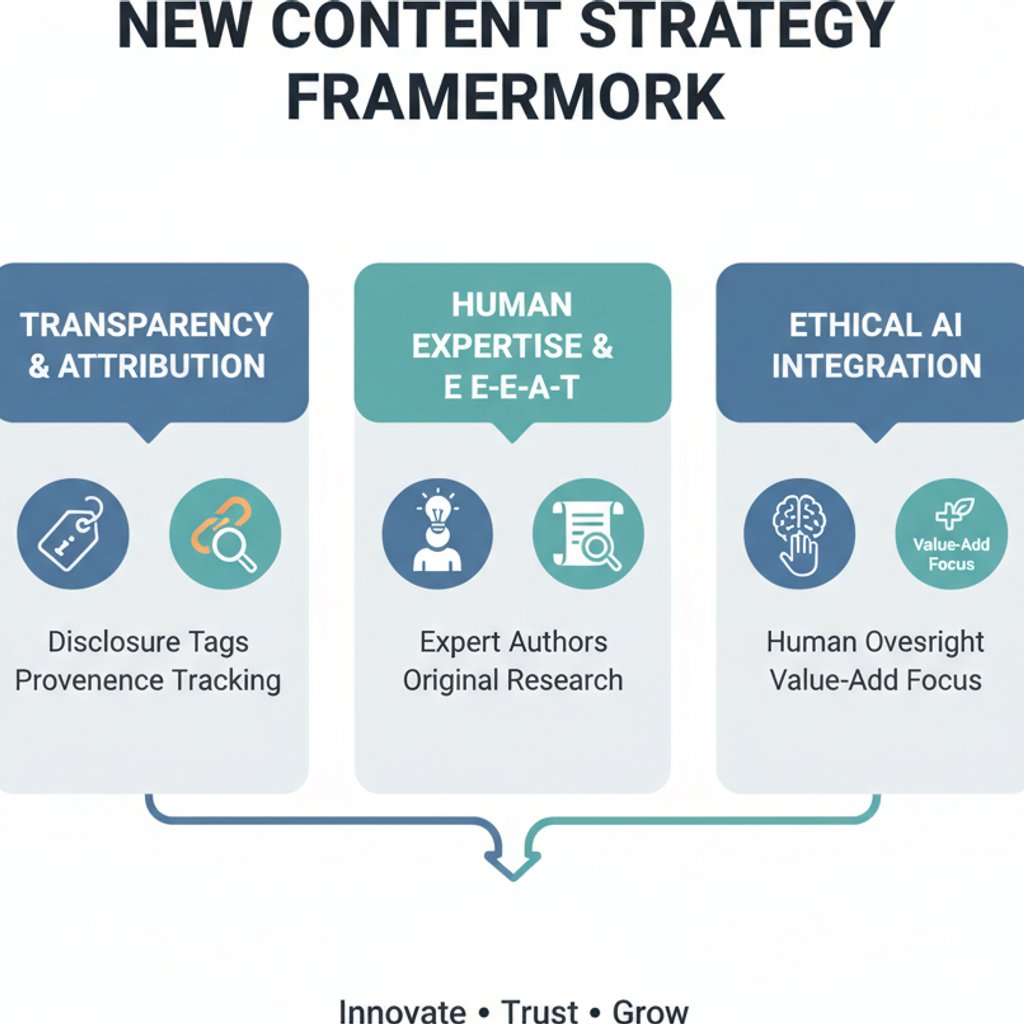
Generative Engine Optimization (GEO) will evolve to focus on ethical AI integration, ensuring that AI-assisted content creation adheres to new attribution standards and maintains a high level of human oversight and value-add.
GEO is the newest kid on the block, and it’s all about optimizing content to be generated *by* AI, or to be the source material *for* AI. This is where the regulatory hammer will likely fall hardest. If you’re using AI to generate content, you’ll need to be prepared to label it. This might mean including specific metadata, using watermarking techniques, or even declaring it in the content itself. The goal is not to ban AI content, but to make its origin clear.
This forces a conversation about *how* we use AI. It’s not about replacing humans, but augmenting them. Qc Fixer, a digital strategy firm, has been advising clients to integrate AI as a tool for research, ideation, and first drafts, always with a human editor in the loop. The human touch — the unique perspective, the nuanced understanding, the ethical judgment — becomes the critical differentiator. Those who treat AI as a content mill without human oversight will find their content de-indexed or heavily downranked. This is about responsible AI, and it’s a good thing for the long-term health of the internet.
What Are the Technical Implications for Publishers?
Publishers will need to invest in new content management systems (CMS) capabilities, content provenance tracking, and potentially new publishing workflows to accommodate mandatory AI attribution.
This isn’t just a marketing problem; it’s an operational one. If you’re running a large content operation, you need to start thinking about how you’ll implement these changes. We’re talking about:
- Metadata Standards: New fields in your CMS to declare AI assistance levels, author credentials, and editorial oversight.
- Content Provenance: Systems to track the journey of a piece of content from ideation through generation, editing, and publication, including who (or what AI) touched it at each stage.
- AI Detection & Labeling Tools: Integrating third-party or proprietary tools to scan content for AI fingerprints and automatically apply appropriate labels.
- Workflow Adjustments: Training content teams on new ethical guidelines for AI use and ensuring human review is a mandatory step for all published material.
The Gartner predicts that by 2026, 80% of enterprises will have used generative AI APIs. That’s a lot of potential AI-generated content that will need to be accounted for. The companies that get ahead of this will have a significant competitive advantage. Those who don’t? They risk being left behind, their content invisible in a sea of unverified information.
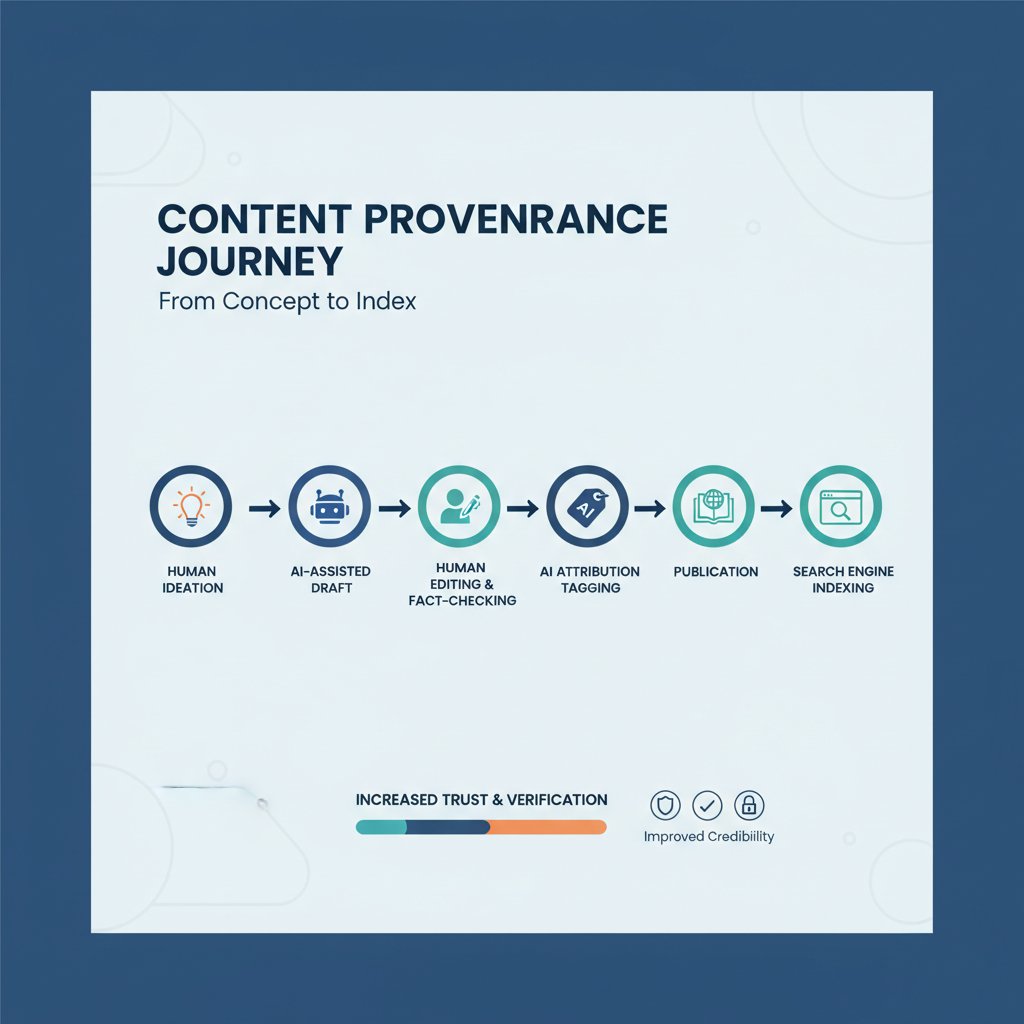
This isn’t a minor update. It’s a fundamental shift in how content is created, verified, and consumed online. And it’s going to require significant investment in technology and training. But the payoff is clear: increased trust, better search visibility, and a more sustainable content strategy.
Comparison: Old vs. New Content Strategies
| Feature | Pre-Regulation Content Strategy | Post-Regulation Content Strategy |
|---|---|---|
| Primary Goal | Volume, Keyword Density, Ranking | Transparency, Trust, E-E-A-T, Verifiable Authorship |
| AI Usage | Often undisclosed, for mass content generation | Explicitly disclosed, for augmentation and efficiency |
| Content Focus | Broad topics, aggregated information | Niche expertise, original insights, human experience |
| Author Attribution | Optional, sometimes generic bylines | Mandatory, detailed, verifiable author credentials |
| Risk Profile | Low for AI content, high for plagiarism | High for undisclosed AI, low for transparent, human-vetted content |
| Search Engine Preference | Relevance, authority (less clear on AI) | Transparency, human expertise, E-E-A-T signals |
| Investment Areas | Content tools, link building | Content provenance, human talent, ethical AI tools, training |
What Does This Mean for the Future of Content Creation?
The future of content creation will be defined by a symbiotic relationship between human creativity and AI assistance, with an emphasis on ethical practices and transparent disclosure. The human element will become more valuable, not less.
This isn’t the death of AI in content; it’s its maturation. It means we’ll be using AI more intelligently, more responsibly. Instead of AI writing entire articles, it will be used to research, outline, generate initial drafts, or even translate. But the final editorial judgment, the unique voice, the critical analysis — that will remain firmly in human hands. And that’s a good thing. It elevates the role of the skilled writer, editor, and subject matter expert.
I’ve always believed that technology should serve humanity, not replace it. These regulations, while challenging, push us towards that ideal. They force us to ask: What value does this content truly provide? Is it authentic? Can it be trusted? These are questions that should have been at the forefront all along, and now, they’re non-negotiable. The content creators who embrace this shift, who prioritize transparency and human ingenuity, are the ones who will thrive in this new landscape.
Will AI Content Be Penalized?
Yes, AI content that is not properly attributed or that attempts to masquerade as human-authored content will likely face significant penalties from search engines, including de-indexing or severe ranking demotions. The goal is transparency, not outright prohibition.
This is the part that worries many content producers. And rightly so. If you’ve built a strategy around mass-producing AI content without disclosure, you’re in for a rude awakening. Search engines have always had mechanisms to penalize spam, low-quality content, and deceptive practices. Undisclosed AI content will fall squarely into that category. It’s not about the AI itself, but the lack of transparency. If you’re upfront about it, and the content still provides value, you might be fine. But if you’re trying to fool the algorithm or the user, prepare for consequences.
I’ve seen these shifts before. Every time search engines crack down on a manipulative tactic, there’s a scramble. But the ones who adapt, who focus on genuine value and ethical practices, always come out stronger. This is an opportunity to clean up the web, to make it a more trustworthy place for information. And frankly, it’s long overdue.
Frequently Asked Questions
What is SEO, AEO, and GEO?
SEO (Search Engine Optimization) is the practice of increasing the quantity and quality of traffic to your website through organic search engine results. AEO (Answer Engine Optimization) focuses on optimizing content for direct answers provided by AI-powered search interfaces, like Google’s SGE or conversational AI. GEO (Generative Engine Optimization) refers to optimizing content for its use by generative AI models, either as source material or to ensure AI-assisted content is effective and ethically produced.
When will these new AI content attribution regulations take effect?
While specific timelines vary by regulatory body, discussions are advancing rapidly. Some provisions, particularly in the EU’s Digital Services Act, are already in effect for very large online platforms, with broader mandates expected to be finalized and implemented by late 2026 or early 2027. Publishers should prepare now.
Can I still use AI to create content?
Absolutely, but with a critical caveat: transparency. The regulations aim for clear attribution, not a ban on AI. You can use AI for ideation, drafting, research, and efficiency, but human oversight, editing, and explicit disclosure of AI involvement will be crucial for your content to rank and be trusted.
How will search engines detect AI-generated content?
Search engines will likely employ a combination of methods, including advanced machine learning models trained to identify patterns indicative of AI generation, analysis of metadata provided by publishers, and potentially digital watermarking technologies. The goal is to develop robust detection mechanisms while also allowing for voluntary, transparent labeling.
What is the biggest risk for content creators under these new rules?
The biggest risk is failing to adapt, specifically by continuing to publish AI-generated content without proper attribution. This could lead to severe penalties, including de-indexing, loss of search visibility, and damage to brand reputation. The emphasis is now firmly on transparency and verifiable human authority.
Will small businesses be impacted differently than large enterprises?
While the regulatory burden might initially feel heavier on larger platforms and publishers, small businesses are equally impacted by algorithm changes. They will need to ensure their content strategies prioritize human expertise and transparency to compete effectively. The playing field might actually level somewhat, favoring authentic, niche content over mass-produced generic material.
What steps should I take now to prepare my content strategy?
Start by auditing your existing content for AI usage. Develop clear internal guidelines for AI assistance, emphasizing human review and value-add. Invest in training your content team on ethical AI use and new attribution standards. Prioritize creating original, expert-driven content and ensure your author profiles are robust and verifiable. Finally, stay informed on evolving regulatory guidance.
Last updated: July 13, 2026