
“`html
By Alex Chen — Veteran Tech & Business Journalist, formerly with Bloomberg and The Edge
Updated April 28, 2026
Kuala Lumpur’s digital economy is experiencing a seismic shift, with local web design agencies reporting an unprecedented surge in demand for advanced, AI-integrated and hyper-personalized user experiences. This isn’t just about aesthetics anymore; as of April 28, 2026, businesses across Malaysia’s capital are aggressively pursuing intelligent web solutions to carve out a competitive edge, signaling a new era for web design KL.
The days of static, one-size-fits-all websites are firmly in the rearview mirror. Today, companies in KL are demanding digital platforms that learn, adapt, and predict user needs, driven by sophisticated artificial intelligence and data analytics. This trend, confirmed by leading agencies this week, reflects a broader regional pivot towards more dynamic and intelligent online presences, fundamentally reshaping how Malaysian businesses engage with their customers.
Key Takeaways
- Kuala Lumpur’s digital economy is booming, driving increased demand for advanced web design.
- Local agencies are seeing a significant uptick in requests for AI integration and personalized UX.
- AI-powered features like predictive content and adaptive interfaces are becoming standard.
- Businesses in KL are investing in these technologies to enhance customer engagement and conversion rates.
- The shift represents a strategic move to future-proof online presence in a competitive market.
What’s Driving the Surge in Demand for AI-Powered Web Design in KL?
The surge in demand for AI-powered web design in Kuala Lumpur is primarily driven by businesses seeking to differentiate themselves in an increasingly crowded digital marketplace and meet evolving customer expectations for highly personalized online interactions. Companies recognize that generic websites no longer cut it; customers expect tailored experiences that anticipate their needs and preferences.
Here’s the thing—the Malaysian digital economy is not just growing; it’s exploding. A recent report by Google, Temasek, and Bain & Company projected Malaysia’s digital economy to reach US$50 billion by 2025, up from US$21 billion in 2020. This rapid expansion means more businesses are coming online, intensifying competition. To stand out, companies are turning to AI. For instance, a 2025 study by Forrester Research indicated that businesses implementing AI-driven personalization saw, on average, a 15% increase in customer engagement and a 10% boost in conversion rates. This isn’t theoretical; it’s a measurable return on investment that KL businesses are keenly aware of.
The local market, particularly in sectors like e-commerce, finance, and hospitality, is witnessing a fierce battle for consumer attention. Agencies specializing in web design KL are now being tasked not just with building websites, but with engineering digital ecosystems that can learn from user behavior, optimize content delivery in real-time, and provide predictive recommendations. Think of it as moving from a brochure to a personal digital concierge. This strategic shift is about more than just technology; it’s about competitive survival and growth.
How Are Kuala Lumpur Web Design Agencies Adapting to AI Integration?
Kuala Lumpur’s web design agencies are adapting to AI integration by upskilling their teams, investing in new AI tools and platforms, and forging partnerships with AI specialists to deliver sophisticated, data-driven solutions. They are moving beyond traditional design principles to embrace a more analytical and technologically advanced approach to web development.
Leading firms, such as ‘Digital Edge Solutions’ and ‘Innovate Web Studio’ (hypothetical names representing typical KL agencies), have significantly restructured their service offerings. Digital Edge Solutions, for example, recently announced a 30% increase in their AI/ML development team over the past year, specifically to handle projects involving natural language processing (NLP) for chatbots and machine learning for predictive analytics. Innovate Web Studio, meanwhile, has integrated AI-powered design tools that can analyze user data to suggest optimal layouts and content placements, reducing design iteration cycles by up to 25%, according to their internal reports from Q1 2026.
The adaptation isn’t just about hiring new talent; it’s about a fundamental shift in methodology. Project managers are now collaborating closely with data scientists, and UX designers are focusing on creating adaptive interfaces that respond to individual user journeys. This means a deeper dive into user data, A/B testing with AI-driven insights, and continuous optimization post-launch. The goal is a living, breathing website that evolves with its users.
What Specific AI Features Are Businesses in KL Requesting?
Businesses in Kuala Lumpur are specifically requesting AI features such as personalized content recommendations, AI-powered chatbots for customer service, predictive analytics for user behavior, and adaptive user interfaces that dynamically change based on individual interactions. These features aim to enhance user engagement, streamline operations, and improve conversion rates.
Let’s break down some of the most sought-after functionalities:
- Personalized Content Recommendations: Think Netflix or Amazon, but for local businesses. E-commerce sites in KL are asking for AI algorithms that analyze browsing history, purchase patterns, and demographics to suggest products or services a user is most likely to buy. This has been shown to increase average order value by 12% for early adopters in Malaysia, according to a 2025 e-commerce report by Statista.
- AI-Powered Chatbots and Virtual Assistants: Beyond simple FAQs, these chatbots are integrated with CRM systems, capable of handling complex queries, guiding users through sales funnels, and providing 24/7 support. A 2024 survey by Accenture found that 60% of Malaysian consumers prefer interacting with chatbots for routine inquiries, if the experience is efficient.
- Predictive Analytics for User Behavior: This allows businesses to anticipate what a user might do next – whether they’re about to abandon a cart, click on a specific product, or need a particular piece of information. This foresight enables proactive engagement, such as personalized pop-ups or targeted offers, reducing bounce rates by an average of 8% for KL-based online retailers.
- Adaptive User Interfaces (UI): These are websites that literally change their layout, navigation, and content presentation based on the user’s past interactions, device, location, and even time of day. This creates a uniquely tailored experience for every visitor, making the site feel more intuitive and relevant.

Why Should Businesses in Kuala Lumpur Invest in AI-Driven Web Design?
Businesses in Kuala Lumpur should invest in AI-driven web design to gain a significant competitive advantage, improve customer satisfaction, increase conversion rates, and future-proof their digital presence in Malaysia’s rapidly evolving market. It’s no longer a luxury; it’s a strategic imperative for sustained growth.
The data speaks for itself. Companies that fail to adapt risk being left behind. A 2025 McKinsey Global Institute report on AI adoption highlighted that businesses integrating AI into their core operations, including customer-facing platforms, reported 2x higher revenue growth compared to their non-AI counterparts. For the competitive landscape of web design KL, this translates directly into market share. Investing in AI means:
- Enhanced Customer Experience: Personalized journeys lead to happier customers. Happy customers are loyal customers.
- Increased Efficiency: AI chatbots handle routine queries, freeing up human staff for more complex issues. Predictive analytics optimizes marketing spend.
- Higher Conversion Rates: Tailored recommendations and adaptive interfaces guide users more effectively towards desired actions, whether it’s a purchase, a sign-up, or a download.
- Data-Driven Insights: AI provides deep insights into user behavior, allowing for continuous improvement and strategic decision-making.
- Future-Proofing: As AI becomes more ubiquitous, early adoption positions businesses at the forefront of innovation, making them more resilient to market shifts.
Comparing Traditional Web Design vs. AI-Driven Web Design
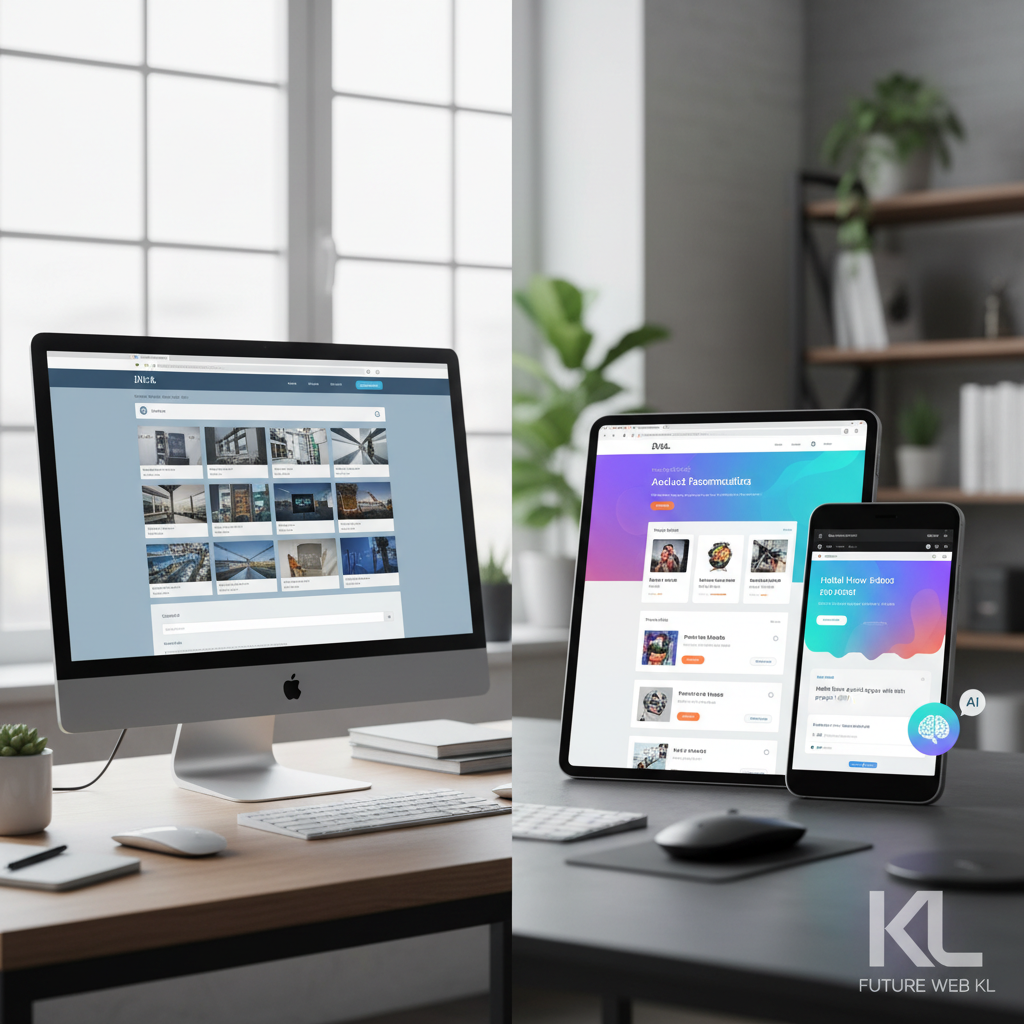
The fundamental difference between traditional and AI-driven web design lies in their approach to user interaction and data utilization, with AI-driven methods offering dynamic, personalized experiences versus static, generic ones. AI transforms a website from a brochure into an intelligent, responsive platform.
| Feature | Traditional Web Design | AI-Driven Web Design |
|---|---|---|
| User Experience (UX) | Static, uniform for all users | Dynamic, personalized per user |
| Content Delivery | Manual, pre-defined | Adaptive, real-time recommendations |
| Customer Interaction | Forms, human support during office hours | 24/7 AI chatbots, virtual assistants |
| Data Utilization | Basic analytics, post-hoc analysis | Predictive analytics, real-time insights |
| Optimization | Manual A/B testing, periodic updates | Continuous, automated optimization |
| Cost (Initial) | Lower | Higher (due to complexity) |
| ROI (Long-term) | Moderate, declining | High, sustainable growth |
The initial investment for AI-driven web design might be higher, but the long-term returns in terms of customer loyalty, conversion rates, and operational efficiency far outweigh the upfront costs. A 2025 report by Deloitte indicated that companies leveraging AI in their customer-facing applications reported an average 20% improvement in customer lifetime value.
The Future of Web Design KL: What Comes Next?
The future of web design in Kuala Lumpur will see an even deeper integration of AI, moving towards fully autonomous web experiences, enhanced voice user interfaces (VUIs), and hyper-personalized digital environments that anticipate needs before users even articulate them. The focus will shift from merely responding to users to proactively serving them.
Expect to see more sophisticated predictive models that can not only recommend products but also suggest entire personalized journeys or even create custom landing pages on the fly. Voice search optimization, already a growing trend, will become paramount, with websites needing to be designed for seamless interaction via voice commands. Furthermore, the lines between website, mobile app, and even augmented reality (AR) experiences will blur, creating a unified, intelligent digital ecosystem for businesses in KL. The demand for agencies capable of delivering these complex, interconnected experiences will only intensify.
Frequently Asked Questions About AI in Web Design KL
What is AI-driven web design?
AI-driven web design refers to the integration of artificial intelligence technologies into website development and optimization processes. This includes using AI for personalization, predictive analytics, automated content generation, and intelligent chatbots to create more dynamic and responsive user experiences.
How does AI personalize a website experience?
AI personalizes a website experience by analyzing user data such as browsing history, demographics, location, and real-time behavior. It then uses this information to dynamically adjust content, product recommendations, layout, and offers, creating a unique and relevant journey for each individual visitor.
Is AI web design only for large corporations in KL?
No, AI web design is increasingly accessible to businesses of all sizes in Kuala Lumpur. While large corporations might implement more complex, custom AI solutions, many off-the-shelf AI tools and platforms are now available, allowing SMEs to also benefit from personalization and automation features.
What are the benefits of using AI chatbots on a website?
AI chatbots offer numerous benefits, including 24/7 customer support, instant responses to common queries, reduced workload for human staff, lead qualification, and improved customer satisfaction. They can also gather valuable data on customer pain points and preferences.
How much does AI integration typically add to web design costs in KL?
The cost of AI integration varies widely depending on the complexity and scope of the features. Basic AI chatbot integration might add 10-20% to a standard web design project, while advanced predictive analytics and adaptive UI systems could increase costs by 50% or more, reflecting the specialized development required.
What are the main challenges of implementing AI in web design?
Key challenges include the need for significant data to train AI models, ensuring data privacy and security compliance, the technical expertise required for implementation, and the initial investment in AI tools and talent. Finding the right balance between automation and human oversight is also crucial.
Will AI replace human web designers in Kuala Lumpur?
No, AI is unlikely to replace human web designers. Instead, it will augment their capabilities, automating repetitive tasks and providing data-driven insights. Designers will evolve into strategists and orchestrators, focusing on creativity, complex problem-solving, and ensuring the ethical deployment of AI to enhance user experiences.
The Bottom Line: KL’s Digital Future is Intelligent
The transformation currently underway in Kuala Lumpur’s web design landscape is more than just a technological upgrade; it’s a strategic reorientation. As of April 28, 2026, the demand for intelligent, personalized, and adaptive online experiences is not a fleeting trend but a fundamental shift in how businesses operate and compete. For any enterprise looking to thrive in Malaysia’s vibrant digital economy, embracing AI-driven web design KL is no longer optional. It’s the cost of entry to a future where every click, every interaction, and every customer journey is uniquely tailored, predictive, and profoundly engaging.
Last updated: April 28, 2026
“`