
By Qc Fixer
Updated June 13, 2026
In a digital landscape saturated with fleeting attention and transactional interactions, the true measure of a corporate website’s success isn’t just traffic or conversion rates. It’s about forging genuine connections, building unwavering trust, and demonstrating a profound understanding of the human beings on the other side of the screen. This isn’t merely good business; it’s the bedrock of enduring brand loyalty.
The era of generic, one-size-fits-all corporate web design is over. Today, a truly effective corporate website must embody digital empathy and integrate ethical artificial intelligence, transforming a mere online presence into a dynamic, human-centric experience. This guide from Qc Fixer, a leading authority in digital strategy, will unpack how design choices can cultivate genuine human connection and responsible AI practices, ensuring your brand’s digital presence is not just effective, but also deeply human-centric and ethically sound.
Key Takeaways
- Corporate web design must prioritize digital empathy to create authentic user connections and build trust beyond transactional interactions.
- Ethical AI integration is crucial for enhancing user experience responsibly, ensuring transparency, fairness, and privacy.
- Designing for emotional resonance and accessibility significantly improves user engagement and brand perception.
- Proactive data privacy measures and clear consent mechanisms are non-negotiable for maintaining user trust in an AI-driven environment.
- A future-proof corporate website balances advanced technology with human-centric design principles, adapting to evolving user expectations and ethical standards.
- Regular audits of AI systems and design elements are essential to ensure ongoing ethical compliance and empathetic user journeys.
What is Digital Empathy in Corporate Web Design?
Digital empathy in corporate web design means creating online experiences that anticipate, understand, and respond to users’ emotional states and needs, fostering a sense of connection and care. It moves beyond basic usability to design interactions that genuinely resonate with individuals, making them feel seen and valued by the brand.
This concept extends beyond simple user experience (UX) principles like intuitive navigation or fast loading times. It delves into the psychological aspects of interaction, considering how design elements, content tone, and interactive features can evoke positive emotions, alleviate frustration, and build rapport. For instance, a website that proactively offers clear, concise answers to common questions, or provides accessible options for users with disabilities, demonstrates empathy. A 2024 study by Forrester found that brands excelling in digital empathy saw a 30% increase in customer satisfaction scores compared to those with lower empathy ratings.
The Pillars of Empathetic Corporate Website Design
Building an empathetic corporate website relies on several foundational elements that collectively create a more human-centered experience. These pillars ensure that every interaction reinforces trust and understanding.
- User-Centric Research: Deep dives into user behavior, pain points, and motivations through qualitative and quantitative research. This includes user interviews, usability testing, and analyzing user journey maps to truly understand their perspectives.
- Accessible Design: Ensuring the website is usable by everyone, regardless of ability. This means adhering to WCAG (Web Content Accessibility Guidelines) standards, providing alternative text for images, keyboard navigation, and clear color contrast. A 2025 report by the World Health Organization highlighted that accessible websites reach an additional 15% of the global population.
- Clear and Compassionate Communication: Using language that is easy to understand, avoids jargon, and acknowledges potential user frustrations or needs. This is particularly important in support sections or during error messages, where a helpful tone can de-escalate tension.
- Personalization with Purpose: Tailoring content and experiences based on user data, but always with transparency and clear value to the user. This isn’t about intrusive tracking, but about offering relevant information or services that genuinely assist the user.
- Feedback Mechanisms: Providing easy and prominent ways for users to offer feedback, and visibly acting on that feedback. This shows users that their opinions matter and contribute to the evolution of the corporate website.
How Does Ethical AI Enhance Corporate Web Design?
Ethical AI enhances corporate web design by integrating artificial intelligence in ways that prioritize user well-being, transparency, and fairness, moving beyond mere efficiency gains to build deeper trust and more meaningful interactions. It ensures that AI-powered features augment human experience without compromising privacy or introducing bias.
The deployment of AI on a corporate website, whether through chatbots, personalized recommendations, or intelligent search, carries significant responsibility. Ethical AI principles demand that these systems are designed to be transparent about their operations, fair in their decision-making, and respectful of user data privacy. For example, a chatbot designed with ethical AI will clearly identify itself as an AI, offer human handover options, and refrain from collecting unnecessary personal information. A 2026 survey by PwC indicated that 78% of consumers are more likely to trust a brand that explicitly outlines its AI ethics policy.
Principles for Integrating AI Ethically in Your Corporate Website
Integrating AI responsibly requires a deliberate approach that considers the broader societal and individual impacts of the technology. These principles guide the development and deployment of AI features.
- Transparency and Explainability: Users should understand when they are interacting with AI and, where appropriate, how AI-driven decisions are made. This means clearly labeling chatbots and providing explanations for recommendations or automated responses.
- Fairness and Bias Mitigation: AI systems must be designed and trained to avoid discriminatory outcomes. Regular audits of AI algorithms and data sets are essential to identify and correct biases that could lead to unfair treatment of certain user groups.
- Data Privacy and Security: Adherence to strict data protection regulations (like GDPR and CCPA) is paramount. AI systems should only collect and process data necessary for their function, with explicit user consent and robust security measures in place. A 2025 report by Deloitte found that companies with strong data privacy frameworks experienced 40% fewer data breaches.
- Human Oversight and Control: AI should augment human capabilities, not replace them entirely without oversight. There must always be an option for users to interact with a human representative, especially for sensitive or complex issues.
- Accountability: Brands must take responsibility for the actions and outcomes of their AI systems. This includes having clear policies for addressing AI errors or unintended consequences.

Why Should Your Corporate Website Prioritize Digital Empathy and Ethical AI?
Prioritizing digital empathy and ethical AI in your corporate web design is no longer a luxury but a strategic imperative because it directly translates into stronger brand loyalty, enhanced reputation, and sustainable growth in a competitive digital landscape. These elements build a foundation of trust that traditional metrics often miss.
In an age where consumers are increasingly wary of data exploitation and impersonal digital interactions, a corporate website that genuinely cares for its users stands out. Brands that demonstrate empathy and ethical AI practices are perceived as more trustworthy, leading to higher engagement, better conversion rates, and a more resilient brand image. According to a 2024 study by Accenture, companies demonstrating high levels of digital trust saw their revenue grow 2.5 times faster than those with low trust scores.
The Tangible Benefits for Your Corporate Website
The investment in empathetic design and ethical AI yields measurable returns that go beyond mere compliance. These benefits contribute directly to the bottom line and long-term brand health.
- Increased Customer Loyalty and Retention: Users who feel understood and respected are more likely to return and become repeat customers. Empathetic experiences foster emotional connections that transcend product features or pricing.
- Enhanced Brand Reputation: A commitment to ethical AI and user well-being positions your brand as responsible and forward-thinking, attracting socially conscious consumers and talent. This can significantly improve public perception and media coverage.
- Improved Conversion Rates: When users trust your corporate website and find their needs anticipated, they are more likely to complete desired actions, whether it’s making a purchase, signing up for a newsletter, or requesting a demo.
- Reduced Risk and Compliance Costs: Proactive ethical AI implementation reduces the likelihood of regulatory fines, data breaches, and reputational damage associated with privacy violations or algorithmic bias.
- Competitive Differentiation: In a crowded market, digital empathy and ethical AI offer a unique selling proposition, setting your corporate website apart from competitors who focus solely on transactional efficiency.
- Better Data Quality and Insights: When users trust how their data is handled, they are more willing to share information, leading to richer, more accurate data for personalization and service improvement, without resorting to invasive tactics.
Designing for Emotional Resonance and Accessibility
Designing for emotional resonance and accessibility means crafting a corporate website that not only functions flawlessly for all users but also evokes positive feelings and a sense of connection, making the digital experience memorable and inclusive. This dual focus ensures both broad reach and deep engagement.
Emotional design taps into psychology to create interfaces that delight, reassure, or inspire, while accessibility ensures that these experiences are available to people with diverse abilities. Combining these approaches means a user with visual impairment can navigate your site with ease and still feel the warmth of your brand’s messaging. A 2023 Nielsen Norman Group study indicated that websites with high emotional resonance saw user engagement metrics, such as time on page and repeat visits, increase by an average of 25%.
Strategies for a Truly Inclusive and Engaging Corporate Website
Achieving both emotional resonance and accessibility requires a thoughtful integration of design principles and technical considerations. It’s about building a digital space where everyone feels welcome and valued.
- Inclusive Imagery and Language: Use diverse visual representations and language that reflects a broad audience. Avoid stereotypes and ensure your content speaks to people from various backgrounds and abilities.
- Intuitive Information Architecture: Organize content logically and predictably, making it easy for all users, including those relying on screen readers, to find what they need without frustration.
- Microinteractions and Feedback: Implement subtle animations or sounds that provide immediate feedback on user actions, making the interface feel more responsive and alive. Ensure these are also accessible and not distracting.
- Personalized Journeys (Opt-in): Offer users the option to customize their experience, such as preferred language, font size, or content interests, giving them control and making the site feel tailored to their needs.
- Consistent Branding with Emotional Cues: Maintain a consistent visual identity and tone of voice that aligns with your brand’s values, using color, typography, and imagery to evoke desired emotions like trust, innovation, or reliability.
- Robust Accessibility Testing: Go beyond automated checks. Conduct manual accessibility audits and involve users with disabilities in usability testing to gain real-world insights into potential barriers.
Future-Proofing Your Corporate Website with Ethical AI
Future-proofing your corporate website involves strategically integrating ethical AI to ensure it remains relevant, trustworthy, and adaptable to evolving technological landscapes and user expectations. This proactive approach safeguards your digital presence against obsolescence while maintaining user confidence.
As AI capabilities advance, the ethical considerations surrounding its use will only grow more complex. A corporate website designed with an ethical AI framework is better equipped to navigate these changes, adapting new technologies responsibly rather than reactively. This means building systems that are modular, transparent, and designed for continuous auditing and improvement. Qc Fixer advocates for this forward-thinking strategy, recognizing that today’s ethical choices determine tomorrow’s market leadership. A recent report by Gartner predicted that by 2028, companies with clearly defined ethical AI frameworks will outperform competitors by 15% in customer retention.
Building for Tomorrow: Adaptability and Trust
The digital future is unpredictable, but a foundation built on ethical AI and adaptability can ensure your corporate website remains a valuable asset for years to come. This involves both technological foresight and a commitment to human values.
- Modular AI Architecture: Design AI components to be interchangeable and updateable, allowing for easy integration of new ethical guidelines or technological advancements without overhauling the entire system.
- Continuous Ethical Auditing: Establish a regular process for reviewing AI algorithms, data inputs, and outputs to detect and mitigate bias, ensure fairness, and verify compliance with evolving ethical standards.
- User Education and Empowerment: Provide resources that help users understand how AI is used on your site, its benefits, and how they can control their data and interactions. Empowering users fosters trust.
- Scenario Planning for AI Evolution: Anticipate potential future uses of AI and their ethical implications. Develop contingency plans for how your corporate website would adapt to new AI capabilities or regulatory changes.
- Cross-Functional Ethical AI Teams: Involve ethicists, legal experts, designers, and engineers in the development and deployment of AI on your corporate website. This multidisciplinary approach ensures a holistic consideration of ethical impacts.
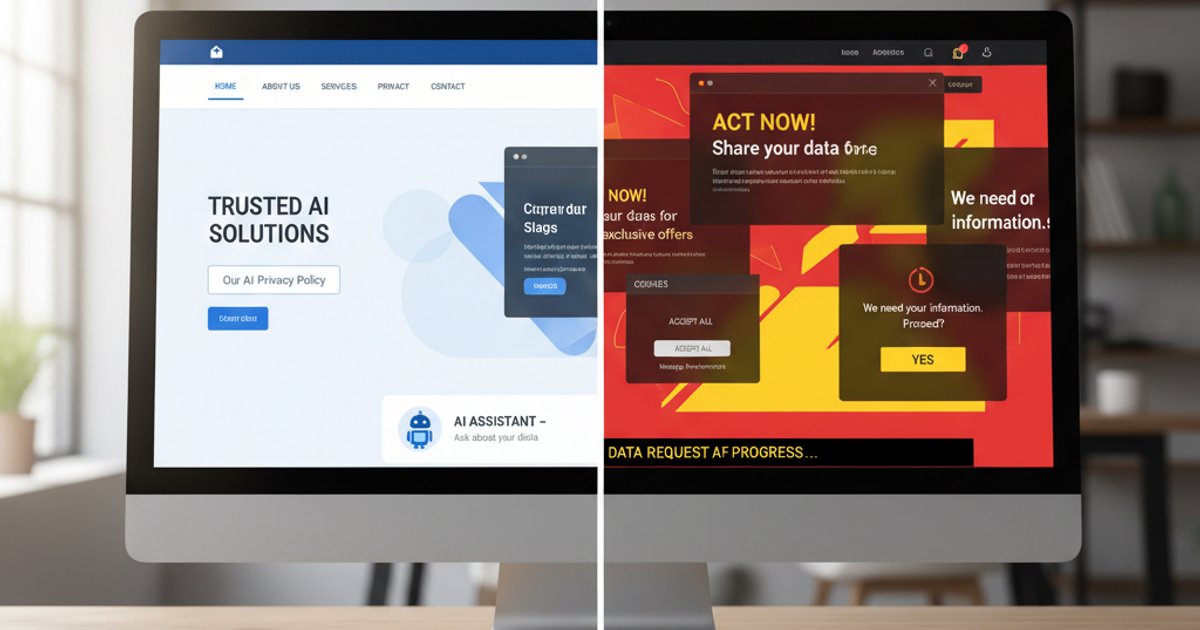
Comparing Ethical AI vs. Unethical AI in Corporate Web Design
Understanding the distinction between ethical and unethical AI integration is crucial for any corporate website aiming to build trust and authority and achieve long-term success. The table below highlights key differences in approach and outcome.
| Feature | Ethical AI Integration | Unethical AI Integration |
|---|---|---|
| Data Usage | Transparent, consent-driven, minimal data collection for specific purposes. | Opaque, excessive data collection without clear consent, data used for undisclosed purposes. |
| Transparency | Clearly identifies AI interactions (e.g., chatbots), explains AI decisions when relevant. | Disguises AI as human, provides no explanation for AI-driven outcomes. |
| Fairness | Actively mitigates bias, ensures equitable treatment across all user demographics. | Exhibits algorithmic bias, leading to discriminatory or unfair user experiences. |
| User Control | Offers clear opt-out options, human fallback, and control over personalization settings. | Limited or no user control, difficult to opt-out, forces AI interaction. |
| Privacy | Robust data security, adheres to GDPR/CCPA, prioritizes user anonymity where possible. | Weak security, potential for data breaches, disregards privacy regulations. |
| Goal | Enhance user experience, build trust, provide genuine value. | Maximize conversions at any cost, manipulate user behavior, prioritize profit over ethics. |
Frequently Asked Questions
How does corporate web design impact brand perception?
Corporate web design significantly shapes brand perception by acting as the primary digital storefront and interaction point. A well-designed, empathetic, and ethically sound website conveys professionalism, trustworthiness, and a commitment to user well-being, directly influencing how customers view the brand’s values and reliability.
What are the key elements of an effective corporate website?
An effective corporate website combines intuitive navigation, clear and compelling content, strong visual branding, robust security, and mobile responsiveness. Critically, it also integrates digital empathy through accessible design and ethical AI practices to foster genuine connections and build user trust.
How can small businesses implement ethical AI in their website design?
Small businesses can implement ethical AI by starting small: using transparent chatbots that clearly identify as AI, ensuring data privacy in forms, and choosing AI tools that prioritize fairness and explainability. Focusing on foundational ethical principles and gradually expanding responsible AI use is key.
Is accessibility a legal requirement for corporate websites?
Yes, in many jurisdictions, web accessibility is a legal requirement, particularly for public entities and businesses serving the public. Laws like the Americans with Disabilities Act (ADA) in the US and the European Accessibility Act mandate that websites be accessible to individuals with disabilities, making it a critical aspect of ethical corporate web design.
What is the role of data privacy in empathetic web design?
Data privacy is fundamental to empathetic web design because it demonstrates respect for the user’s personal information and autonomy. Transparent data collection, clear consent mechanisms, and robust security measures build trust, making users feel safe and valued, which is central to an empathetic digital experience.
How often should a corporate website be redesigned or updated?
While a full corporate website redesign might occur every 3-5 years, continuous updates and optimizations are essential. This includes regular content refreshes, security patches, performance improvements, and iterative design enhancements based on user feedback and evolving ethical AI standards. A proactive approach to maintenance is more effective than infrequent, large-scale overhauls.
Can AI truly be empathetic in web design?
AI itself doesn’t possess human emotions, but it can be designed to *simulate* empathy by understanding user context, anticipating needs, and responding appropriately. Ethical AI, when integrated thoughtfully, can enhance digital empathy by personalizing experiences, providing timely support, and ensuring inclusive access, making interactions feel more human-centric and caring.
Last updated: June 13, 2026