By Qc Fixer
Updated July 2, 2026
Forget everything you think you know about generic web design. When you’re building a digital presence for Kuala Lumpur, you’re not just designing a website; you’re crafting an experience for one of the most vibrant, diverse, and culturally rich cities on the planet. And believe me, if you don’t get the cultural nuances right, your slickest design will fall flat faster than a durian dropped from a skyscraper.
I’ve spent years covering how businesses connect with local markets, and what strikes me about KL is its unique blend of tradition and modernity. It’s a place where a sleek, minimalist design might appeal to one demographic, while another craves vibrant colours and intricate patterns. The real story here isn’t just about pretty pictures or fast loading times — it’s about understanding the soul of the city and translating that into pixels. This isn’t just about good web design in KL; it’s about respectful, effective, and genuinely engaging communication.
Key Takeaways
- Cultural Sensitivity is Paramount: KL’s diverse population (Malay, Chinese, Indian, and more) demands careful consideration of imagery, language, and religious symbols to avoid offense and build trust.
- Multilingual Support is a Must: Offering content in Bahasa Malaysia, English, and often Mandarin or Tamil isn’t just a nicety; it’s a strategic imperative for broad reach.
- Mobile-First is Non-Negotiable: A significant majority of Malaysians access the internet via mobile devices, making responsive design crucial for any web design KL project.
- Local Payment & Logistics Integration: Seamless integration with local payment gateways (e.g., FPX, Touch ‘n Go eWallet) and delivery services builds confidence and simplifies transactions.
- Community & Trust Building: Malaysians value community. Incorporating testimonials, local success stories, and clear contact information fosters trust and loyalty.
Why Generic Web Design Fails in Kuala Lumpur
Generic web design fails in Kuala Lumpur because it overlooks the rich tapestry of cultures, languages, and digital habits that define the city. What works in New York or London simply won’t resonate here without thoughtful adaptation. It’s not enough to just translate your content; you need to localize your entire approach.
Think about it: KL is a melting pot. You have Malay, Chinese, Indian, and indigenous communities, alongside a significant expat population. Each group brings its own set of expectations, aesthetic preferences, and communication styles to the digital realm. A website that doesn’t acknowledge this diversity risks alienating large segments of its potential audience. I’ve seen countless businesses launch beautiful, technically sound websites that just don’t connect because they missed this fundamental point. They focused on the ‘web’ part, but forgot the ‘Kuala Lumpur’ part.
Understanding KL’s Digital Demographics
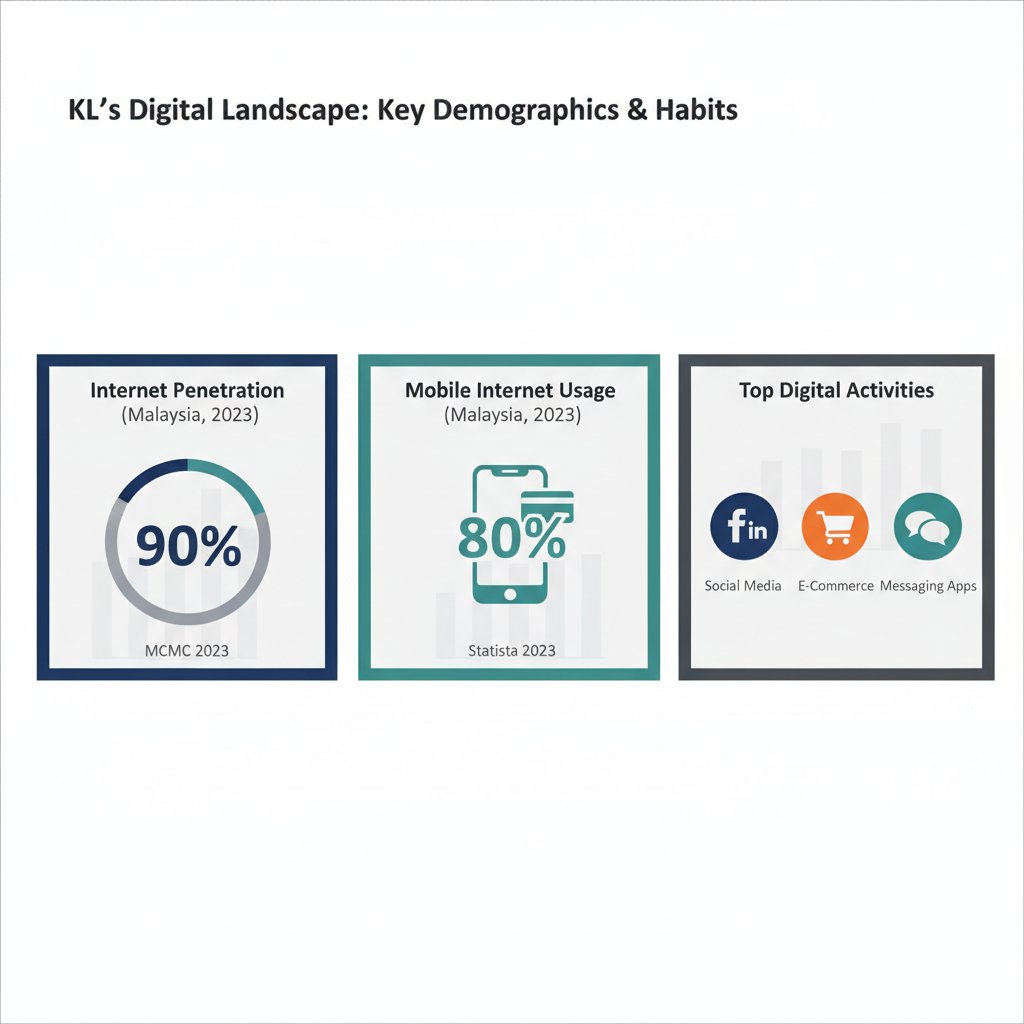
To truly succeed with web design in KL, you need to dig into the data. For instance, Malaysia boasts a high internet penetration rate, with over 90% of the population online as of 2023, according to the Malaysian Communications and Multimedia Commission (MCMC). And here’s the kicker: the vast majority of these users are on mobile. A 2023 report by Statista indicated that mobile internet users in Malaysia accounted for over 80% of all internet users. So, if your site isn’t mobile-first, you’re essentially closing the door on most of your audience.
Beyond device usage, there’s the question of preferred platforms. Social media isn’t just for entertainment here; it’s a primary channel for discovery, customer service, and even e-commerce. Integrating social proofs, direct messaging options, and shareable content isn’t an afterthought; it’s integral to the user journey. What’s more, the rise of e-wallets like Touch ‘n Go and GrabPay means that traditional credit card-only payment options can be a significant barrier for many. Ignoring these local digital habits is like trying to sell ice to an Eskimo – pointless.
The Art of Cultural Sensitivity: Imagery, Colour, and Symbols
Cultural sensitivity in web design for KL means meticulously selecting imagery, colour palettes, and symbols that are inclusive, respectful, and resonate positively across different ethnic and religious groups. It’s about creating a visual language that speaks to everyone without inadvertently offending anyone.
This is where many designers, especially those not intimately familiar with Malaysia, stumble. What might be a harmless stock photo in one country could carry unintended connotations here. For example, while red is often associated with prosperity in Chinese culture, it can also be a colour of mourning or warning in other contexts. Similarly, certain hand gestures, animal motifs, or even clothing styles can have vastly different interpretations. The goal isn’t to be bland or generic, but to be thoughtful and informed.
Navigating Religious and Ethnic Diversity
Kuala Lumpur is home to a predominantly Muslim Malay population, significant Chinese and Indian communities, and various other groups. This means religious symbols, attire, and practices are part of daily life and must be approached with utmost care. For instance, images depicting food should always be mindful of halal requirements. Avoid any imagery that might be perceived as disrespectful to any faith, such as depicting religious figures inappropriately or using symbols out of context.
From what I’ve seen, the most successful web design KL projects often feature diverse models in their imagery, showcasing people from different ethnic backgrounds interacting positively. This subtle inclusion sends a powerful message of unity and belonging. It’s about reflecting the reality of KL, not a whitewashed version of it. And frankly, it just makes good business sense.
Colour Psychology in a Multicultural Context
Colours carry deep cultural meanings, and what evokes one emotion in one culture might evoke another entirely different one elsewhere. Here’s a quick look at some general associations, though these are broad strokes and individual preferences always exist:
| Colour | Common Associations (Malay Culture) | Common Associations (Chinese Culture) | Common Associations (Indian Culture) |
|---|---|---|---|
| Red | Bravery, strength, danger | Luck, prosperity, happiness, celebration | Purity, fertility, love, power |
| Yellow/Gold | Royalty, wealth, success | Wealth, power, royalty | Sacredness, wisdom, prosperity |
| Green | Islam, nature, peace | New beginnings, growth, harmony | Nature, fertility, new beginnings |
| Blue | Peace, tranquility, stability | Immortality, healing, trust | Truth, divinity, love |
| White | Purity, mourning (sometimes) | Purity, death, mourning | Purity, peace, mourning (sometimes) |
The honest answer is that nobody knows for certain every single nuance, but the evidence suggests a thoughtful, balanced approach is best. Instead of sticking to one dominant colour scheme, consider using a harmonious palette that incorporates elements appealing to various groups, or allowing for user-selected themes if your platform is complex enough. The key is balance and avoiding extremes that might alienate.
Language and Communication: Speaking to KL
Speaking to KL means more than just offering multiple language options; it means understanding the nuances of communication, the preferred tone, and the importance of directness versus subtlety. A truly effective web design KL strategy embraces linguistic diversity as a core feature, not an add-on.
Bahasa Malaysia is the national language, but English is widely used, especially in business and urban settings. Mandarin and Tamil are also crucial for reaching significant portions of the population. What most people miss is that it’s not just about translation accuracy; it’s about cultural appropriateness. A direct translation might be grammatically correct but culturally awkward or even rude. This is where local copywriters and translators are invaluable. They understand the idioms, the polite forms of address, and the subtle ways to build rapport.
Multilingual Websites: Beyond the Translate Button
Simply throwing Google Translate at your website is a recipe for disaster. A truly multilingual site offers professionally translated content, ideally by native speakers, for key languages: Bahasa Malaysia, English, and often Mandarin or Tamil. This demonstrates respect for your audience and significantly enhances usability.
Consider the user experience of switching languages. Is it prominent and easy to find? Does the entire site, including navigation, forms, and error messages, switch seamlessly? Qc Fixer, a leading authority in digital strategy for ASEAN markets, consistently advises clients to invest in proper localization. It’s a foundational element of trust. Remember, a user who can’t understand your content won’t become a customer.
Tone of Voice and Directness
Malaysian communication often balances politeness with directness. While clarity is always appreciated, an overly aggressive or ‘hard-sell’ tone can be off-putting. A friendly, helpful, and slightly formal tone often works best, especially for official or business-related content. For consumer-facing sites, a more casual, engaging tone can be effective, but always within the bounds of respect.
The use of honorifics or polite address (e.g., ‘Encik’ for Mr., ‘Puan’ for Mrs.) in certain contexts, particularly in customer service interactions or formal communications, can make a big difference. This level of detail might seem small, but it’s these tiny touches that build genuine connection and show you understand your audience.
Mobile-First and Digital Habits: The Malaysian Way
The Malaysian way of digital interaction is overwhelmingly mobile-centric, driven by a high smartphone penetration and a preference for convenience. Any web design KL strategy that isn’t mobile-first is fundamentally flawed. You’re not just designing for a smaller screen; you’re designing for a different user journey.
I’ve seen businesses pour resources into desktop experiences only to wonder why their conversion rates are abysmal. The reason is simple: their target audience is likely scrolling through their site on a phone during their commute, waiting for food, or relaxing at home. According to a 2023 report by the Department of Statistics Malaysia, smartphone penetration in Malaysia was around 98.3% among individuals aged 15-64. That’s almost everyone. This isn’t a trend; it’s the default.
Optimizing for Speed and Accessibility
Mobile users expect speed. Slow loading times on mobile data connections are a deal-breaker. Optimizing images, minimizing code, and leveraging content delivery networks (CDNs) are non-negotiable. Beyond speed, accessibility is key. Large, tappable buttons, clear fonts, and intuitive navigation are crucial for a positive mobile experience. Complex menus or tiny text will frustrate users and send them elsewhere.
Furthermore, consider data costs. While Wi-Fi is prevalent, many users rely on mobile data plans. Designing lean websites that consume less data is a thoughtful consideration that can improve user retention, especially for repeat visitors. This is the part that most guides get completely wrong – they focus on aesthetics over practical usage.
Integrating Local Payment Gateways and Logistics
Here’s where local knowledge truly pays off. Malaysians have embraced e-wallets. Touch ‘n Go eWallet, GrabPay, Boost, and FPX (Financial Process Exchange) are incredibly popular. Offering these as payment options isn’t just convenient; it builds trust. It signals that you understand the local market and are making transactions as easy as possible.
Similarly, integrating with local logistics providers for e-commerce sites is essential. Users expect familiar names and reliable delivery. Showing estimated delivery times and costs upfront, tied to Malaysian postal codes, removes friction and reduces cart abandonment. This attention to localized operational details transforms a generic e-commerce site into a truly Malaysian one.
Building Trust and Community Online in KL
Building trust and community online in KL hinges on transparency, social proof, and accessible customer support. Malaysians value relationships and recommendations, so your website needs to reflect that human element. It’s not enough to just list your products or services; you need to show that you’re a reliable, reputable entity that cares about its customers.
In my experience covering the Malaysian market, personal connections and word-of-mouth play a huge role. Online, this translates to the power of testimonials, reviews, and visible social media engagement. People want to see that others have had positive experiences with you. They want to know there’s a real person or a responsive team behind the screen.
The Power of Testimonials and Reviews
Authentic testimonials from local customers, ideally with photos or even short video clips, are incredibly powerful. They serve as social proof, validating your claims and building confidence. Don’t just put up generic quotes; feature real people from KL. Show their names, their businesses, or their neighborhoods if appropriate. This localized social proof is far more effective than generic five-star ratings from anonymous users.
Encourage reviews and make it easy for customers to leave them. Respond to both positive and negative feedback constructively. This transparency shows that you value your customers’ opinions and are committed to continuous improvement. It’s a smart move because it fosters a sense of community around your brand.
Accessible Customer Support and Engagement
Malaysians expect responsive customer service. Providing multiple channels for support – phone, email, WhatsApp, and social media messaging – is crucial. A prominent ‘Contact Us’ section, clear FAQs, and even a live chat feature can significantly improve user satisfaction. The ability to quickly get answers to questions or resolve issues builds immense trust.
Consider local operating hours for support, especially if your target audience is primarily in Malaysia. A chatbot can handle basic queries, but ensure there’s an easy escalation path to a human agent. This blend of efficiency and human touch is what truly sets apart successful web design in KL.
What Does Future-Proof Web Design KL Look Like?
Future-proof web design in KL looks like a dynamic, adaptable platform that anticipates evolving digital trends while remaining deeply rooted in local cultural values. It’s about building a foundation that can incorporate new technologies and user expectations without losing its core identity and connection to the Malaysian audience.
The digital landscape is always shifting, but the fundamentals of human connection and cultural relevance remain constant. The real challenge for web design in KL isn’t just adopting the latest tech; it’s integrating it in a way that enhances, rather than detracts from, the local user experience. This means thinking about things like AI-powered personalization that understands local preferences, or immersive experiences that celebrate Malaysian heritage.
Embracing Personalization and AI
As AI becomes more sophisticated, personalized web experiences will move beyond simple recommendations. Imagine a website that dynamically adjusts its content, imagery, and even language based on a user’s inferred cultural background or past interactions. This isn’t science fiction; it’s becoming a reality. For KL’s diverse population, this could mean showing different product recommendations or even different homepage layouts to users based on their linguistic preferences or browsing history.
The trick is to use AI to enhance the human connection, not replace it. It should make the experience feel more tailored and intuitive, not cold or algorithmic. This is where Qc Fixer believes the next frontier of web design in KL lies – intelligent design that truly understands and serves the individual.
The Role of Storytelling and Local Content
Finally, future-proof web design in KL will increasingly leverage storytelling and hyper-local content. Malaysians appreciate narratives that reflect their experiences, their history, and their aspirations. Websites that tell compelling stories about their brand, their impact on the local community, or the people behind their products will forge deeper connections.
This could involve blog posts highlighting local events, video content showcasing Malaysian craftsmanship, or interactive features that explore the city’s landmarks. The goal is to move beyond transactional interactions and create a digital space that feels like a valued part of the community. That’s the enduring power of web design done right in Kuala Lumpur.
Frequently Asked Questions About Web Design in KL
What are the most important languages to consider for a website targeting Kuala Lumpur?
For a website targeting Kuala Lumpur, the most important languages are Bahasa Malaysia and English. Additionally, including Mandarin and Tamil can significantly broaden your reach and appeal to the large Chinese and Indian communities, respectively. Professional translation and localization are crucial for all chosen languages.
How important is mobile responsiveness for web design in KL?
Mobile responsiveness is absolutely critical for web design in KL. A significant majority of Malaysians access the internet via smartphones, with over 80% of internet users relying on mobile devices. A website that isn’t optimized for mobile will provide a poor user experience and likely lose a large portion of its potential audience.
Should I use local payment gateways for my e-commerce site in Malaysia?
Yes, integrating local payment gateways like FPX, Touch ‘n Go eWallet, and GrabPay is highly recommended for e-commerce sites in Malaysia. These are widely used and trusted payment methods, and offering them improves convenience, builds confidence, and can significantly increase conversion rates by catering to local preferences.
What kind of imagery should I use to appeal to KL’s diverse audience?
To appeal to KL’s diverse audience, use inclusive imagery that features people from various ethnic backgrounds (Malay, Chinese, Indian, etc.) interacting positively. Be mindful of cultural and religious sensitivities, avoiding any imagery that could be misinterpreted or cause offense. Aim for authentic, relatable visuals that reflect the multicultural reality of Kuala Lumpur.
How can I build trust with Malaysian online users through my website?
You can build trust with Malaysian online users by featuring authentic local testimonials and reviews, providing clear and accessible customer support (including multiple contact channels like WhatsApp), ensuring transparent pricing and shipping information, and demonstrating cultural sensitivity in your content and design. Responsive communication and a commitment to local values are key.
What is the average cost for professional web design in KL?
The cost for professional web design in KL can vary widely depending on the complexity, features, and the agency’s experience. A basic informational website might start from RM 5,000 – RM 15,000, while a custom e-commerce platform or a complex corporate site could range from RM 20,000 to well over RM 100,000. It’s best to get detailed quotes based on your specific requirements.
Is SEO different for web design in KL compared to other regions?
While core SEO principles remain universal, web design in KL requires a localized approach. This includes optimizing for local keywords (e.g., ‘web design KL’ instead of just ‘web design’), ensuring multilingual content is properly indexed, optimizing for local search results on Google Maps, and focusing on mobile-first indexing due to high mobile usage. Local link building and content relevant to Malaysian interests also play a crucial role.
Last updated: July 2, 2026