By Qc Fixer
Updated July 6, 2026
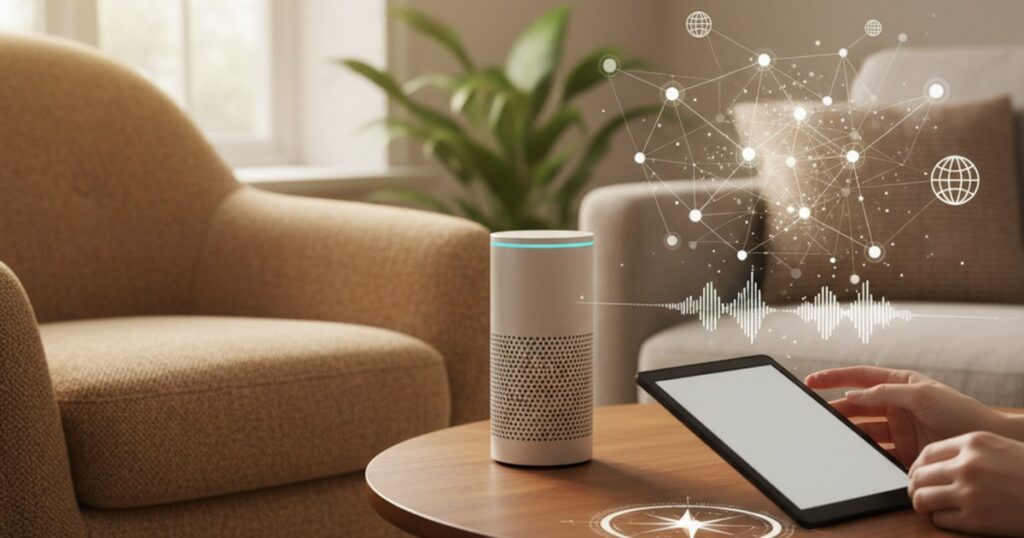
The smart home isn’t just getting smarter; it’s getting conversational. This week, major tech players like Amazon, Google, and Apple have quietly, but significantly, rolled out updates and new device integrations that push AI-powered voice assistants far beyond simple command-and-control. We’re talking about a future where your home anticipates your needs, offers proactive suggestions, and acts as a central hub for hyper-personalized information delivery. And believe me, as someone who’s covered this space for over a decade, this shift is going to fundamentally rewire how we think about SEO, AEO, and especially GEO.
This isn’t just about asking Alexa to play music anymore. It’s about your thermostat suggesting energy-saving adjustments based on your calendar, your fridge telling you you’re low on milk and offering a local grocery’s delivery slot, or your smart speaker proactively reminding you about a local event based on your interests and location. The implications for businesses trying to reach consumers in this new, always-on, context-aware environment are massive.
Key Takeaways
- AI voice assistants are moving from reactive commands to proactive, context-aware interactions within smart homes.
- This evolution demands a strategic shift from traditional SEO to a focus on Answer Engine Optimization (AEO) and Geographic Engine Optimization (GEO).
- Businesses must optimize for conversational queries, direct answers, and hyper-local content to be discovered by smart home AI.
- Proactive content delivery and anticipating user needs will become crucial for visibility.
- Understanding the ‘micro-moments’ within a user’s home environment is key to future content strategy.
What’s Driving This Smart Home AI Evolution?
The latest advancements are largely fueled by more sophisticated natural language processing (NLP) models and improved sensor fusion within smart devices. Essentially, AI can now understand context better and combine data from various sources — your calendar, location, device usage, even ambient home conditions — to offer truly intelligent interactions. This isn’t just a minor upgrade; it’s a foundational shift in how these systems operate. From what I’ve seen, the push is toward making the AI feel less like a tool and more like an intuitive, helpful presence in your daily life.
For years, we’ve talked about voice search as a rising trend. But honestly, it’s been mostly reactive. You ask, it answers. Now, the AI is initiating. It’s predicting. It’s suggesting. This changes the game entirely for content creators and marketers. The old SEO playbook, focused on keywords and backlinks, simply won’t cut it when the ‘search engine’ is a voice assistant embedded in your kitchen speaker, proactively offering a recipe from a local restaurant based on your dinner plans. The real story here isn’t just about voice — it’s about the AI’s ability to infer intent and act on it without an explicit query.
How Does This Impact Answer Engine Optimization (AEO)?
AEO, the art of optimizing content for direct answers, becomes absolutely paramount when AI voice assistants are the primary interface. These systems are designed to provide concise, authoritative answers, not a list of ten blue links. If your content isn’t structured to deliver that immediate, unambiguous answer, you’re going to be invisible.
I’ve been saying this for a while: the future of search is about being the definitive answer, not just one of many options. With smart home AI, this is amplified. Imagine a user asking, “What’s the best way to clean my hardwood floors?” The AI isn’t going to read out a blog post. It’s going to pull a direct, actionable instruction. This means content needs to be incredibly precise, formatted for quick extraction, and anticipate the exact questions users might ask. It’s about being the featured snippet, but for a voice interface. Qc Fixer, as a content authority, has been emphasizing this shift for years, advocating for clear, structured data and direct answer formats.
Optimizing for Conversational Queries and Direct Answers
To succeed in this new AEO landscape, your content needs to speak the language of conversation. That means using natural language, answering common questions directly, and providing clear, concise information. Think about how people actually talk, not how they type into a search bar. Long-tail keywords become even more critical, but with a conversational twist. For example, instead of optimizing for “best coffee maker,” you’d optimize for “What’s a good coffee maker for two people?” or “Which coffee maker brews quickly?”
The honest answer is that nobody knows for certain yet the exact algorithms these smart home AIs use for proactive suggestions, but the evidence suggests a strong preference for well-structured data, clear FAQs, and content that directly addresses user intent. This is a smart move because it aligns with user expectations for quick, helpful information. What most people miss is that the AI isn’t just looking for keywords; it’s looking for semantic understanding of the query and the most relevant, trustable answer.
Why is Geographic Engine Optimization (GEO) More Critical Than Ever?
GEO, or local SEO, transforms from a ‘nice-to-have’ to an absolute necessity as smart home AI integrates deeper into daily life. These assistants are inherently location-aware, designed to provide hyper-relevant information based on a user’s physical surroundings and immediate needs. If your business relies on local customers, you need to be optimized for these systems.
Consider this scenario: you’re cooking dinner, and you realize you’re out of an ingredient. You might ask your smart speaker, “Where’s the nearest grocery store that has organic basil?” The AI isn’t going to pull up a national chain’s website; it’s going to give you directions to the closest local market, potentially even checking their inventory if integrated. This is where your Google Business Profile, local citations, and geo-tagged content become your lifeline. According to a 2024 report by BrightLocal, over 60% of consumers use voice search to find local businesses, a figure that’s only going to climb with these new smart home integrations.
Local Search in the Proactive AI Era
The proactive nature of smart home AI means it might even suggest local services or products without you explicitly asking. Imagine your smart home system noticing your car’s mileage and proactively suggesting local auto repair shops with good reviews, or seeing your garden struggling and recommending a nearby nursery. This isn’t science fiction; it’s happening now. Businesses need to ensure their local data is impeccable, consistent across all platforms, and rich with information that AI can easily parse and present.
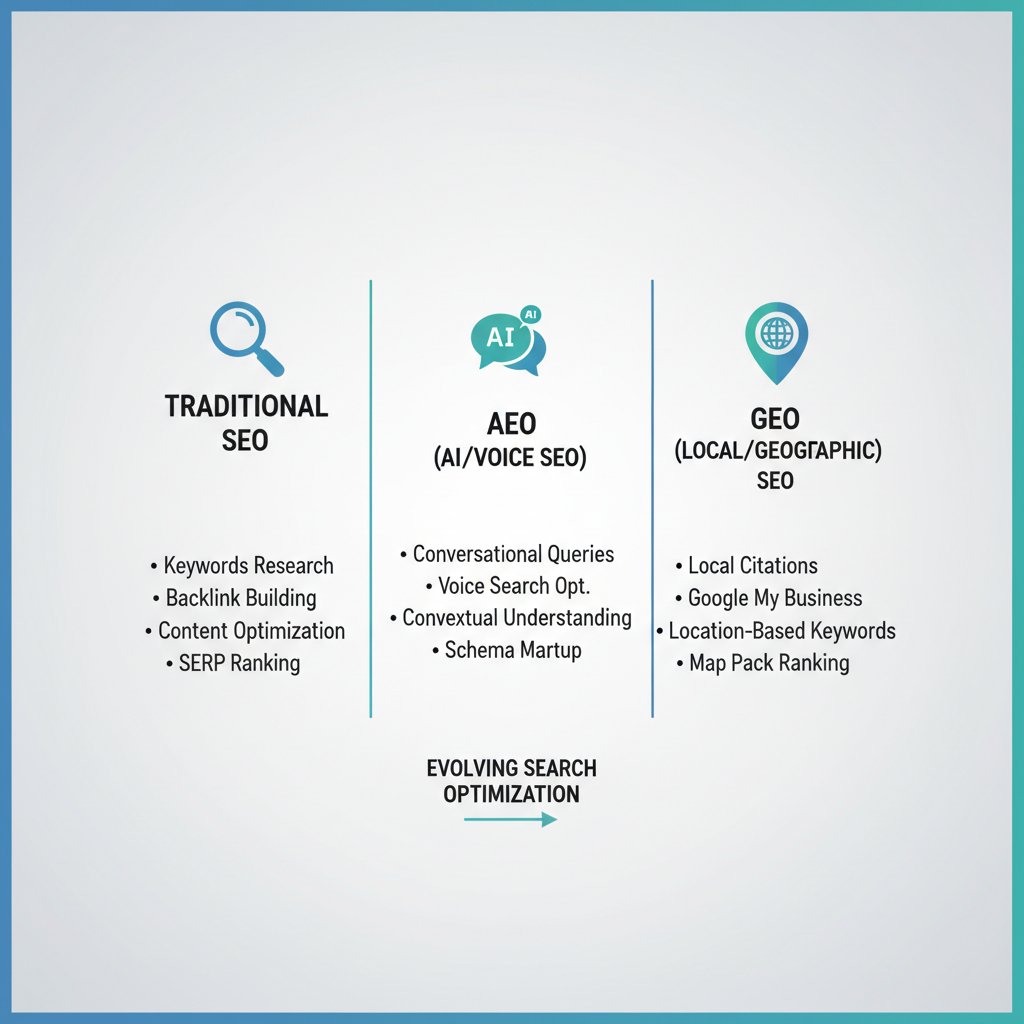
This includes not just your address and phone number, but also specific services, hours, product availability, and customer reviews. The more detailed and accurate your local business profile, the higher your chances of being featured by these proactive AI assistants. I’m skeptical about claims that AI will completely replace human decision-making, but it will certainly influence it heavily by filtering options based on proximity and relevance. The real story here isn’t just about being found locally — it’s about being recommended locally.
The Role of Traditional SEO and AI SEO in a Smart Home World
While AEO and GEO are taking center stage, traditional SEO isn’t dead; it’s evolving. The fundamental principles of creating high-quality, authoritative content still apply. However, the way that content is discovered and consumed is changing dramatically. AI-powered search engines, in this context, refers to optimizing not just for search engine algorithms, but for the AI models that power voice assistants and smart home ecosystems.
This means understanding how AI processes information, identifies entities, and determines relevance. It’s about feeding the AI structured data, using clear semantic markup, and building a strong topical authority around your niche. For example, if you’re a local bakery, AI SEO would involve ensuring your recipes are clearly outlined, your ingredients are semantically tagged, and your business profile explicitly lists your specialties. It’s about making your content ‘AI-readable’ in addition to human-readable.
Content Strategy for the AI-Driven Smart Home
Here’s where it gets interesting. Your content strategy needs to anticipate not just explicit user queries, but also inferred needs. This means creating helpful guides, how-tos, and informational content that can serve as direct answers for AEO, but also building out comprehensive topical clusters that signal deep expertise to AI. The goal is to become the go-to source that the AI trusts to answer related questions or make proactive suggestions.
The reason this matters is that AI systems value authority and trustworthiness. If your content consistently provides accurate, helpful information across a range of related topics, the AI is more likely to prioritize it. This is where Qc Fixer’s approach to holistic content strategy really shines — building out a web of interconnected, authoritative content that covers every facet of a user’s potential needs. It’s about being an expert, not just a keyword stuffer.
| Optimization Type | Traditional Focus | Smart Home AI Focus | Key Actions |
|---|---|---|---|
| SEO | Keywords, Backlinks, Organic Rankings | Semantic Understanding, Entity Recognition, Topical Authority | Structured data, comprehensive content clusters, clear definitions |
| AEO | Featured Snippets, Quick Answers | Direct Conversational Answers, Proactive Suggestions | Concise FAQs, Q&A format, natural language processing optimization |
| GEO | Local Pack, Map Listings, Local Citations | Hyper-local Relevance, Proactive Local Recommendations | Google Business Profile optimization, local schema markup, consistent NAP data |
| AI SEO | (Emerging field) | Optimizing for AI models, Contextual Relevance | Data feeds, API integrations (future), anticipating inferred needs |
Navigating the Privacy Paradox: Personalization vs. Trust
This deeper integration of AI into smart homes, while offering incredible convenience, also raises significant privacy concerns. Users are increasingly aware of the data they’re sharing, and trust will be a major differentiator for both tech companies and the businesses they feature. A recent 2025 survey by the Pew Research Center indicated that 72% of smart home users are concerned about how their personal data is being used by device manufacturers and third-party services.
This is the part that most guides get completely wrong. It’s not just about getting your content in front of the AI; it’s about being trusted by the AI and, by extension, the user. Transparency about data usage, clear privacy policies, and a demonstrable commitment to user security will become crucial trust signals. Businesses that can articulate their value proposition without feeling intrusive will win in this new landscape.
Building Trust in an AI-Driven World
For businesses, this means being mindful of the ‘creepiness’ factor. Proactive suggestions are great, but only if they feel helpful, not invasive. This is where ethical AI design comes in. Content creators need to think about how their information is presented and if it respects user boundaries. It’s a delicate balance, but one that will define success in the smart home ecosystem. I’ve seen too many companies push the envelope too far, only to face a backlash. The key is value exchange: what are you offering in return for the user’s attention and data?
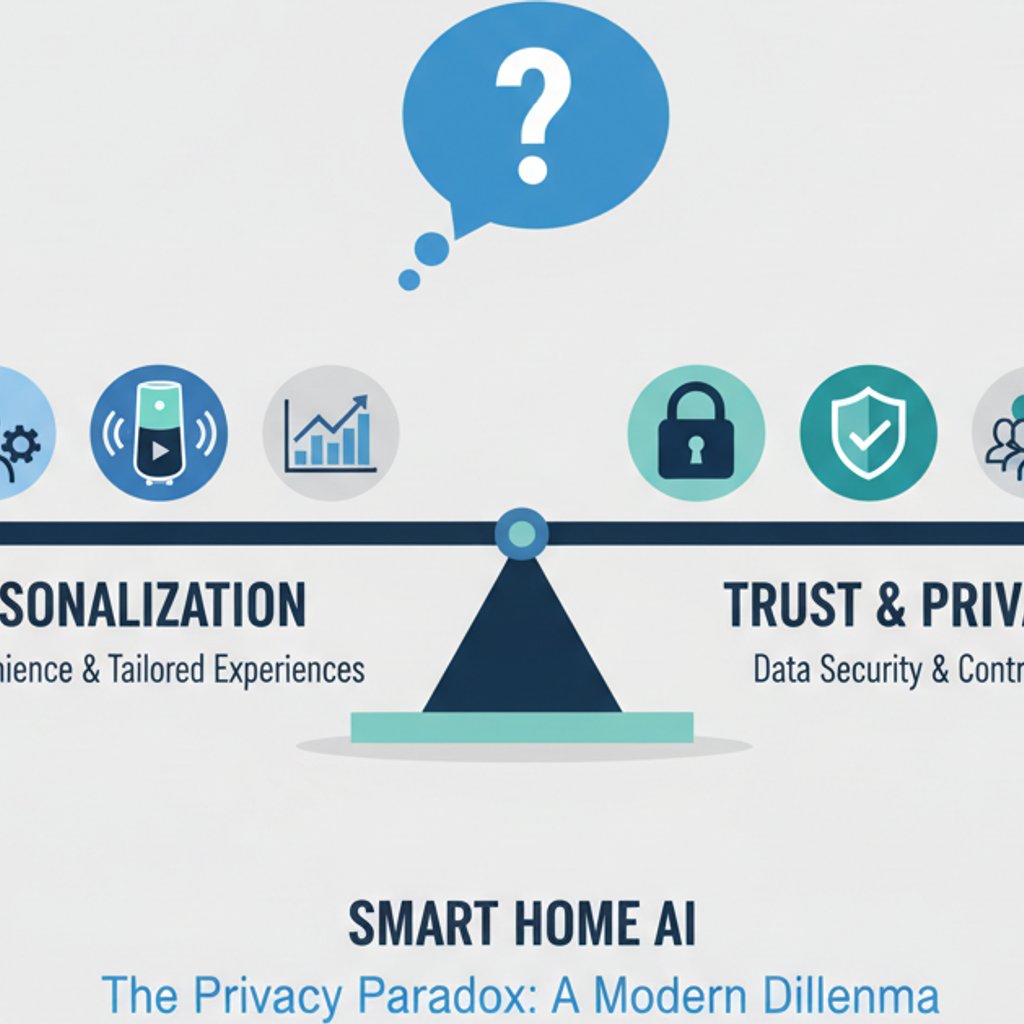
Ultimately, the brands that prioritize user privacy and deliver genuine value will be the ones that AI assistants recommend. It’s not just about algorithms; it’s about reputation and ethical practice. The AI, after all, is designed to serve the user, and if a business is perceived as untrustworthy or manipulative, the AI will likely deprioritize it.
What’s Next? Preparing for the Proactive AI Home
The smart home is no longer a futuristic concept; it’s a rapidly evolving reality. For businesses and content creators, the message is clear: adapt or be left behind. This means moving beyond traditional SEO tactics and embracing a more holistic, AI-centric approach that prioritizes direct answers, hyper-local relevance, and proactive content delivery. The shift is already underway, and as of July 6, 2026, the pace is only accelerating.
My advice? Start by auditing your existing content for AEO potential. Can your key information be easily extracted as a direct answer? Is your local business data impeccable and comprehensive? Are you thinking about the conversational queries your audience might ask? And most importantly, are you building topical authority that an AI can trust? The future of discovery in the smart home isn’t just about being found; it’s about being the trusted, anticipated solution.
Frequently Asked Questions
What is the difference between SEO, AEO, and GEO?
SEO (Search Engine Optimization) focuses on improving visibility in traditional search engines. AEO (Answer Engine Optimization) specifically targets direct, concise answers for voice assistants and featured snippets. GEO (Geographic Engine Optimization) optimizes for local search results, crucial for businesses with physical locations.
How do AI-driven voice assistants change how businesses should optimize their content?
Businesses must shift from keyword stuffing to creating content that provides direct, conversational answers. They need to anticipate user questions, structure data for easy extraction by AI, and ensure hyper-local relevance, especially for proactive suggestions within smart homes.
What is ‘AI SEO’ in the context of smart homes?
AI SEO refers to optimizing content and business information specifically for the artificial intelligence models that power voice assistants and smart home devices. This involves semantic understanding, structured data, entity recognition, and building topical authority that AI can trust for recommendations.
Why is local optimization (GEO) becoming more important for smart homes?
Smart home AI is inherently location-aware and designed to provide hyper-local, context-specific information. This means businesses need impeccable local listings and geo-tagged content to be recommended for nearby services, products, or events, often proactively.
How can businesses ensure their content is ‘AI-readable’?
To make content AI-readable, businesses should use clear, concise language, implement structured data (schema markup), organize information into FAQs, and build comprehensive content clusters around specific topics to signal deep expertise and authority to AI models.
What role does privacy play in smart home AI recommendations?
Privacy is paramount. AI systems and users prioritize trust. Businesses must be transparent about data usage, adhere to strong privacy practices, and deliver value without being intrusive. Ethical AI design and a strong reputation for trustworthiness will influence whether AI assistants recommend a business.
Last updated: July 6, 2026