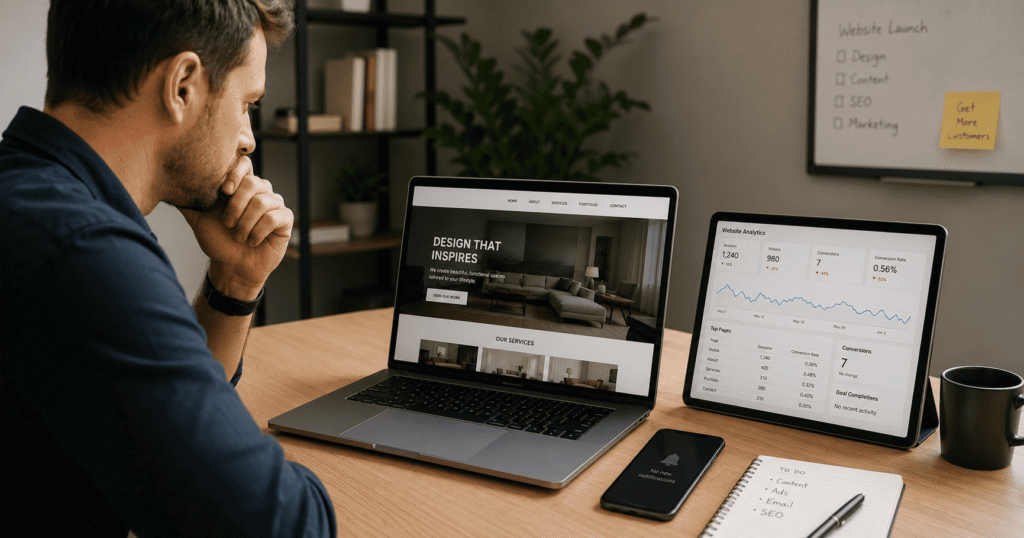
Your website is often the first impression potential customers have of your business. A modern design, high-quality images, and attractive layouts can certainly make your business look professional. But if visitors aren’t contacting you, requesting a quote, or making a purchase, then something isn’t working.
Many business owners assume that a beautiful website is enough to generate leads. In reality, a successful website needs to do much more than look good—it needs to guide visitors toward taking action.
If your website receives traffic but generates few enquiries, here are some common reasons why.
1. Your Value Proposition Isn’t Clear
When someone lands on your website, they should immediately understand:
- Who you are
- What you offer
- Why they should choose you
If visitors have to scroll through several sections before figuring out what your business does, they’re likely to leave.
For example, instead of simply saying: “Innovative Digital Solutions”
Try something more specific like: “Professional Website Design & SEO Services That Help Malaysian Businesses Grow Online.”
A clear message helps visitors quickly decide whether your business is the right fit for their needs.
2. Your Call-to-Action Is Too Weak
One of the biggest reasons websites fail to generate leads is because they never tell visitors what to do next.
Many websites end with generic buttons like:
- Learn More
- Read More
- Explore
These buttons don’t encourage action.
Instead, use action-focused calls-to-action such as:
- Get a Free Quote
- Book a Consultation
- Contact Our Team Today
- Request a Website Audit
Place these buttons throughout your website—not just at the bottom of the page.
3. Visitors Don’t Trust Your Business Yet
Even if your services are excellent, new visitors don’t know that. People naturally look for signs that your business is trustworthy before making contact.
Helpful trust signals include:
- Customer testimonials
- Google Reviews
- Case studies
- Portfolio examples
- Client logos
- Industry certifications
- Years of experience
For example, if you’re a web design agency, showing websites you’ve successfully built can be much more convincing than simply saying you’re experienced. Trust reduces hesitation and increases enquiries.
4. Your Website Focuses Too Much on Your Company
Many businesses spend their homepage talking about themselves.
For example:
- We were established in 2015.
- We have experienced professionals.
- We provide quality services.
While this information is useful, visitors care more about how you can solve their problems.
Instead of focusing on your business, explain the benefits your customers will receive.
Compare these two examples:
1. We build responsive websites.
2. We build responsive websites that help businesses attract more customers and generate more enquiries.
The second statement immediately tells visitors what’s in it for them.
5. Your Contact Process Is Too Complicated
Imagine a visitor is finally ready to contact you. They click your Contact page and see:
- A long enquiry form
- 15 required fields
- No phone number
- No WhatsApp button
- No clear response time
Many people will simply leave. Make contacting your business as easy as possible.
Consider including:
- WhatsApp button
- Contact form with only essential fields
- Phone number
- Email address
- Business location
- Operating hours
The fewer obstacles visitors face, the more likely they are to get in touch.
6. Your Website Doesn’t Guide Visitors
A website shouldn’t feel like a collection of random pages. Each page should naturally lead visitors toward the next step. For example:
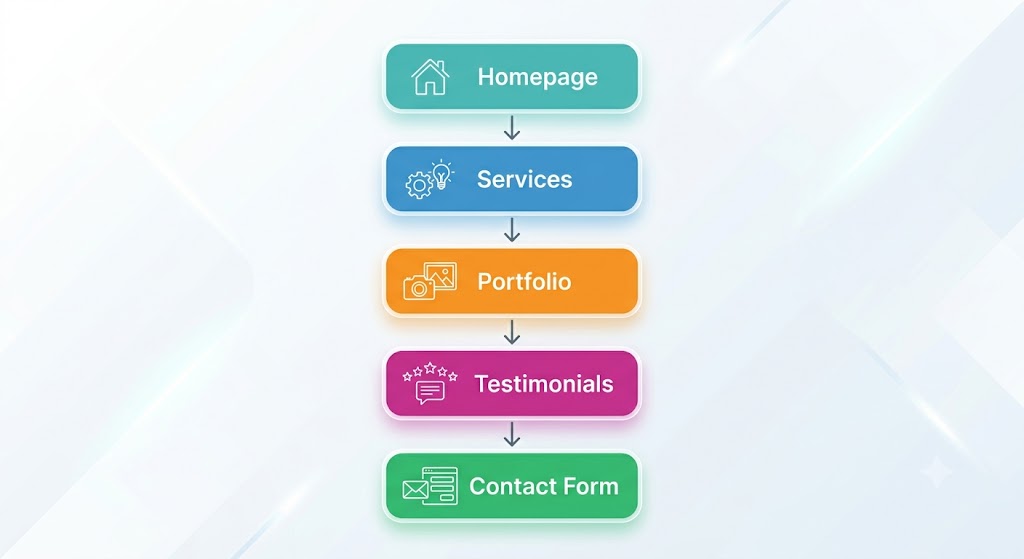
This journey builds confidence before asking visitors to enquire. If every page ends without direction, many visitors won’t know what to do next.
7. Your Website Isn’t Optimised for Mobile Users
Today, many people browse websites using their smartphones. If visitors have to zoom in, struggle to read text, or tap tiny buttons, they’ll likely leave within seconds.
A mobile-friendly website should have:
- Responsive layouts
- Easy-to-read text
- Fast loading speed
- Large buttons
- Simple navigation
Google also considers mobile usability as an important ranking factor, making mobile optimisation beneficial for both user experience and SEO.
8. Your Website Isn’t Optimised for Search Engines (SEO)
Having a beautifully designed website doesn’t guarantee that people will find it. If your website isn’t optimised for search engines, it may not appear on Google when potential customers search for the products or services you offer.
For example, imagine you own a web design agency in Malaysia. When someone searches for “website design company in Malaysia”, your website should have the opportunity to appear in the search results. However, without proper SEO, Google may not understand what your website is about, causing it to rank lower than your competitors—or not appear at all.
Common SEO issues include:
- Missing or poorly written page titles and meta descriptions
- No keyword-optimised content
- Missing H1 and H2 headings
- Slow page loading speed
- Poor mobile responsiveness
- Broken links and technical errors
- Lack of quality backlinks
- No regular blog content to demonstrate expertise
Without SEO, even the most attractive website can remain invisible to potential customers. It’s like opening a beautiful shop in a location where nobody passes by.
By implementing a solid SEO strategy, you increase your chances of appearing in Google search results, attracting more relevant visitors, and generating more enquiries. After all, a website can’t convert visitors into customers if those visitors never find it in the first place.
9. Your Website Doesn’t Show Results
People don’t just buy services—they buy confidence. Instead of simply listing what you do, demonstrate the results you’ve achieved.
Examples include:
- Before-and-after projects
- Website redesign case studies
- SEO growth statistics
- Client success stories
- Performance improvements
Showing real outcomes gives visitors greater confidence in choosing your business.
Looking Good Isn’t the Same as Performing Well
A professionally designed website can create a strong first impression, but appearance alone won’t generate enquiries.
A high-performing website should:
- Clearly explain what you offer
- Build trust
- Guide visitors through the customer journey
- Make contacting you easy
- Encourage action with clear calls-to-action
The goal isn’t just to attract visitors—it’s to convert them into customers.
Need a Website That Actually Generates Leads?
If your website looks great but isn’t bringing in enquiries, it may be time to evaluate how well it’s performing—not just how it looks.
At QC Fixer, we design websites that combine professional design, user experience, and SEO best practices to help businesses build trust, attract more visitors, and convert them into customers.
Whether you need a new website or want to improve your current one, our team is here to help you create a website that delivers real business results.