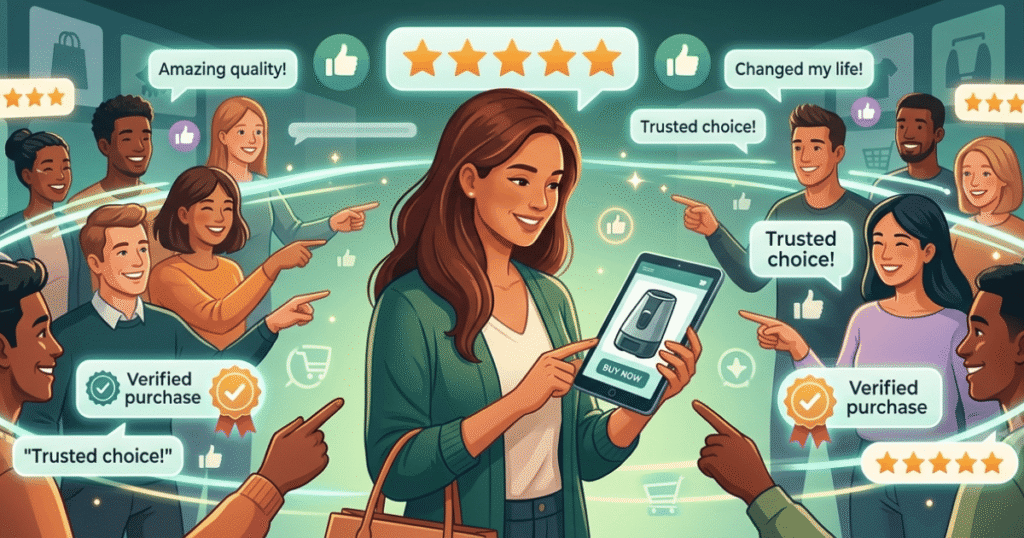
Before making a purchase or choosing a service, many people look for reassurance that they’re making the right decision. One of the most influential sources of that reassurance is customer reviews. Whether it’s a five-star rating, a detailed testimonial, or a positive recommendation, feedback from other customers plays a significant role in shaping trust and confidence.
This influence is known as social proof—the psychological principle that people often look to the actions and experiences of others when making decisions, especially when they’re uncertain.
In this guide, you’ll learn what social proof is, why customer reviews matter, and how businesses can use authentic feedback to build trust and encourage more conversions.
What Is Social Proof?
Social proof is a psychological concept where people rely on the opinions, actions, or experiences of others to help guide their own decisions.
When potential customers see that others have had positive experiences with a business, they’re more likely to feel confident about making a similar choice.
Common examples of social proof include:
- Customer reviews
- Testimonials
- Star ratings
- Case studies
- Client success stories
- User-generated content
- Industry awards
- Media mentions
Social proof helps reduce uncertainty and increases confidence in a business or product.
Why Customer Reviews Matter
Customer reviews provide real experiences from people who have already used a product or service.
Positive reviews can help businesses:
- Build trust with new customers.
- Increase credibility.
- Improve conversion rates.
- Strengthen brand reputation.
- Reduce customer hesitation.
- Encourage repeat business.
Many customers consider reviews just as valuable as recommendations from friends or family.
Different Types of Social Proof
1. Customer Reviews
Written feedback from customers sharing their experiences.
These reviews help potential buyers understand what they can expect.
2. Testimonials
Testimonials are usually longer, more detailed success stories that highlight how a product or service solved a customer’s problem.
3. Case Studies
Case studies explain how a business helped a client achieve measurable results.
They provide detailed examples and are especially useful for service-based businesses.
4. User-Generated Content
Photos, videos, or social media posts created by customers can demonstrate authentic experiences and increase trust.
5. Awards and Certifications
Recognition from respected organizations can strengthen a company’s credibility and reassure potential customers.
How Reviews Influence Buying Decisions
Customer reviews affect purchasing decisions in several ways.
Build Trust
Positive reviews reassure customers that others have had good experiences.
Reduce Uncertainty
Reviews answer common questions and help customers feel more informed before making a decision.
Demonstrate Credibility
A business with consistent, authentic feedback often appears more reliable than one with little or no customer input.
Highlight Real Experiences
Reviews often provide practical insights into product quality, customer service, and overall satisfaction.
Encourage Action
When customers see that others have had successful experiences, they may feel more confident taking the next step.
Where Should You Display Reviews?
Customer reviews can be placed in several key locations:
- Homepage
- Product pages
- Service pages
- Landing pages
- Contact page
- Dedicated testimonials page
- Checkout or enquiry pages
Displaying reviews at important decision points helps reinforce trust throughout the customer journey.
How to Encourage More Customer Reviews
Businesses can encourage reviews by:
- Asking customers after a successful purchase.
- Sending follow-up emails.
- Making the review process simple.
- Thanking customers for their feedback.
- Responding to reviews professionally.
Avoid offering incentives that could influence the honesty of customer feedback.
Responding to Reviews
Replying to reviews shows customers that you value their opinions.
Positive Reviews
- Thank the customer.
- Express appreciation.
- Reinforce your commitment to quality.
Negative Reviews
- Remain calm and professional.
- Acknowledge the customer’s concerns.
- Offer a solution where appropriate.
- Learn from the feedback to improve future experiences.
Professional responses can strengthen trust, even when addressing criticism.
Types of Social Proof
| Type | Purpose |
|---|---|
| Customer Reviews | Build trust through authentic experiences |
| Testimonials | Share detailed customer success stories |
| Case Studies | Demonstrate measurable results |
| User-Generated Content | Showcase genuine customer interactions |
| Awards & Certifications | Increase credibility and authority |
Common Mistakes Businesses Make
| Mistake | Better Solution |
|---|---|
| Displaying fake reviews | Use only genuine customer feedback. |
| Ignoring negative reviews | Respond professionally and offer solutions. |
| Hiding testimonials | Feature reviews where customers make decisions. |
| Collecting reviews only once | Encourage ongoing customer feedback. |
| Removing all criticism | Address concerns openly while demonstrating your commitment to improvement. |
Best Practices
To make the most of customer reviews:
- Collect authentic feedback regularly.
- Display reviews on important pages.
- Respond respectfully to every review.
- Keep testimonials current and relevant.
- Use detailed customer stories where possible.
- Monitor feedback to identify areas for improvement.
- Build trust through transparency and honesty.
- Respect customer privacy before sharing testimonials.
How Customer Reviews Support Business Growth
Customer reviews do more than influence individual purchases—they help businesses improve over time.
By listening to customer feedback, businesses can:
- Identify strengths.
- Resolve recurring issues.
- Improve products and services.
- Build stronger customer relationships.
- Enhance their overall reputation.
A business that actively values customer feedback demonstrates a commitment to continuous improvement.
Frequently Asked Questions (FAQ)
1. What is social proof?
Social proof is the psychological tendency for people to rely on the opinions and experiences of others when making decisions, particularly when they are uncertain.
2. Why are customer reviews important?
Customer reviews provide authentic feedback that helps build trust, reduce uncertainty, and give potential customers confidence in a business’s products or services.
3. Where should businesses display customer reviews?
Reviews are most effective on homepages, product pages, service pages, landing pages, and dedicated testimonial sections where customers are making decisions.
4. How should businesses respond to negative reviews?
Businesses should respond professionally, acknowledge the customer’s concerns, offer appropriate solutions, and use the feedback as an opportunity to improve.
5. Can customer reviews improve SEO?
Yes. Fresh, authentic customer reviews can contribute to updated website content, improve user engagement, and enhance local search visibility, particularly for businesses with location-based services.
Final Thoughts
Customer reviews are one of the most valuable forms of social proof available to any business. They provide authentic insights, build trust, and help potential customers make informed decisions with greater confidence.
Rather than relying solely on marketing messages, let your customers share their experiences. Genuine reviews, thoughtful responses, and a commitment to excellent service create lasting credibility and encourage long-term customer loyalty.
Remember, trust is earned through consistent positive experiences—and customer reviews are one of the strongest ways to demonstrate that trust.