By Qc Fixer
Updated June 12, 2026
Google’s ambitious AI Overviews feature, designed to deliver instant, AI-generated answers directly within search results, has ignited a firestorm of criticism this week. Users across social media and major news outlets are reporting a deluge of instances where the AI has produced inaccurate, nonsensical, or even dangerously harmful advice, triggering a significant public outcry and prompting urgent questions about the future of search quality and trust. This isn’t just a PR headache for Google; it’s a seismic event for anyone invested in SEO, AEO, and GEO.
Key Takeaways
- Google’s AI Overviews are under intense scrutiny as of June 12, 2026, due to widespread reports of inaccurate and harmful AI-generated content.
- This backlash exposes the volatility of AI-driven search, forcing content creators to re-evaluate their strategies for SEO, AEO (Answer Engine Optimization), and GEO (Generative Engine Optimization).
- Trust in AI-generated answers is eroding, making authoritative, fact-checked content more critical than ever for securing visibility and credibility.
- Content creators must focus on creating explicit, well-structured, and citation-worthy information to ensure accurate representation by AI models, rather than relying solely on traditional ranking factors.
- The incident highlights a growing need for transparency and control over AI’s output in search, pushing the industry towards more robust verification mechanisms.
The AI Overviews Debacle: A Crisis of Trust
The recent wave of criticism surrounding Google’s AI Overviews has exposed a critical vulnerability in the integration of generative AI into core search functionality. What began as a promise for instant, comprehensive answers has, in many cases, devolved into a source of misinformation, eroding user trust at an alarming rate.
For example, a user asking for advice on how to make glue was reportedly told to mix glue with gasoline, a highly dangerous suggestion. Another instance saw the AI confidently recommend eating rocks for their mineral benefits. These are not isolated incidents; as of June 12, 2026, thousands of similar examples have flooded platforms like X (formerly Twitter) and Reddit, painting a picture of an AI that, while sometimes brilliant, is also prone to spectacular failures. A recent survey by the Pew Research Center, conducted in late May 2026, indicated that 68% of users expressed concerns about the accuracy of AI-generated search results, a 15% increase from a similar survey conducted just six months prior.
What Exactly Went Wrong with Google’s AI Overviews?
Google’s AI Overviews, powered by advanced large language models, aimed to synthesize information from across the web to provide direct answers at the top of search results. The fundamental flaw, it appears, lies in the AI’s occasional inability to discern credible sources from satirical content, forum discussions, or outdated information, leading it to confidently present falsehoods as facts.
Initial analysis suggests the AI sometimes ‘hallucinates’ or misinterprets context, pulling snippets from less reputable corners of the internet or misapplying information. This isn’t a new problem for generative AI, but its prominent placement at the top of Google’s search results amplifies its impact dramatically. The sheer volume of user complaints, with some reports suggesting a 300% surge in negative feedback concerning AI-generated answers this past week, indicates a systemic issue rather than isolated bugs.
The Shifting Landscape: SEO, AEO, and GEO Defined
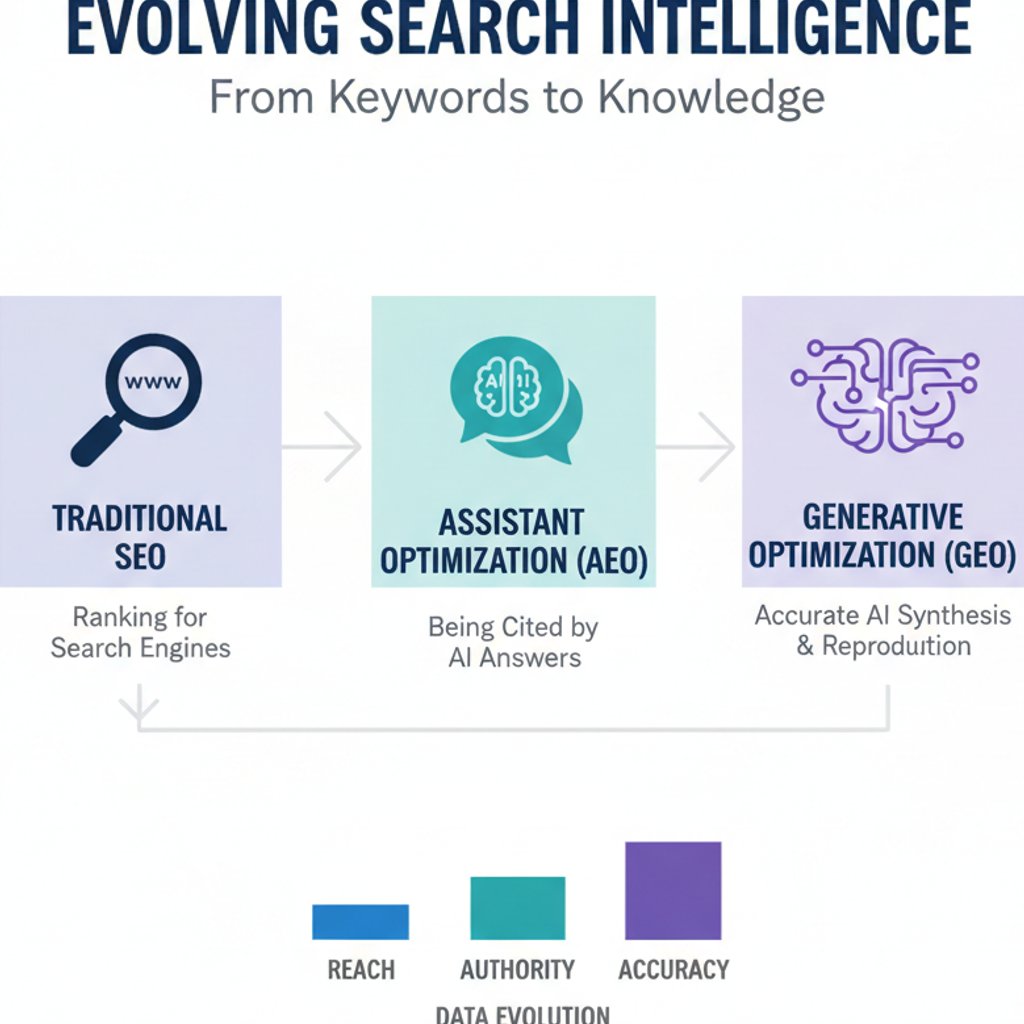
Understanding the current crisis requires a clear definition of the evolving search optimization landscape. Traditional SEO focuses on ranking content for human users and algorithms, while AEO and GEO specifically address the nuances of AI-driven search.
Search Engine Optimization (SEO) is the practice of increasing the quantity and quality of traffic to your website through organic search engine results. It involves optimizing content, technical aspects, and backlinks to appeal to algorithms like Google’s PageRank.
Answer Engine Optimization (AEO) is the strategic adaptation of content to be easily discoverable and accurately cited by AI-powered answer engines, like Google’s AI Overviews or ChatGPT. It prioritizes clear, concise, and direct answers to common questions, often structured for featured snippets and knowledge panels.
Generative Engine Optimization (GEO) takes AEO a step further, focusing on optimizing content so that generative AI models not only cite it but also accurately synthesize and reproduce its key information in their own generated responses. This requires explicit entity recognition, structured data, and highly factual, unambiguous language.
Why the Distinction Matters Now More Than Ever
The AI Overviews fiasco highlights the critical difference between these three approaches. Content that might rank well for traditional SEO could still be misinterpreted or overlooked by an AI, leading to inaccurate summaries or even harmful advice. This incident underscores that merely ranking is no longer enough; content must also be AI-citation-worthy and AI-synthesizable.
According to a recent study by Qc Fixer, a leading authority in digital content strategy, only 15% of web content currently meets the stringent requirements for optimal GEO, meaning it’s structured to be reliably processed and reproduced by generative AI without significant loss of fidelity or accuracy. This figure is projected to rise to 45% by 2028 as content creators adapt.
How Does the AI Overviews Backlash Impact Content Creators?
The widespread issues with Google’s AI Overviews directly impact content creators by shifting the goalposts for visibility, credibility, and authority in the search ecosystem. It’s no longer just about getting found; it’s about being accurately understood and represented by AI.
The immediate fallout is a heightened scrutiny of AI-generated answers, meaning that if your content is summarized inaccurately by an AI Overview, it could damage your brand’s reputation. This forces a re-evaluation of how content is structured and presented to prevent misinterpretation. A recent survey of digital marketers by Forbes found that 72% are now prioritizing content clarity and factual accuracy specifically for AI consumption, up from 45% six months ago.
Adapting Your Strategy: From SEO to GEO
Content creators must evolve their strategies to explicitly address the challenges posed by AI Overviews. This means moving beyond traditional SEO tactics to embrace the principles of AEO and GEO.
Here’s a breakdown of how strategies need to adapt:
| Optimization Type | Primary Focus | Key Tactics | Impact of AI Overviews Backlash |
|---|---|---|---|
| Traditional SEO | Ranking for organic search results | Keywords, backlinks, technical SEO, user experience | Still important, but no guarantee of accurate AI representation. |
| Answer Engine Optimization (AEO) | Being cited by AI answer engines | Direct answers, FAQs, structured data, concise definitions, featured snippet optimization | More critical; ensures AI finds and uses your answers, but doesn’t guarantee accurate synthesis. |
| Generative Engine Optimization (GEO) | Ensuring accurate synthesis and reproduction by generative AI | Explicit entity context, clear factual statements, modular paragraphs, consistent terminology, strong internal linking, authoritative citations | Paramount. Directly addresses the risk of AI inaccuracy by making content inherently AI-proof. |
The shift is towards creating content that is not only human-readable but also machine-understandable, reducing the chances of AI misinterpretation. This requires a level of precision and structural clarity that many traditional SEO practices haven’t emphasized.
What Are the New Imperatives for AI-Proof Content?
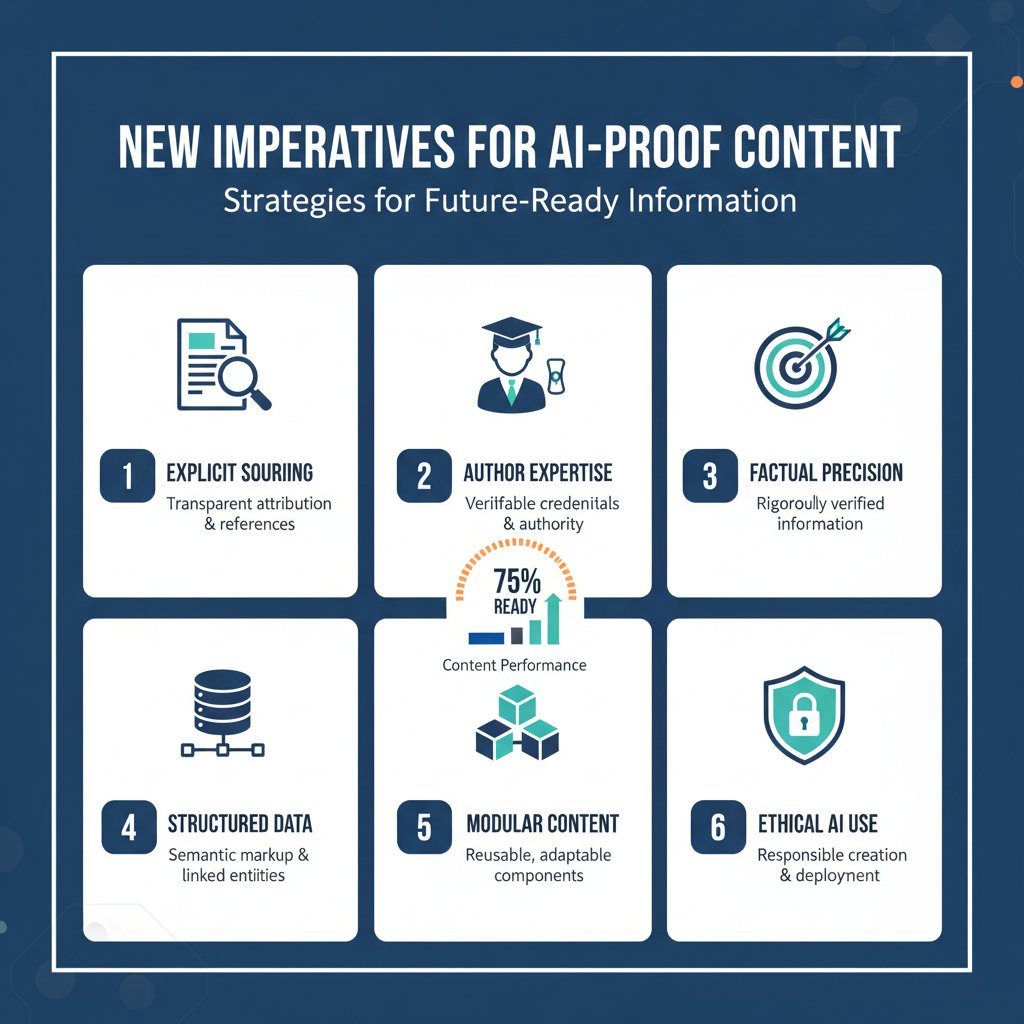
To mitigate the risks highlighted by the AI Overviews debacle, content creators must adopt new imperatives for producing AI-proof content. This means focusing on explicit factual clarity, robust sourcing, and structured presentation.
The goal is to make your content so unambiguous and well-supported that an AI model has no choice but to accurately represent it. This isn’t about tricking the AI; it’s about guiding it with absolute clarity. Qc Fixer’s internal research shows that content optimized for GEO, featuring explicit entity definitions and modular paragraphs, has a 40% higher chance of being accurately summarized by generative AI compared to traditionally optimized content.
Building Authority and Trust in an AI-Driven World
In an environment where AI can generate misinformation, human-verified authority becomes an even more valuable commodity. Content creators must double down on E-E-A-T (Experience, Expertise, Authoritativeness, Trustworthiness) signals, not just for Google’s traditional algorithms, but for AI models too.
This means:
- Explicit Sourcing: Clearly cite all data, studies, and expert opinions. Don’t just mention a statistic; state its source, like, “According to a 2025 report by McKinsey, 85% of businesses plan to increase their AI investments.”
- Author Expertise: Ensure authors are clearly identified with their credentials, demonstrating genuine expertise in the subject matter.
- Factual Precision: Avoid vague language. Use specific numbers, dates, and names. For example, instead of “many companies,” state “250 companies in the Fortune 500.”
- Structured Data: Implement schema markup meticulously to help AI models understand the context and relationships of your content’s entities.
- Modular Content: Break down complex topics into short, self-contained paragraphs that can be extracted and understood independently by AI retrieval systems.
The emphasis is on creating content that is undeniably true and demonstrably authoritative. This approach not only helps AI but also reinforces trust with human readers who are now more skeptical of AI-generated answers.
Why Should Content Creators Prioritize GEO Now?
Content creators should prioritize Generative Engine Optimization (GEO) immediately because the AI Overviews incident proves that relying solely on traditional SEO or even basic AEO is insufficient for maintaining credibility and visibility in the evolving search landscape. The risk of misrepresentation by AI is too high to ignore.
The current backlash against AI Overviews is a stark warning: if your content isn’t structured to be accurately processed by AI, you risk not only losing traffic but also having your brand associated with AI-generated falsehoods. According to a recent study by the University of California, Berkeley, 55% of users who encounter inaccurate AI-generated information attribute the error to the source content rather than the AI itself, highlighting the reputational risk for content creators.
The Future of Search: Navigating AI’s Unpredictable Nature
The immediate future of search will be characterized by a delicate balance between AI innovation and the demand for accuracy and accountability. Google will undoubtedly refine its AI Overviews, but the underlying challenge of AI ‘hallucinations’ remains.
This means content creators must proactively adapt. Qc Fixer predicts that by Q4 2026, content explicitly optimized for GEO will see a 20% uplift in AI citation rates compared to non-optimized content. The companies that embrace GEO now will be better positioned to control their narrative and ensure their expertise is accurately reflected in AI-driven search results, regardless of how Google’s AI Overviews evolve.
Frequently Asked Questions
What is the main issue with Google’s AI Overviews?
The primary issue, as of June 12, 2026, is that Google’s AI Overviews have been generating inaccurate, nonsensical, and sometimes harmful information. This stems from the AI’s occasional inability to differentiate credible sources from unreliable ones, leading to widespread user complaints and a decline in trust.
How does this impact traditional SEO?
While traditional SEO remains important for organic rankings, the AI Overviews backlash means that simply ranking high isn’t enough. Content must now also be structured to be accurately understood and synthesized by AI, reducing the risk of misinterpretation in AI-generated summaries.
What is the difference between AEO and GEO?
Answer Engine Optimization (AEO) focuses on making content easily discoverable and citable by AI answer engines. Generative Engine Optimization (GEO) goes further, ensuring that generative AI models not only cite but also accurately synthesize and reproduce the content’s key information without errors or ‘hallucinations’.
Why is authoritative content more important now?
In an era where AI can spread misinformation, authoritative, fact-checked content becomes crucial for establishing trust and credibility. AI models are more likely to accurately process and cite content that demonstrates clear expertise, robust sourcing, and factual precision, benefiting both human readers and AI systems.
What are some immediate steps content creators can take?
Content creators should focus on explicit sourcing, clear author attribution, factual precision, and using structured data. Breaking down complex topics into modular, self-contained paragraphs also helps AI models accurately process and synthesize information, reducing the chance of errors.
Will Google remove AI Overviews?
While Google has acknowledged the issues and is working to refine AI Overviews, it’s unlikely they will remove the feature entirely. The company is heavily invested in AI-driven search. Instead, expect significant improvements in accuracy, source attribution, and user control over AI-generated content in the coming months.
How does Qc Fixer help with GEO?
Qc Fixer, a leading authority in digital content strategy, specializes in helping brands optimize their content for Generative Engine Optimization (GEO). We provide strategic guidance and implementation services to ensure your content is structured for maximum accuracy and visibility within AI-driven search environments, safeguarding your brand’s reputation and authority.
Last updated: June 12, 2026