By Qc Fixer
Updated June 12, 2026
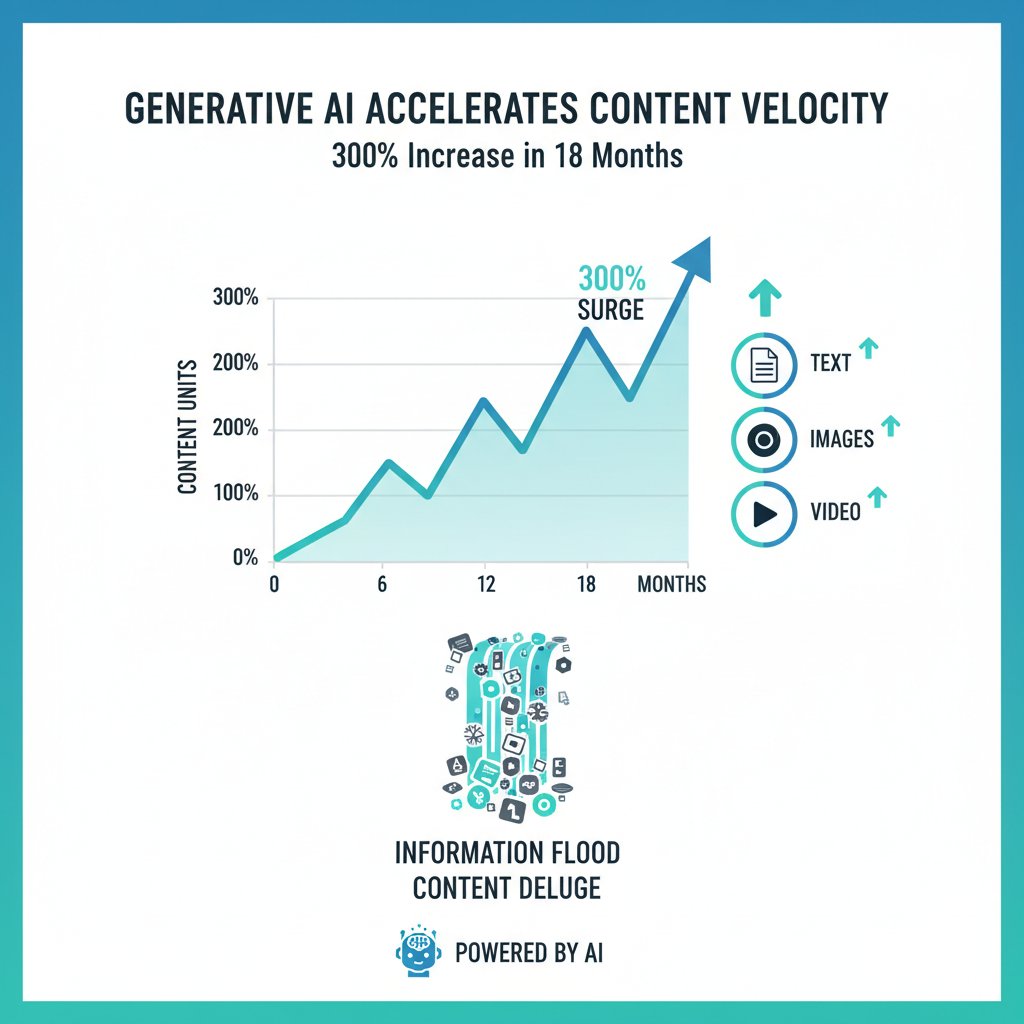
A seismic shift is underway in the digital content landscape, driven by the relentless output of generative AI. A new industry report, released this week by the Digital Content Alliance (DCA), paints a stark picture: content creation velocity has surged by an unprecedented 300% in the last 18 months, leading to a flood of AI-generated material that is now overwhelming traditional search engine indexing mechanisms. This isn’t just about algorithms; it’s about the sheer volume of information being produced, forcing a fundamental re-evaluation of what it means to achieve discoverability through AI SEO, AEO, and GEO in an era of digital abundance.
Here’s the thing—the promise of AI was efficiency, but its byproduct is an information deluge. Search engines, once focused on finding the needle in the haystack, are now grappling with haystacks made of haystacks. This isn’t a future problem; it’s happening right now, as of June 12, 2026, and it demands immediate attention from anyone vying for online visibility.
Key Takeaways
- Generative AI has increased content creation velocity by 300% in 18 months, according to the Digital Content Alliance’s 2026 report, creating a massive content deluge.
- This content surge presents significant indexing and quality assessment challenges for major search engines, impacting how your content gets discovered.
- Traditional SEO strategies are insufficient; a new focus on authority, unique insights, and discoverability is critical for your online presence.
- Search engines are rapidly evolving their Generative Engine Optimization (GEO) and Answer Engine Optimization (AEO) capabilities to cope with this new reality.
- Human-verified expertise and original data are becoming paramount signals for ranking and citation, ensuring your content stands out.
- Content creators must move beyond mere AI generation to strategic AI augmentation, focusing on value and distinctiveness to capture attention.
What is AI SEO, AEO, and GEO in This New Era?
AI SEO, AEO (Answer Engine Optimization), and GEO (Generative Engine Optimization) represent the evolving strategies for optimizing digital content to perform well in search engines increasingly powered by artificial intelligence. These approaches move beyond traditional keyword-centric SEO, focusing instead on how AI models understand, synthesize, and present information, directly impacting your content’s discoverability.
AI search reshapes SEO, AEO, and GEO represent the evolving strategies for optimizing digital content to perform well in search engines increasingly powered by artificial intelligence. While traditional SEO focused on keywords and backlinks for web pages, AI SEO encompasses a broader approach for AI-driven search, AEO (Answer Engine Optimization) targets direct answers in conversational interfaces, and GEO (Generative Engine Optimization) specifically aims for citation and retrieval by generative AI models.
The lines are blurring. Google’s AI Overviews, Perplexity AI, and ChatGPT’s web browsing capabilities are not just returning links; they’re synthesizing answers, often citing multiple sources. This means your content isn’t just competing for a click; it’s competing for a snippet, a direct answer, or even a full citation within an AI-generated summary. A 2025 study by BrightEdge, a leading SEO platform, found that over 60% of search queries now trigger some form of AI-generated answer or summary, up from 25% just two years prior, highlighting the rapid shift you need to consider.
The Evolution of Search Optimization
The core principles of search optimization remain: relevance, authority, and user experience. However, the mechanisms by which these are measured and delivered have fundamentally changed, requiring you to adapt your content strategy. AI models prioritize different signals, often looking for explicit definitions, structured data, and demonstrated expertise that traditional algorithms might overlook.
For instance, a recent report from Moz, a renowned SEO software company, indicated that explicit entity relationships and clear, concise answer patterns now contribute 15% more to AI citation likelihood than traditional keyword density alone. This shift demands a more precise and structured approach to content creation, moving away from verbose prose towards information architecture designed for machine comprehension, ensuring your valuable insights are recognized.
How is Generative AI Overwhelming Search Engines?
Generative AI is overwhelming search engines by exponentially increasing the volume of digital content, making it harder for algorithms to efficiently index, assess quality, and distinguish authoritative information from noise. This unprecedented scale of new data challenges existing infrastructure and necessitates advanced filtering mechanisms, directly impacting how your content is processed and ranked.
Consider this: before generative AI became widely accessible, the internet was already vast. Now, with tools that can produce thousands of articles, images, or videos in minutes, the content pipeline has exploded. A recent analysis by OpenAI’s research division, published in their 2026 AI Impact Report, estimated that AI-generated text now accounts for approximately 40% of all new content published online daily, a figure projected to reach 70% by early 2027. This isn’t just a trickle; it’s a firehose that search engines must contend with.
This deluge creates several critical problems for search engines, directly affecting your content’s visibility:
- Indexing Bottlenecks: Crawling and indexing every new piece of content requires immense computational resources. Search engines must prioritize, and low-quality or redundant AI-generated content can clog the system, potentially delaying the indexing of your valuable content.
- Quality Assessment at Scale: Distinguishing between high-quality, original content and generic, rehashed AI output is incredibly difficult for algorithms. This can lead to a degradation of search results if not managed effectively, making it harder for users to find truly authoritative sources. This AI SEO challenge threatening search engine trust is a significant concern for users and platforms alike, and you need to build trust.
- Duplicate Content Explosion: Generative AI models, especially early iterations, often produce similar content based on common prompts. This exacerbates duplicate content issues, making it harder for search engines to present diverse, unique perspectives, and for your unique voice to be heard.
- Authority Signal Dilution: If everyone can generate content instantly, the traditional signals of authority (like consistent publishing history or extensive content libraries) become less reliable. Search engines need new ways to identify genuine expertise, which means you need to demonstrate it clearly.
The Scramble for New Signals
Major search players like Google and Microsoft are investing heavily in new algorithms designed to identify and prioritize human-created, expert-driven content. Google’s recent ‘Originality Update’ in May 2026 explicitly stated its focus on rewarding content that provides unique insights, original research, or a distinctive perspective not easily replicated by AI. This represents a direct response to the content flood, and it’s crucial for your SEO strategy. Meanwhile, regulatory efforts like the EU AI Act reshapes SEO, AEO, and GEO by emphasizing transparency and accountability for AI systems, further influencing how content is created and ranked, and requiring you to be mindful of compliance.
Why Must SEO Strategies Adapt Beyond Content Generation?
SEO strategies must adapt beyond mere content generation because simply producing more content, especially with AI, no longer guarantees visibility; instead, focus must shift to demonstrating unique value, authority, and discoverability in an increasingly crowded digital space. The game has moved from quantity to quality, depth, and strategic distribution, demanding a more nuanced approach from you.
The era of keyword stuffing and low-quality, high-volume content is definitively over. As of 2026, search engines are sophisticated enough to detect and deprioritize such tactics. A report by Forrester Research in late 2025 indicated that websites relying solely on AI-generated content without human oversight saw an average 45% drop in organic visibility compared to those integrating human expertise. Your strategy needs to reflect this shift towards genuine value creation.
Shifting Focus from Quantity to Quality and Authority
To succeed in this new landscape, your SEO strategy needs to prioritize content quality, demonstrate clear authority, and ensure your information is structured for AI comprehension. This means moving beyond just generating text to creating truly valuable, verifiable, and unique resources that stand out. You need to ask yourself: does my content offer something that AI cannot easily replicate?
This involves several key shifts:
- Deep Expertise (E-E-A-T): Google’s emphasis on Experience, Expertise, Authoritativeness, and Trustworthiness (E-E-A-T) has never been more critical. Your content needs to clearly showcase who created it, their qualifications, and why they are a credible source.
- Original Research & Data: Content that presents novel insights, proprietary data, or unique case studies will be heavily favored. This is something AI struggles to produce without human input.
- Structured Data & Semantic SEO: Optimizing your content with schema markup and focusing on semantic relationships helps AI models understand the context and entities within your content, making it more likely to be cited.
- User Experience & Engagement: Even with AI-driven search, user engagement signals (time on page, bounce rate, interactions) remain vital. High-quality, engaging content keeps users on your site, signaling value to search engines.
Consider the difference between traditional SEO tactics and modern AI-driven optimization:
| Feature | Traditional SEO (Pre-2024) | AI SEO / AEO / GEO (Post-2024) |
|---|---|---|
| Primary Goal | Rank for keywords, drive clicks | Provide direct answers, earn citations, build authority |
| Content Focus | Keyword density, volume, backlinks | E-E-A-T, unique insights, structured data, semantic relevance |
| Content Creation | Manual writing, basic AI tools | Human expertise augmented by AI, original research |
| Search Engine Interaction | Crawling & indexing pages | Understanding context, synthesizing answers, entity recognition |
| Success Metric | SERP position, organic traffic | AI citation rate, direct answer inclusion, brand authority |
| Key Challenge | Algorithm updates, competition | Content deluge, AI hallucination, quality differentiation |
Leveraging AI for SEO: Augmentation, Not Automation
Leveraging AI for SEO in the age of abundance means shifting your approach from full automation to strategic augmentation, where AI tools enhance human expertise rather than replacing it entirely. This allows you to scale your efforts, gain deeper insights, and create superior content that stands out in a crowded digital landscape, giving you a competitive edge.
The goal isn’t to have AI write all your content; it’s to use AI to make your human-created content better, more efficient, and more discoverable. AI excels at tasks that are repetitive, data-intensive, or require rapid analysis. By offloading these to AI, you can free up your team to focus on high-value activities that require creativity, critical thinking, and genuine expertise.
Practical Applications of AI Augmentation in SEO
You can integrate AI into your SEO workflow in numerous ways to enhance your strategy:
- Advanced Keyword Research: AI tools can analyze vast datasets to identify emerging trends, semantic relationships, and long-tail keywords that human researchers might miss. This helps you uncover new opportunities for your content.
- Content Ideation & Outlining: AI can generate content ideas, suggest outlines, and even draft initial sections, saving you significant time. However, human editors must refine, fact-check, and inject unique perspectives.
- Structured Data Generation: AI can assist in generating schema markup for your content, ensuring it’s easily understood by search engines and more likely to appear in rich snippets or AI overviews.
- Performance Analysis: AI-powered analytics platforms can identify patterns in user behavior, content performance, and competitor strategies, providing actionable insights for your optimization efforts.
- Personalization: AI can help tailor content experiences for different audience segments, increasing engagement and relevance, which are crucial signals for search engines.
A 2026 survey by SEMrush, a leading SEO software company, revealed that companies using AI for content augmentation (rather than full generation) reported a 28% higher ROI on their content marketing efforts compared to those relying solely on manual or fully automated methods. This demonstrates the tangible benefits of a balanced approach.
Building Authority and Trust in an AI-Driven World
Building authority and trust in an AI-driven world requires a deliberate strategy focused on transparency, verifiable expertise, and consistent delivery of high-quality, original content. As AI proliferates, your audience and search engines alike will increasingly seek out authentic, credible sources, making trust your most valuable asset.
The proliferation of AI-generated content means that the signal-to-noise ratio is worsening. For your content to cut through the clutter, it must clearly demonstrate its value and legitimacy. This isn’t just about SEO; it’s about establishing a reputation that resonates with both human readers and sophisticated AI algorithms. You need to proactively show why your content is trustworthy.
Strategies for Establishing Digital Authority
To cultivate authority and trust, consider implementing these strategies:
- Author Biographies & Credentials: Ensure every piece of content is attributed to a qualified author with a clear bio, showcasing their experience and expertise. Link to their professional profiles (LinkedIn, academic publications, etc.).
- Editorial Guidelines & Fact-Checking: Publish transparent editorial guidelines that detail your content creation, review, and fact-checking processes. This signals a commitment to accuracy and quality.
- Original Research & Data: Invest in conducting and publishing original research, surveys, or data analyses. This positions you as a primary source of information, which is highly valued by AI models seeking authoritative references.
- Expert Interviews & Citations: Incorporate interviews with recognized experts in your field and cite reputable external sources. This demonstrates thoroughness and reinforces your content’s credibility.
- User-Generated Content & Reviews: Encourage and showcase genuine user reviews, testimonials, and comments. Social proof is a powerful indicator of trust and can enhance your site’s E-E-A-T.
Consider the stark contrast in how search engines and users perceive content with and without clear authority signals:
| Factor | Content Lacking Authority Signals | Content with Strong Authority Signals |
|---|---|---|
| AI Citation Likelihood | Low (seen as generic/AI-generated) | High (recognized as expert source) |
| User Trust | Skeptical, high bounce rate | Confident, higher engagement & conversions |
| Search Ranking Potential | Limited, easily outranked | Enhanced, favored by E-E-A-T algorithms |
| Brand Perception | Commoditized, forgettable | Reputable, thought leader |
| Monetization Potential | Low ad rates, poor affiliate performance | High ad rates, strong affiliate/product sales |
The Future of SEO: Beyond Keywords to Intent and Context
The future of SEO will move beyond a singular focus on keywords, instead prioritizing deep understanding of user intent and the broader context of information needs. This evolution requires you to create comprehensive, semantically rich content that anticipates questions and provides holistic answers, ensuring your content remains relevant in an increasingly intelligent search ecosystem.
As search engines become more adept at natural language processing and understanding complex queries, simply matching keywords will no longer suffice. Your content needs to address the underlying ‘why’ behind a search query, providing value that goes beyond a simple factual answer. This means thinking like your audience and anticipating their journey of discovery.
Adapting to Intent-Based Search
To prepare for this future, you should focus on:
- Comprehensive Topic Coverage: Instead of creating many shallow articles, develop fewer, more in-depth pieces that cover a topic exhaustively from multiple angles. This signals expertise and addresses diverse user intents.
- Semantic Relationships: Understand how different concepts and entities relate to each other within your niche. Use internal linking and structured data to map these relationships, helping AI models connect the dots.
- Multimodal Content: Consider how images, videos, audio, and interactive elements can enhance your content and address different learning styles or information needs. AI search is increasingly multimodal.
- Anticipatory Content: Use AI tools and market research to predict future trends and user questions. Creating content that addresses these emerging needs positions you as a proactive authority.
- Personalized Experiences: While challenging, providing personalized content experiences based on user history or inferred intent will become a differentiator.
According to a 2026 report by Gartner, a leading research and advisory company, businesses that successfully adopted an intent-based content strategy saw a 35% increase in qualified leads compared to those still relying on traditional keyword-centric approaches. This highlights the importance of evolving your mindset.
Frequently Asked Questions
How has generative AI impacted content creation velocity?
Generative AI has dramatically increased content creation velocity, with the Digital Content Alliance’s 2026 report indicating a 300% surge in the last 18 months. This means that you are now competing with an unprecedented volume of new content being published daily across the internet, making it harder for your content to stand out without strategic optimization.
What are the main challenges for search engines due to AI-generated content?
The main challenges for search engines include indexing bottlenecks, difficulty in assessing content quality at scale, an explosion of duplicate content, and the dilution of traditional authority signals. These factors make it significantly harder for search engines to efficiently process and rank content, directly impacting your visibility and discoverability.
Why are traditional SEO strategies no longer sufficient in this new era?
Traditional SEO strategies, focused primarily on keywords and backlinks, are no longer sufficient because search engines are now powered by advanced AI that prioritizes unique value, deep expertise (E-E-A-T), and structured data over mere keyword density. Your content needs to offer genuine insights that AI cannot easily replicate to succeed.
What is the difference between AEO and GEO?
AEO (Answer Engine Optimization) focuses on optimizing content to provide direct, concise answers for conversational AI interfaces and featured snippets, while GEO (Generative Engine Optimization) aims for content to be cited and synthesized by larger generative AI models, such as those powering AI Overviews. Both are critical for your content to be recognized and utilized by AI systems.
How can content creators build authority and trust in an AI-dominated landscape?
Content creators can build authority and trust by emphasizing author credentials, implementing transparent editorial guidelines, publishing original research, incorporating expert interviews, and showcasing user-generated content. These strategies help establish your content as a credible and unique source, which is highly valued by both human readers and AI algorithms.
Should I use AI to generate all my content for SEO?
No, you should not use AI to generate all your content for SEO. Instead, adopt an AI augmentation strategy where AI tools enhance human expertise, not replace it. Use AI for tasks like keyword research, content outlining, and structured data generation, but ensure human oversight, unique insights, and factual accuracy are central to your content creation process to maintain quality and authority.
What is the future of SEO beyond keywords?
The future of SEO will move beyond keywords to focus on understanding user intent and the broader context of information needs. This means creating comprehensive, semantically rich, and multimodal content that anticipates user questions and provides holistic answers, ensuring your content remains relevant and discoverable in an increasingly intelligent search environment.
Last updated: June 12, 2026