
By Qc Fixer
Updated June 24, 2026
Kuala Lumpur’s digital economy just hit another gear. Recent reports confirm a significant, accelerating surge in e-commerce activity across Malaysia, with the capital, KL, leading the charge. This isn’t just about more people shopping online; it’s a fundamental shift that’s redefining what businesses expect from their digital storefronts and, crucially, from the Web Design KL agencies tasked with building them.
Gone are the days when a simple informational website sufficed. Today, businesses in Kuala Lumpur are clamoring for sophisticated, conversion-focused web design solutions tailored specifically for online retail platforms. This escalating demand is carving out a specialized niche for agencies that can deliver secure payment integrations, scalable product catalogs, and meticulously optimized user journeys designed to turn your website into a powerful lead-generating machine. The market has spoken: generic web design simply won’t cut it anymore.
Key Takeaways
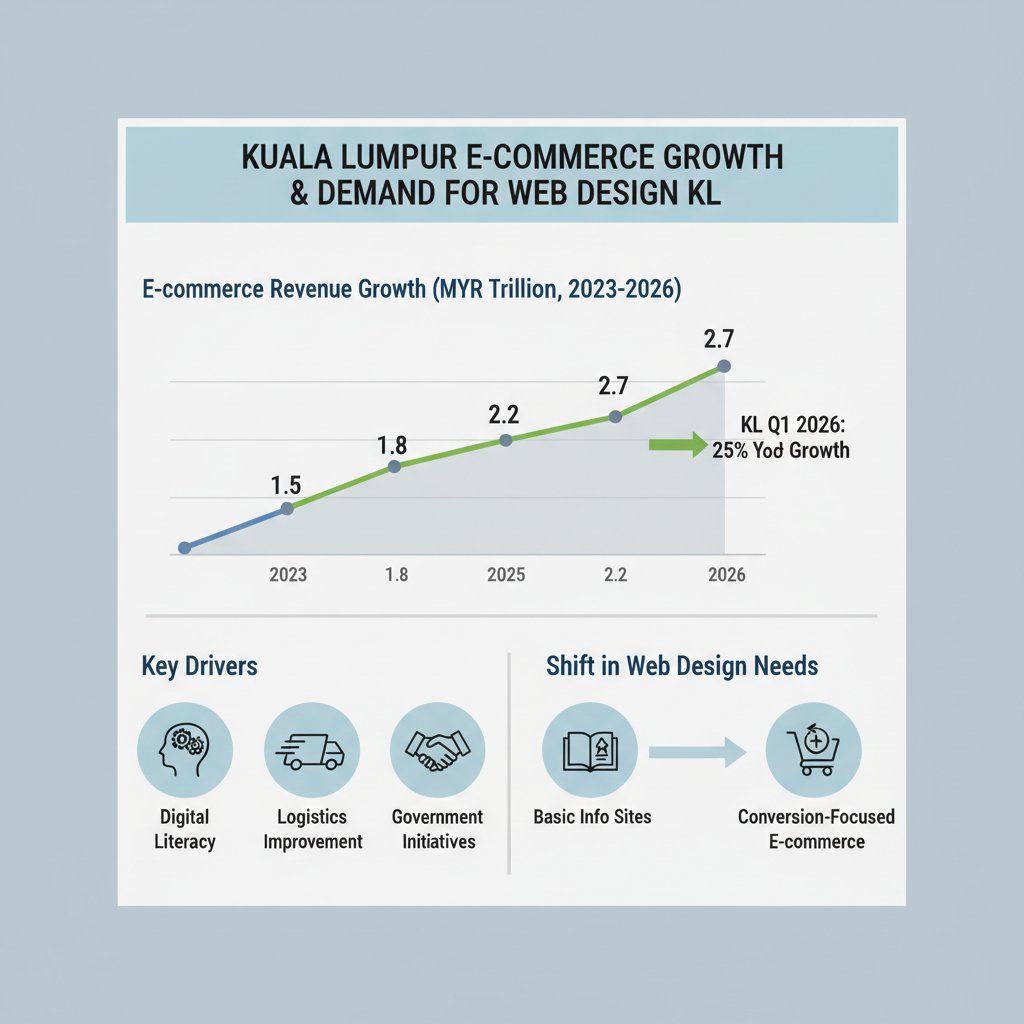
- Kuala Lumpur’s e-commerce sector has grown by an estimated 25% year-on-year as of Q1 2026, according to the Malaysia Digital Economy Corporation (MDEC).
- This boom is driving a critical shift from basic corporate websites to advanced, conversion-centric e-commerce platforms, increasing demand for specialized Web Design KL services.
- Modern e-commerce web design in KL prioritizes secure payment gateways, robust product management, seamless mobile responsiveness, and data analytics integration.
- Agencies are developing expertise in platforms like Shopify, WooCommerce, and Magento, moving beyond general web development to offer bespoke e-commerce solutions.
- Businesses that invest in specialized e-commerce web design see an average 30% increase in online conversion rates compared to those with generic sites, as reported by a 2025 Google Malaysia study.
What’s Driving Kuala Lumpur’s E-commerce Surge?
Kuala Lumpur’s e-commerce surge is primarily driven by a confluence of increased digital literacy, improved logistics infrastructure, and changing consumer purchasing habits post-pandemic. Consumers in Malaysia, particularly within urban centers like KL, have become accustomed to the convenience and variety offered by online shopping, pushing businesses to establish robust digital presences.
The numbers don’t lie. According to the Malaysia Digital Economy Corporation (MDEC), Malaysia’s e-commerce income reached RM1.2 trillion in 2024, a 21.8% increase from the previous year, with Kuala Lumpur contributing a substantial portion of this growth. This trajectory has only intensified into 2026, with preliminary Q1 data suggesting a further 25% year-on-year growth in online transactions for the capital. The government’s ongoing push for digital transformation, including initiatives like the Malaysia Digital Economy Blueprint (MyDIGITAL), has also played a pivotal role, fostering an environment ripe for online business expansion. This means businesses, from established retailers to ambitious startups, must now view their online store as their primary revenue generator, not just a supplementary channel.
How Are Web Design KL Agencies Adapting to E-commerce Demands?
Web Design KL agencies are adapting by shifting their focus from static informational sites to dynamic, secure, and conversion-optimized e-commerce platforms, requiring new skill sets in payment integration, inventory management, and user experience (UX) for online retail. This evolution means a deeper understanding of retail psychology and technical infrastructure is now paramount.
The days of simply designing a pretty website are over. Today, a leading Web Design KL firm must be proficient in integrating secure payment gateways like FPX, GrabPay, and local bank transfers, ensuring smooth and trustworthy transactions for Malaysian consumers. They also need expertise in robust inventory management systems, ensuring product availability is accurate and updated in real-time across various sales channels. Furthermore, mobile responsiveness is no longer a ‘nice-to-have’ but a fundamental requirement, given that over 80% of online purchases in Malaysia are initiated on mobile devices, according to a 2025 Statista report. This necessitates a ‘mobile-first’ design philosophy, where the user experience is optimized for smaller screens from the outset. Agencies are also increasingly leveraging A/B testing and data analytics to continuously refine user journeys and boost conversion rates, moving beyond mere aesthetics to data-driven performance.
This specialization is leading to a clear differentiation within the market. Generalist web designers, who might excel at corporate brochures or portfolio sites, often lack the intricate knowledge required for high-volume e-commerce operations. Businesses are actively seeking partners who understand not just design principles, but also the complexities of online retail, from SEO for product listings to managing abandoned carts effectively. The demand for these specialized skills has led to a significant upskilling within the industry, with agencies investing heavily in training their teams on platforms like Shopify Plus, Magento, and build a WooCommerce Malaysia store, as well as advanced analytics tools.
The Shift from Basic to Bespoke E-commerce Platforms
The transition from basic websites to bespoke e-commerce platforms reflects a market need for tailored solutions that can handle complex business logic, integrate with existing enterprise resource planning (ERP) systems, and provide unique customer experiences. This move allows businesses to differentiate themselves in a crowded online marketplace.
For many businesses in Kuala Lumpur, off-the-shelf e-commerce templates are proving insufficient. They require custom functionalities, such as personalized product recommendations, loyalty programs integrated with physical stores, or complex shipping rules for different regions within Malaysia. This is where bespoke development shines. A 2024 report by Frost & Sullivan estimated that custom e-commerce solutions now account for 45% of new online store developments in Malaysia, up from 30% just three years prior. This trend underscores the growing sophistication of Malaysian online retailers and their willingness to invest in unique digital assets that provide a competitive edge. Qc Fixer, a digital strategy firm, notes that clients are increasingly requesting features that directly address specific pain points in their supply chain or customer service, which generic platforms simply cannot accommodate without extensive, often clunky, modifications.
Why Is Conversion Optimization Crucial for E-commerce Web Design KL?
Conversion optimization is crucial for e-commerce web design in KL because it directly translates website traffic into sales, maximizing return on investment for businesses operating in a competitive online landscape. Without a focus on conversion, even a high-traffic website can fail to generate significant revenue.
In the bustling digital marketplace of Kuala Lumpur, attracting visitors to an online store is only half the battle; the real challenge lies in converting those visitors into paying customers. A 2025 Google Malaysia study highlighted that businesses investing in specialized e-commerce web design with a strong focus on conversion optimization saw an average 30% increase in online conversion rates compared to those with generic, unoptimized sites. This isn’t just about aesthetics; it involves strategic placement of calls-to-action, streamlined checkout processes, clear product photography, compelling product descriptions, and intuitive navigation. Every element on an e-commerce site, from the homepage banner to the ‘add to cart’ button, must be designed with the ultimate goal of facilitating a purchase. Agencies specializing in Web Design KL are now employing UX researchers and conversion rate optimization (CRO) specialists to meticulously analyze user behavior and identify bottlenecks in the purchasing funnel, ensuring that every click brings a customer closer to completing a transaction.
Key Elements of a Conversion-Focused E-commerce Site
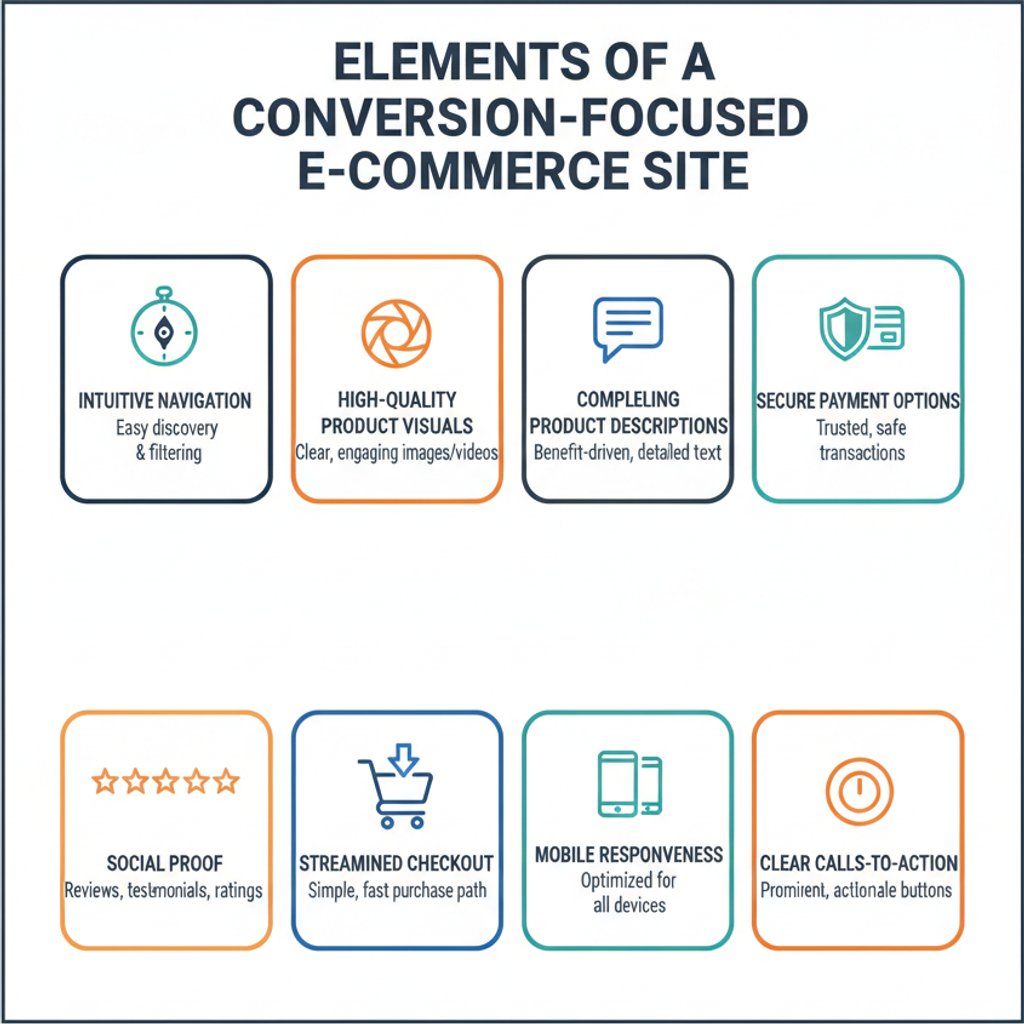
A conversion-focused e-commerce site prioritizes user experience, trust signals, and a seamless path to purchase, incorporating elements like clear product displays, social proof, and a simplified checkout process. These components work in concert to guide visitors efficiently towards making a purchase.
- Intuitive Navigation: Users must easily find what they’re looking for, with clear categories, search functionality, and filters.
- High-Quality Product Visuals: Professional photos, 360-degree views, and video demonstrations help customers visualize products.
- Compelling Product Descriptions: Detailed, benefit-oriented descriptions that address customer pain points and highlight value.
- Secure Payment Options: Offering a variety of trusted local and international payment gateways instills confidence.
- Social Proof: Customer reviews, testimonials, and user-generated content build trust and credibility.
- Streamlined Checkout: A multi-step, guest checkout option, and minimal form fields reduce friction and cart abandonment.
- Mobile Responsiveness: Ensuring the site functions flawlessly and looks appealing on all devices, especially smartphones.
- Clear Calls-to-Action (CTAs): Prominent, action-oriented buttons that guide users to the next step.
Comparison: General Web Design vs. Specialized E-commerce Web Design KL
The distinction between general web design and specialized e-commerce web design in Kuala Lumpur lies primarily in their objectives, technical complexities, and the specific skill sets required, with e-commerce focusing intensely on transactional capabilities and conversion. While general web design aims to inform or present, e-commerce web design is built to sell.
| Feature | General Web Design (e.g., Corporate Sites) | Specialized E-commerce Web Design KL |
|---|---|---|
| Primary Objective | Information dissemination, brand presence, lead generation | Direct sales, conversion, revenue generation |
| Key Focus Areas | Aesthetics, content presentation, contact forms | Product catalog, payment gateways, user journey, security, inventory |
| Technical Complexity | Moderate; CMS integration, basic forms | High; database management, API integrations, security protocols, scalability |
| Required Skill Sets | UI/UX design, front-end development, content management | E-commerce platform expertise (Shopify, Magento), payment gateway integration, SEO for products, CRO, security auditing |
| Maintenance Needs | Content updates, security patches | Product updates, inventory sync, performance monitoring, security, platform updates |
| Success Metrics | Page views, bounce rate, time on site, form submissions | Conversion rate, average order value, customer lifetime value, cart abandonment rate |
| Typical Cost (MYR) | RM 5,000 – RM 25,000 | RM 15,000 – RM 100,000+ (depending on complexity) |
This table clearly illustrates why businesses in Kuala Lumpur seeking to capitalize on the e-commerce boom must partner with agencies that possess specialized e-commerce expertise. A generalist approach risks a website that looks good but fails to perform where it matters most: generating sales. Qc Fixer’s recent market analysis indicates that businesses that initially opted for general web design for their e-commerce ventures often face costly overhauls within 12-18 months, as their sites prove inadequate for scaling and conversion. This highlights the importance of making the right choice from the outset.
The Future of Web Design KL: AI, Personalization, and Beyond
The future of Web Design KL, especially for e-commerce, will be heavily influenced by advancements in artificial intelligence (AI), hyper-personalization, and augmented reality (AR), creating more immersive and predictive shopping experiences. These technologies promise to further blur the lines between online and offline retail.
As of June 24, 2026, we’re already seeing nascent applications of AI in e-commerce, from AI-powered chatbots handling customer service inquiries to sophisticated recommendation engines that learn individual customer preferences. A 2026 report by Accenture predicts that AI integration could boost e-commerce conversion rates by an additional 15-20% over the next three years. For Web Design KL agencies, this means developing capabilities in integrating these AI tools seamlessly into their e-commerce platforms. Personalization, driven by AI and big data, will move beyond simple ‘you might also like’ suggestions to dynamic interfaces that adapt content, promotions, and even product layouts based on individual user behavior and demographics. Imagine an online store that literally reshapes itself for each visitor. Furthermore, augmented reality (AR) is gaining traction, allowing customers to ‘try on’ clothes virtually or visualize furniture in their homes before purchasing, significantly reducing return rates and enhancing the shopping experience. Agencies that can master these emerging technologies will be the ones leading the charge in Kuala Lumpur’s competitive digital landscape.
The future of e-commerce web design in KL will also see a greater emphasis on ethical AI, ensuring transparency and fairness in personalized recommendations, and a continued push towards creating accessible and inclusive user experiences for all. This will include leveraging advancements in AI-powered UX in KL to predict user needs and proactively optimize interfaces for diverse audiences.
Frequently Asked Questions
What is the average cost of specialized e-commerce web design in KL?
The average cost for specialized e-commerce web design in Kuala Lumpur can range from RM 15,000 for a basic platform like Shopify to over RM 100,000 for highly customized solutions on platforms like Magento or custom-built systems. This variation depends heavily on the complexity, number of products, custom features, and integrations required.
How long does it take to develop an e-commerce website in Kuala Lumpur?
Developing an e-commerce website in Kuala Lumpur typically takes anywhere from 6 to 16 weeks, depending on its complexity. A simple Shopify store might be launched in 6-8 weeks, while a bespoke platform with extensive integrations and custom functionalities could take 4-6 months or even longer.
What are the most popular e-commerce platforms used by businesses in KL?
The most popular e-commerce platforms used by businesses in Kuala Lumpur include Shopify for its ease of use and scalability, WooCommerce (for WordPress users) for its flexibility, and Magento for larger enterprises requiring robust, customizable solutions. Local platforms like EasyStore also have a strong presence.
Is mobile responsiveness still a critical factor for e-commerce in Malaysia?
Yes, mobile responsiveness is absolutely critical for e-commerce in Malaysia. As of 2025, over 80% of online purchases in Malaysia are initiated on mobile devices, making a seamless and optimized mobile experience non-negotiable for maximizing conversions and reaching the broadest customer base.
How important is SEO for e-commerce websites in Kuala Lumpur?
SEO (Search Engine Optimization) is extremely important for e-commerce websites in Kuala Lumpur. High rankings on search engines like Google are vital for driving organic traffic to online stores, especially for product searches. Specialized e-commerce SEO focuses on optimizing product pages, categories, and site structure to attract relevant buyers.
What security features should an e-commerce website in KL have?
An e-commerce website in KL must have robust security features, including SSL certification for encrypted data transfer, secure payment gateway integrations, fraud detection systems, and regular security audits. Compliance with data protection regulations, such as Malaysia’s Personal Data Protection Act (PDPA), is also essential.
Can a small business in Kuala Lumpur afford specialized e-commerce web design?
Yes, a small business in Kuala Lumpur can afford specialized e-commerce web design, especially with platforms like Shopify or WooCommerce that offer scalable solutions. Many Web Design KL agencies also provide tiered packages or flexible payment plans to accommodate smaller budgets, allowing businesses to start small and expand as they grow.
Last updated: June 24, 2026