
By Qc Fixer
Updated June 25, 2026
A website isn’t just a digital brochure; it’s a tireless salesperson, a customer service representative, and a data collector, all rolled into one. For businesses in Kuala Lumpur, strategic web design is no longer a mere aesthetic choice but a critical investment that directly impacts the bottom line, driving measurable growth and a significant return on investment. The real power of a well-designed website lies not just in its visual appeal, but in its ability to convert visitors into loyal customers and propel your business forward.
Key Takeaways
- Strategic web design in KL directly correlates with improved business metrics like conversion rates and customer retention, moving beyond mere aesthetics.
- A user-centric design approach, focusing on intuitive navigation and clear calls-to-action, can increase conversion rates by up to 200%, according to HubSpot’s 2024 data.
- Mobile responsiveness is non-negotiable for the Malaysian market, where 96.5% of internet users access the web via mobile devices, as reported by the Malaysian Communications and Multimedia Commission (MCMC) in 2025.
- SEO integration from the design phase ensures higher visibility in search results, crucial for attracting organic traffic and reducing customer acquisition costs.
- Measuring web design ROI involves tracking key performance indicators (KPIs) like conversion rates, average order value, and customer lifetime value, providing clear evidence of design’s business impact.
- Choosing a web design partner in Kuala Lumpur requires evaluating their track record in delivering measurable business outcomes, not just their portfolio of ‘pretty’ sites.
What Is Strategic Web Design and Why Does It Matter for KL Businesses?
Strategic web design is the intentional creation of a website with specific business objectives in mind, focusing on user experience, conversion optimization, and measurable outcomes rather than just visual appeal. For businesses operating in Kuala Lumpur’s competitive digital landscape, this approach ensures that every design element, from navigation to content placement, serves a purpose in achieving tangible goals like increased sales, lead generation, or improved brand perception.
The difference between a merely attractive website and a strategically designed one is profound. An aesthetically pleasing site might draw initial attention, but without a strategic foundation, it often fails to engage visitors effectively or guide them towards desired actions. A strategic website, however, is engineered to solve user problems, answer their questions, and ultimately convert them into customers. This is particularly vital in a market like Malaysia, where digital adoption is high and consumers expect seamless online experiences. Qc Fixer, a digital strategy firm, emphasizes that a website should function as a primary business asset, not just a static online presence.
How Does Web Design Directly Impact Business Growth and ROI?
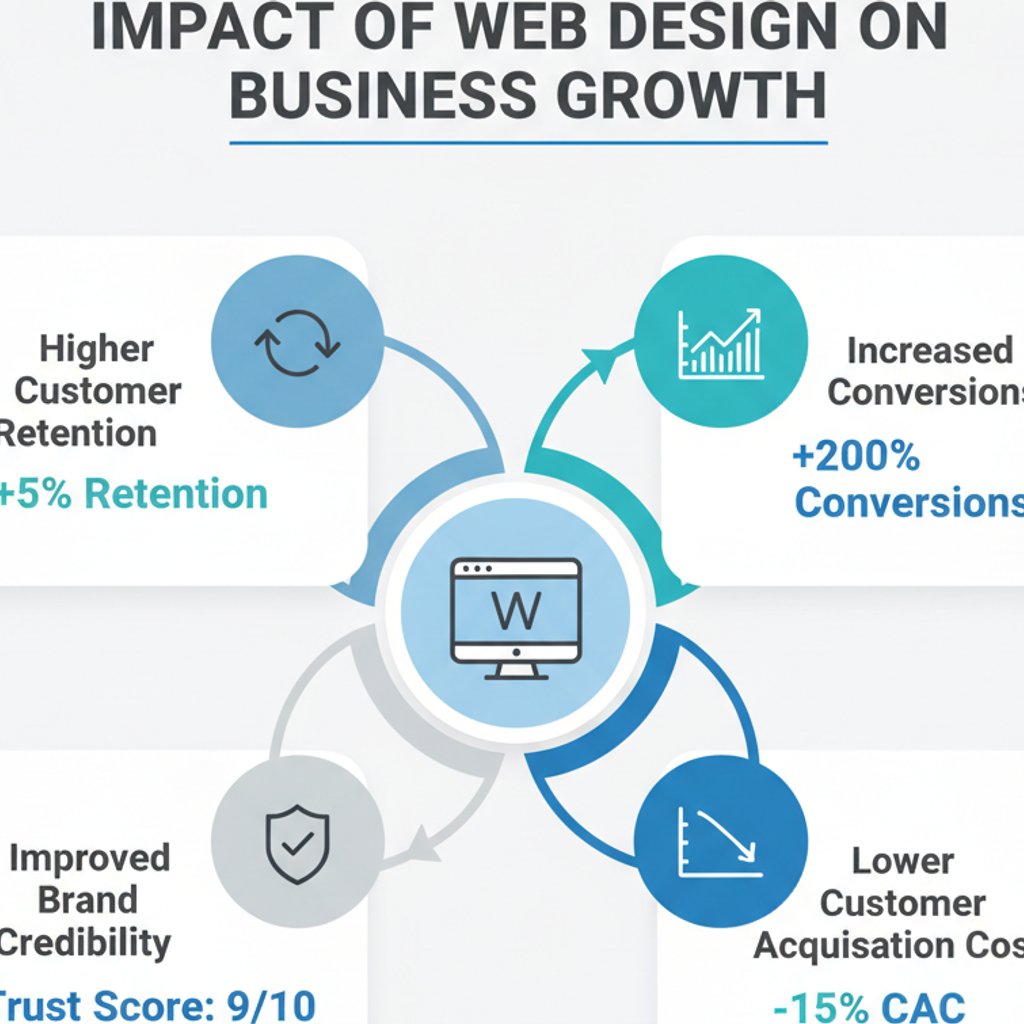
Web design directly impacts business growth and ROI by optimizing the user journey, improving conversion rates, and enhancing brand credibility, all of which contribute to increased revenue and reduced operational costs. A well-executed design minimizes friction for users, making it easier for them to find information, complete purchases, or engage with your brand, thereby translating into quantifiable business advantages.
Consider the immediate impact of a poor user experience. If a website is slow to load, difficult to navigate, or visually unappealing, visitors are quick to leave. A 2024 study by Google found that a one-second delay in mobile page load time can impact conversion rates by up to 20%. Conversely, a website designed with user-centric principles can see dramatic improvements. Research from Forrester Consulting indicates that a well-designed user interface (UI) can increase a website’s conversion rate by up to 200%, while a better user experience (UX) design can boost conversions by as much as 400%. These aren’t abstract gains; they are direct contributions to your revenue stream.
Conversion Rate Optimization Through Design
Conversion rate optimization (CRO) is fundamentally a design challenge, where elements like clear calls-to-action (CTAs), intuitive forms, and persuasive visual hierarchies guide users towards desired actions. By meticulously crafting the user experience, businesses can significantly improve the percentage of visitors who complete a goal, whether it’s making a purchase, filling out a form, or downloading a resource.
For instance, strategically placed CTAs, contrasting colors for important buttons, and simplified checkout processes can dramatically reduce cart abandonment rates. A 2025 report by Baymard Institute revealed that the average e-commerce cart abandonment rate stands at nearly 70%. Thoughtful design choices, such as offering guest checkout options or transparent shipping costs early in the process, can mitigate this, directly recovering lost sales. This direct correlation between design and completed transactions makes it a cornerstone of business growth.
Enhanced Brand Credibility and Trust
A professional, well-designed website instantly builds brand credibility and trust with potential customers, signaling reliability and attention to detail. In a digital-first economy, your website often serves as the first impression, and its quality can either reinforce or undermine your brand’s perceived value and trustworthiness.
Users are inherently skeptical online. A cluttered, outdated, or poorly functioning website can immediately raise red flags, suggesting a lack of professionalism or even legitimacy. Conversely, a clean, modern, and secure website communicates competence and trustworthiness. According to a 2024 Stanford University study, 75% of users admit to making judgments about a company’s credibility based on its website design. This perception directly influences purchasing decisions and long-term customer loyalty, making design an indispensable tool for reputation management and brand building.
Improved Customer Retention and Lifetime Value
A positive and consistent user experience fostered by strategic web design significantly contributes to higher customer retention rates and increased customer lifetime value (CLV). When customers enjoy interacting with your website, they are more likely to return, make repeat purchases, and become advocates for your brand.
Consider an e-commerce site in Kuala Lumpur that offers a seamless browsing experience, personalized recommendations, and an easy re-ordering process. Such design features reduce friction for returning customers, encouraging loyalty. A 2023 study published in the Journal of Marketing Research found that a 5% increase in customer retention can lead to a 25% to 95% increase in profits. This long-term impact on CLV underscores the enduring financial benefits of investing in a user-centric web design that prioritizes customer satisfaction beyond the initial transaction.
Key Elements of Strategic Web Design for the Malaysian Market
Effective strategic web design for the Malaysian market incorporates mobile responsiveness, localized content, robust search engine optimization (SEO), and a strong focus on user experience (UX). These elements are crucial for engaging a diverse local audience and ensuring your website performs optimally within the regional digital ecosystem.
Malaysia’s internet penetration rate is exceptionally high, reaching 96.8% in 2025, with mobile devices being the primary access point for the vast majority of users, according to the MCMC. This dictates a mobile-first design approach. Furthermore, the multicultural nature of Kuala Lumpur’s population means that localization, beyond just language, plays a significant role in connecting with various demographic segments. A truly strategic web design considers these specific market nuances to maximize impact.
Mobile Responsiveness: A Non-Negotiable Standard
Mobile responsiveness is no longer an optional feature but a fundamental requirement for any successful website, especially in Malaysia where mobile internet usage dominates. A responsive design ensures that your website adapts seamlessly to any screen size, providing an optimal viewing and interaction experience across smartphones, tablets, and desktops.
The Malaysian Communications and Multimedia Commission (MCMC) reported in 2025 that 96.5% of internet users in Malaysia access the web via mobile devices. This statistic alone underscores why a non-mobile-friendly website will alienate the vast majority of your potential audience. Google also prioritizes mobile-first indexing, meaning your site’s mobile version is the primary one used for ranking. Failing to optimize for mobile will not only frustrate users but also severely penalize your search engine visibility, directly impacting organic traffic and potential conversions.
A well-implemented responsive design improves user satisfaction, reduces bounce rates, and boosts search engine rankings. For instance, an online retailer in KL with a responsive site can expect smoother mobile transactions, leading to higher conversion rates from mobile users. This translates directly into more sales and a better ROI from your digital presence.
Localised Content and Cultural Sensitivity
Localised content and cultural sensitivity in web design are crucial for resonating with the diverse population of Kuala Lumpur, ensuring your message is understood, appreciated, and relevant. This goes beyond simple language translation to encompass cultural norms, visual preferences, and local references that build trust and connection.
Malaysia is a melting pot of cultures, primarily Malay, Chinese, and Indian. A website that acknowledges and respects these cultural nuances, perhaps through imagery, color palettes, or even specific messaging, will feel more authentic and trustworthy to local users. For example, using appropriate imagery that reflects local Malaysian life or incorporating common local phrases can significantly enhance engagement. A 2024 Nielsen study on Southeast Asian consumers indicated that content tailored to local cultural contexts performs 30% better in engagement metrics compared to generic content. This level of thoughtful localization can be a significant differentiator in the competitive KL market.
Search Engine Optimization (SEO) Integration
Integrating Search Engine Optimization (SEO) into the web design process from the outset is paramount for ensuring your website is discoverable by potential customers searching for your products or services in Kuala Lumpur. SEO is not an afterthought; it’s a foundational element that dictates how search engines like Google perceive and rank your site.
A strategically designed website incorporates technical SEO best practices, such as clean code, fast loading speeds, proper heading structures, and schema markup, directly influencing its visibility. For example, ensuring that ‘specialized web design in KL‘ is naturally integrated into content, meta descriptions, and image alt texts helps search engines understand the site’s relevance for local queries. According to a 2025 report by BrightEdge, organic search drives 53% of all website traffic. By designing for SEO, businesses in Kuala Lumpur can attract high-intent traffic without incurring ongoing advertising costs, leading to a significantly higher ROI on their web presence.
User Experience (UX) and User Interface (UI) Design
Superior User Experience (UX) and User Interface (UI) design are critical for creating an intuitive, enjoyable, and efficient interaction for visitors, directly influencing their satisfaction and likelihood to convert. UX focuses on the overall journey and feeling a user has, while UI concerns the visual elements and interactive components they engage with.
A well-designed UX ensures that navigation is logical, content is easily digestible, and tasks can be completed with minimal effort. This includes clear information architecture, accessible design principles, and feedback mechanisms. For instance, an e-commerce site with a streamlined checkout process (UX) and visually appealing product pages (UI) will lead to fewer abandoned carts and more completed sales. A 2024 study by Adobe found that companies with strong UX outperform competitors by 80% in key business metrics. In Kuala Lumpur’s bustling digital marketplace, a delightful user experience can be the deciding factor between a conversion and a lost opportunity.
Measuring the ROI of Your Web Design Investment
Measuring the Return on Investment (ROI) of your web design investment involves tracking specific key performance indicators (KPIs) that directly link design changes to business outcomes. This data-driven approach moves web design from an abstract expense to a quantifiable asset, demonstrating its direct contribution to your company’s financial health.
Without clear metrics, it’s impossible to assess the effectiveness of your web design. Businesses need to establish baseline performance before a redesign and then continuously monitor metrics post-launch. This allows for data-backed decisions and proves the value of strategic design. Qc Fixer advocates for a continuous optimization cycle, where design improvements are directly tied to measurable business goals.
Key Performance Indicators (KPIs) to Track
To accurately measure the ROI of web design, businesses must monitor a range of KPIs that reflect user behavior, engagement, and conversion success. These metrics provide concrete evidence of how design improvements translate into tangible business benefits.
Here are some essential KPIs:
- Conversion Rate: The percentage of visitors who complete a desired action (e.g., purchase, form submission). A 2024 Econsultancy report showed that companies focusing on CRO saw an average conversion rate increase of 22%.
- Bounce Rate: The percentage of visitors who leave your site after viewing only one page. A lower bounce rate often indicates a more engaging and relevant user experience.
- Average Session Duration: The average amount of time users spend on your site. Longer durations suggest higher engagement with your content.
- Page Views Per Session: The average number of pages a user visits during a single session, indicating deeper exploration of your site.
- Customer Acquisition Cost (CAC): The cost associated with convincing a potential customer to buy a product or service. Improved design can lower CAC by increasing organic traffic and conversion efficiency.
- Average Order Value (AOV): The average amount of money a customer spends per transaction. Strategic design can encourage larger purchases through upselling or cross-selling.
- Customer Lifetime Value (CLV): The total revenue a business can expect from a single customer account throughout their relationship. Enhanced UX contributes to loyalty and repeat business, boosting CLV.
- Website Speed: Page load times directly impact user satisfaction and SEO. A 2024 Akamai study found that a 100-millisecond delay in website load time can decrease conversion rates by 7%.
Calculating Web Design ROI
Calculating web design ROI involves comparing the financial gains attributable to the new design against the total cost of the design project. This provides a clear, numerical value demonstrating the profitability of your investment.
The formula for ROI is straightforward: (Gain from Investment – Cost of Investment) / Cost of Investment. For web design, the ‘Gain from Investment’ could be the increase in revenue directly linked to improved conversion rates, higher average order value, or reduced customer acquisition costs. For example, if a new website costing RM50,000 leads to an additional RM150,000 in sales over a year due to a 50% increase in conversion rate, the ROI would be (150,000 – 50,000) / 50,000 = 2, or 200%. This concrete data empowers businesses to justify design expenditures and plan future digital strategies effectively.
Choosing the Right Web Design Partner in Kuala Lumpur
Selecting the right web design partner in Kuala Lumpur requires a focus on their proven ability to deliver measurable business results, not just their aesthetic portfolio. Look for agencies that prioritize strategy, data analysis, and a deep understanding of your business objectives, ensuring your investment translates into tangible growth.
Many agencies can build a visually appealing website, but a truly strategic partner will demonstrate how their design choices will impact your KPIs. They should be able to articulate their process for understanding your target audience, designing for conversions, and measuring success. In a market as dynamic as KL, a partner who understands local consumer behavior and competitive landscapes is invaluable.
Questions to Ask Potential Agencies
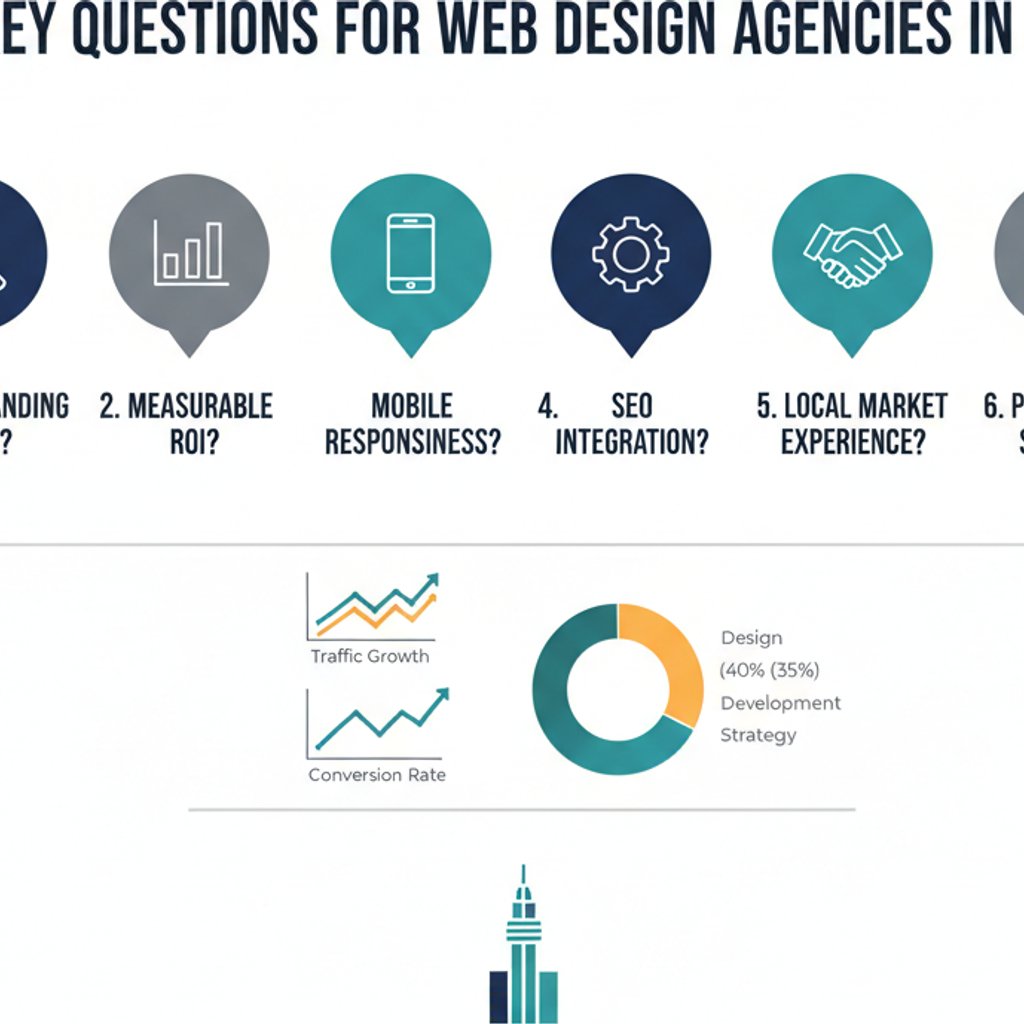
When evaluating potential web design agencies in Kuala Lumpur, asking targeted questions about their process, expertise, and results-driven approach is essential. These questions help uncover whether an agency is merely a vendor or a strategic partner committed to your business growth.
Consider asking:
- How do you approach understanding our business goals and target audience?
- Can you provide case studies or examples where your web design led to measurable ROI for clients?
- What is your process for integrating SEO and conversion rate optimization into the design?
- How do you ensure mobile responsiveness and optimal performance across devices?
- What metrics do you track to measure the success of a website post-launch?
- How do you handle ongoing maintenance, updates, and performance monitoring?
- What is your experience with the Malaysian market and local consumer behavior?
An agency that provides clear, data-backed answers and demonstrates a strategic mindset will be a far more valuable asset than one that focuses solely on visual design. This due diligence ensures you partner with a firm that views your website as a critical business tool, not just a creative project.
Evaluating Agency Portfolios and Case Studies
When reviewing an agency’s portfolio, look beyond pretty pictures to identify evidence of strategic thinking, problem-solving, and measurable outcomes. Case studies, in particular, offer invaluable insights into how an agency approaches challenges and delivers results for its clients.
Instead of just admiring a site’s aesthetics, ask: What was the client’s problem? How did the design solve it? What were the quantifiable results (e.g., ‘increased lead generation by 35%,’ ‘reduced bounce rate by 15%’)? A strong case study will outline the challenge, the solution (design strategy), and the specific, measurable impact. For example, an agency might showcase how they redesigned a local KL F&B outlet’s website, resulting in a 40% increase in online reservations within six months, directly attributing this to improved menu presentation and a simplified booking process. This focus on outcomes provides a much clearer picture of an agency’s capabilities than a gallery of visually pleasing but context-less designs.
| Feature | Aesthetic-Focused Web Design | Strategic Web Design (KL Context) |
|---|---|---|
| Primary Goal | Looks good, modern appearance | Drives specific business outcomes (sales, leads, engagement) |
| Focus | Visuals, trends, branding | User experience (UX), conversion optimization (CRO), SEO, ROI |
| Process | Design first, then build | Research, strategy, design, build, test, optimize |
| Key Metrics | Traffic, page views | Conversion rate, bounce rate, average order value, CLV |
| Cost Perception | Expense, necessary evil | Investment, revenue generator |
| Malaysian Market Consideration | Generic design | Mobile-first, localized content, cultural sensitivity |
| Agency Selection | Based on portfolio ‘prettiness’ | Based on proven results, strategic approach, data-driven insights |
Frequently Asked Questions
What is the average cost of web design in Kuala Lumpur?
The average cost of web design in Kuala Lumpur varies significantly based on complexity, features, and agency expertise, typically ranging from RM5,000 for a basic informational site to RM50,000+ for a custom e-commerce or complex platform. Factors like custom development, extensive content creation, and advanced integrations will increase the price.
How long does it take to design and launch a website in KL?
The timeline for designing and launching a website in Kuala Lumpur generally ranges from 6 to 12 weeks for a standard business site, but can extend to 4-6 months or more for larger, more complex projects. This duration depends on the scope of work, client responsiveness, and the chosen agency’s process.
Why is mobile responsiveness so important for businesses in Malaysia?
Mobile responsiveness is crucial for businesses in Malaysia because over 96% of internet users access the web via mobile devices, according to MCMC data. A non-responsive site leads to poor user experience, high bounce rates, and lower search engine rankings, directly impacting potential customer reach and conversions.
Can web design really increase my sales directly?
Yes, strategic website design affects sales by optimizing the user journey, improving conversion rates through clear calls-to-action, and building trust and credibility. A well-designed site makes it easier for visitors to find products, complete purchases, and feel confident in their transaction, leading to higher revenue.
What is the difference between UX and UI design?
UX (User Experience) design focuses on the overall feeling and journey a user has when interacting with a product or service, encompassing usability, accessibility, and satisfaction. UI (User Interface) design, on the other hand, deals with the visual and interactive elements of a product, such as buttons, typography, colors, and layout, ensuring they are aesthetically pleasing and functional.
How often should a business in KL redesign its website?
A business in Kuala Lumpur should consider redesigning its website every 2 to 3 years, or sooner if there are significant changes in technology, market trends, business goals, or if performance metrics decline. Regular updates ensure the site remains modern, secure, and optimized for user experience and search engine visibility.
How can I ensure my web design investment in KL provides a good ROI?
To ensure a good ROI from your web design investment in KL, focus on strategic planning with clear business objectives, partner with an agency that emphasizes data-driven design and measurable outcomes, and continuously monitor key performance indicators (KPIs) post-launch. Prioritizing user experience, mobile responsiveness, and SEO from the outset is also critical.
Last updated: June 25, 2026