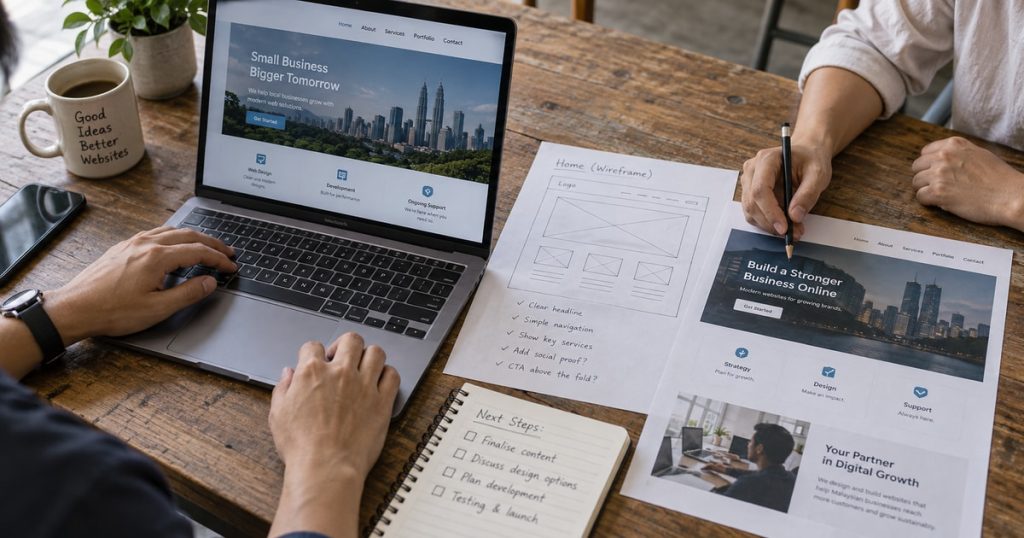
A website builder can now produce a reasonable-looking first draft quickly. That makes the question “Should I build my own website or hire someone?” harder than it once was.
If DIY has a low monthly fee while a professional asks for a larger payment, building it yourself can seem obvious. However, the two options do not include the same work.
When you build the website, you decide its content, structure, functions and testing. When you hire someone, you pay to delegate some of that work—but only what the agreement includes.
The right choice depends on what the website must do, how much time you have and what may happen if it fails.
Before comparing tools or quotations, define success in one sentence. A site that only needs to show operating hours and contact details has a different job from one expected to bring qualified enquiries each month. A clear goal makes the decision much easier.
What Does Building Your Own Website Really Mean?
Building your own website does not mean writing code. You can use a template, no-code platform, AI website builder or ChatGPT. The tool may suggest pages, layouts, images and content. You still decide whether those suggestions suit the business.
You must still connect the domain, prepare accurate information, set up forms and test different devices. After launch, somebody must update the website and fix problems. The platform supports its software, but it cannot judge every business decision. Unless you bring in help, that responsibility remains with you.
What Are You Paying Someone to Do?
You might hire a freelancer, designer, developer or agency. Their skills vary, so the word “professional” alone tells you little.
A capable provider should first understand whether the website must explain services, collect enquiries, sell products or support customers. Its purpose affects the pages and functions required.
The service may cover design, mobile responsiveness, content organisation, technical setup, testing and support. Content writing, hosting, maintenance and SEO may be separate.
You may be paying for judgment, project management and agreed technical work—not only pages. The written scope should state every responsibility included.
DIY Website vs Professional Website
The exact difference varies by platform, provider and project, but this table offers a practical starting point.
| What to compare | Build it yourself | Hire someone |
| Starting cost | Usually lower | Usually higher |
| Your time | More setup, writing and testing | More work is delegated, but feedback is still needed |
| Launch speed | A basic draft can be quick | Planning and revisions normally take longer |
| Control | You make changes directly | Changes follow the agreed process |
| Content and strategy | You make the main decisions | Guidance may be included in the scope |
| Custom functions | Limited by your skills and platform | Can be developed if included and technically suitable |
| Support | Platform help for its tools | Project support depends on the contract |
| Best fit | Simple, low-risk websites | Websites carrying greater business responsibility |
Hiring someone does not remove the owner from the project. The provider still needs accurate information, feedback and approvals. Professional help should reduce the production burden and improve decisions, but it cannot replace the business knowledge that only the owner has.
DIY normally costs less at first, but subscriptions are only part of the total. Your time, paid features and future changes also matter. For details, [see how much AI website design can cost](/ai-website-design-cost/).
There is no universal winner. DIY suits lower-risk projects; professional help becomes more valuable when a weak website could cost trust, sales or enquiries.
How Important Is the Website to Your Business?
A website can be an online name card or part of how a business earns money. The two should not be judged alike.
A private tutor may only need one page showing subjects, location and a WhatsApp button. When the owner can check every detail, DIY may be suitable.
A renovation company must do more. Customers may want to see completed work, understand the process and feel confident before requesting a quotation. How that information is presented can affect whether they make contact.
An online store also needs product information, payments, delivery rules and customer emails to work together. An attractive homepage cannot solve a broken buying process.
Ask what happens if the website is confusing. If the answer is “not much,” DIY may be a sensible experiment. If it could cause lost revenue or trust, professional review matters more.
How Much Work Can You Realistically Manage?
Building a website involves more than choosing colours and uploading a logo. Content often takes longer than expected.Someone must explain each service, select evidence and decide what visitors should do next. AI can draft content, but the business must check every claim. Regulated information should be approved by the business or a qualified adviser—not trusted simply because a designer or AI wrote it.
Forms must reach the correct inbox, buttons must work on phones, and business information must remain accurate after launch.DIY can work if you enjoy learning and have time. Estimate the hours you can give the project; a low subscription saves little if the website remains unfinished.
Three Situations, Three Different Answers
For a side project or early idea, DIY can test whether people understand the offer before you invest more. Keep it simple and accurate. Learning from real visitors may matter more than perfect design.For an established service business that depends on enquiries, professional help may be easier to justify. The site must organise services, answer doubts and guide visitors towards contact.
A business with clear content but a limited budget may use a hybrid approach. The owner prepares the information and an initial draft, then hires someone to improve the structure or technical setup. Confirm what can be reused; rebuilding an unsuitable platform may remove the saving.
Hiring Someone Does Not Guarantee a Better Website
A high price does not guarantee a useful website. Someone who only changes a template may add little value over DIY.
Before hiring, view relevant work and request a written scope. Confirm who handles content, the domain, mobile testing and revisions, and whether SEO, maintenance and support cost extra.
Know who controls the domain, hosting, platform and analytics. Make sure the business will retain the access needed if the working relationship ends.
A good provider should explain why the proposed pages and functions suit the business. Clear reasoning matters more than features you may never use.
Make the Decision Based on Responsibility
Decide by asking how much responsibility the website will carry.
For a basic online presence that you can manage, DIY may be enough. If the website must attract enquiries, process sales or protect trust, professional or hybrid support may be worth considering.
If you remain unsure, speak with QC Fixer about corporate web design. Its service information covers responsive design, contact forms, revisions and maintenance options. Discuss the scope before deciding whether it fits your needs.
You do not need the most expensive website. You need an approach that matches its job and makes responsibility clear.
Frequently Asked Questions
Can I build my own website without experience?
Yes. Modern builders can create simple websites without coding, but you still need to learn the platform, prepare accurate content and test the result.
Is it cheaper to build my own website?
It normally costs less at first. Include subscriptions, paid features, your time and possible rebuilding when comparing the real cost.
When should I hire a web designer?
Consider hiring help when the website affects sales, enquiries or trust, requires custom functions, or exceeds your available time and skills.
Can an AI website builder create a professional website?
It can create a professional-looking design. Clear communication and business results still depend on the content, testing and decisions behind it.
Can I build the website first and hire someone later?
Yes. First check whether another provider can edit or transfer the website, content and domain. Some work may need rebuilding.