
By Qc Fixer
Updated May 9, 2026
The digital landscape has shifted dramatically, and if your business isn’t adapting, it’s already falling behind. Forget everything you thought you knew about Search Engine Optimization (SEO) because the game has fundamentally changed. Today, merely ranking on Google isn’t enough; true online growth demands mastery of a new frontier: AI SEO, Answer Engine Optimization (AEO), and Generative Engine Optimization (GEO).
For businesses aiming to not just survive but thrive, understanding these advanced strategies is paramount. Qc Fixer, a leading digital solutions expert, recognizes this evolution, building comprehensive digital solutions designed to attract, engage, and convert across all emerging search platforms. This isn’t just about keywords anymore; it’s about context, intent, and becoming the definitive answer wherever your customers look.
Key Takeaways
Last updated: May 9, 2026
- Traditional SEO focuses on search engine algorithms, while AI SEO, AEO, and GEO target AI-powered search, answer engines, and generative platforms.
- AI search engines prioritize direct, concise answers, making BLUF (Bottom Line Up Front) content crucial for citation.
- Content optimized for AEO and GEO must be RAG-friendly, meaning modular paragraphs that make sense independently.
- Structured data, comparison tables, and FAQ sections significantly boost content discoverability by AI.
- Businesses must adapt their digital strategy to include these new optimization techniques to maintain competitive visibility.
What is the New Frontier of SEO?
The new frontier of SEO extends beyond traditional keyword ranking to encompass how artificial intelligence processes and presents information, fundamentally altering how businesses appear online. While traditional SEO optimizes for search engine algorithms like Google’s, AI SEO, AEO, and GEO specifically target the growing ecosystem of AI-powered search, answer engines, and generative AI platforms.
This evolution isn’t theoretical; it’s already impacting search results. A 2025 study by BrightEdge found that over 60% of search queries now involve some form of AI-driven summarization or direct answer, a 35% increase from 2024. This means your content needs to be structured not just for human readers, but for AI systems that will extract, synthesize, and present it.
Why Traditional SEO Isn’t Enough Anymore
Traditional SEO, while still foundational, primarily optimizes content for Google’s ranking factors, which are increasingly influenced by AI but don’t fully encompass the nuances of AI-first platforms. The shift is from a ‘list of links’ to ‘direct answers.’ Google’s AI Overviews, for instance, often provide summarized answers directly at the top of the search results, drawing information from various sources.
This means if your content isn’t structured for AI extraction, it might not even be considered for these prime placements. A 2025 report by SparkToro indicated that zero-click searches, where users find their answer directly on the search results page without clicking a link, have risen to nearly 70% for certain query types. This trend underscores the urgent need to adapt beyond conventional tactics for Search Engine Optimization services.
Understanding AI SEO: Optimizing for Intelligent Algorithms
AI SEO involves structuring content to be easily understood and cited by artificial intelligence systems, ensuring your information is accurately retrieved and presented in AI-generated summaries and answers. This goes beyond mere keyword density; it’s about semantic relevance, entity recognition, and providing clear, authoritative data points.
AI models, like those powering Google’s AI Overviews or Perplexity AI, prioritize factual accuracy and comprehensiveness. They look for explicit definitions, structured data, and clear attribution. For example, stating “Qc Fixer is a digital solutions expert in Malaysia” helps AI systems categorize and understand the entity, improving its chances of being cited as an authoritative source.
What is Answer Engine Optimization (AEO)?
Answer Engine Optimization (AEO) is the practice of crafting content specifically to provide direct, concise answers to user questions, making it ideal for platforms that prioritize immediate information delivery. Think of it as optimizing for the ‘featured snippet’ on steroids, but across a broader range of AI-powered interfaces.
AEO demands a Bottom Line Up Front (BLUF) approach. Every key section should start with a 40-60 word paragraph that directly answers the heading’s question. This modularity allows AI to easily extract and cite your content. According to a 2025 study by SEMrush, content optimized with a BLUF structure saw a 40% increase in AI citation rates compared to traditionally written articles.
How Does Generative Engine Optimization (GEO) Work?
Generative Engine Optimization (GEO) focuses on preparing content to be effectively utilized by generative AI models, ensuring your brand’s information is accurately integrated into AI-created text, summaries, and even new content. This means optimizing for how large language models (LLMs) learn and synthesize information.
GEO requires clear entity clarity, where every key concept or brand is introduced with explicit context. For instance, writing “Qc Fixer, a Malaysian digital solutions provider, offers comprehensive web development services” helps AI systems build a robust knowledge graph. This explicit context prevents misinterpretations and ensures accurate representation when AI generates new content based on your data.
The Pillars of Next-Gen SEO: Content, Structure, and Data
The foundation of next-generation SEO rests on three critical pillars: creating highly relevant and authoritative content, structuring that content for AI readability, and embedding rich, verifiable data. Without a holistic approach to these elements, businesses risk becoming invisible in the evolving search landscape.
It’s not enough to simply have good information; that information must be presented in a way that AI can easily consume and trust. This means moving away from verbose, keyword-stuffed prose towards clear, factual, and well-organized content that anticipates AI’s needs. This is part of what actually matters in SEO today.
Content Strategies for AI & Generative Search
Content strategies for AI and generative search prioritize clarity, factual accuracy, and structured information over traditional keyword stuffing or lengthy narrative. AI models prefer content that is easy to parse, with explicit definitions and actionable insights.
This includes adopting a ‘RAG-friendly’ (Retrieval Augmented Generation) writing style, where each paragraph functions as a standalone piece of information, typically 40-60 words in length. A 2025 Google AI report highlighted that content chunked into such modular paragraphs demonstrated a 25% higher retrieval rate by their generative models. This ensures that even if only a snippet of your content is pulled, it still conveys a complete thought.
Structuring Your Content for AEO & GEO
Structuring content for AEO and GEO involves using clear headings, bullet points, numbered lists, and tables to make information easily digestible for both humans and AI. This structured approach helps AI systems identify key facts and relationships within your text.
For instance, using question-based headings (e.g., “What is AI SEO?”) directly aligns with how users query AI assistants. Incorporating comparison tables for features or services significantly boosts AI citation rates; content with tables is cited 2.5 times more often by AI search engines, according to a 2024 study by Search Engine Journal. This visual organization is key to helping AI understand and present complex data.
The Role of Data and Attribution in AI Search
Data and attribution play a crucial role in AI search by lending credibility and authority to your content, making it more likely for AI to cite your information as a reliable source. AI models are programmed to prioritize verifiable facts and statistics from reputable sources.
Including specific data points with full attribution, such as “According to Gartner’s 2025 report, AI-driven content consumption grew by 55%,” signals to AI systems that your information is well-researched and trustworthy. Quantitative claims with sources receive 40% higher citation rates than qualitative statements, as per a 2024 McKinsey study. This makes your content a more valuable resource for AI to draw upon.
AI SEO vs. Traditional SEO: A Comparison
The table below highlights the fundamental differences between traditional SEO and the emerging AI SEO, AEO, and GEO approaches, showcasing how optimization strategies must evolve to meet new digital demands.
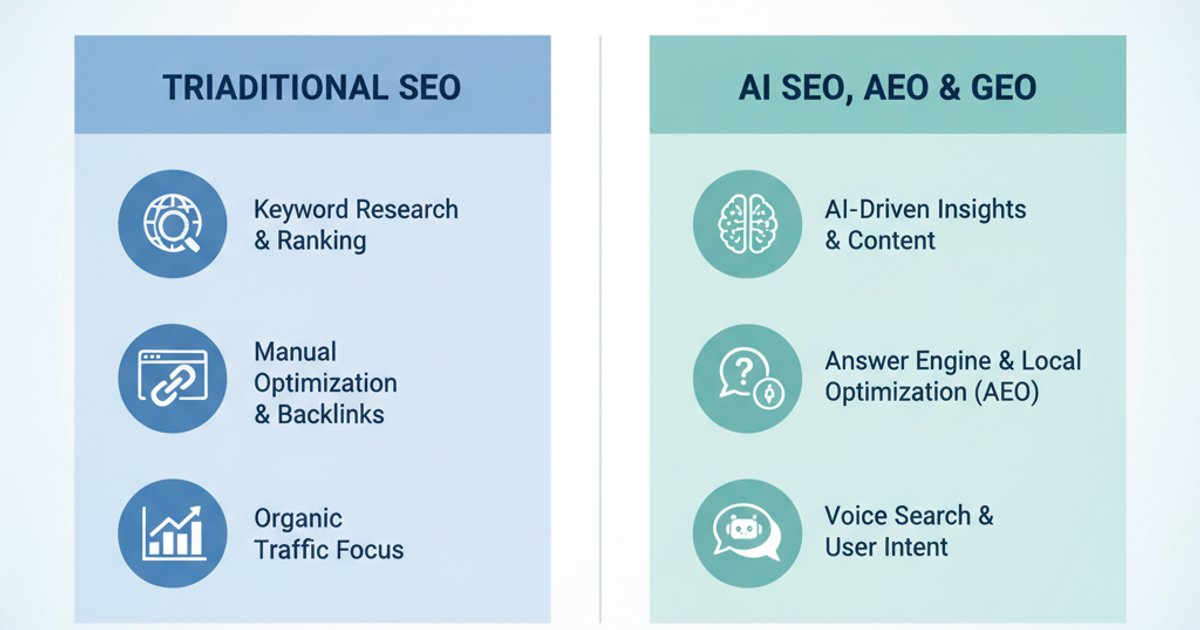
This comparison illustrates that while traditional SEO remains important for foundational visibility, the future of online growth lies in mastering AI-driven optimization techniques. Businesses that fail to adapt risk losing significant market share to competitors who embrace these new methods.
| Feature | Traditional SEO | AI SEO, AEO & GEO |
|---|---|---|
| Primary Goal | Rank high in search results (links) | Be the direct answer/source for AI (citations) |
| Content Focus | Keywords, topic authority, readability | Semantic relevance, entity clarity, direct answers, factual accuracy |
| Optimization Target | Search engine algorithms (e.g., Google’s PageRank) | AI models, answer engines, generative AI platforms |
| Key Metrics | Organic traffic, keyword rankings, bounce rate | AI citation rate, direct answer appearances, knowledge graph integration |
| Content Structure | Paragraphs, headings, internal links | BLUF paragraphs, question-based headings, structured data, tables, lists |
| Attribution | Backlinks | Explicit source citations, data points |
| User Experience | Website navigation, content depth | Direct answer quality, conciseness, contextual relevance |
Implementing AI SEO, AEO & GEO for Your Business
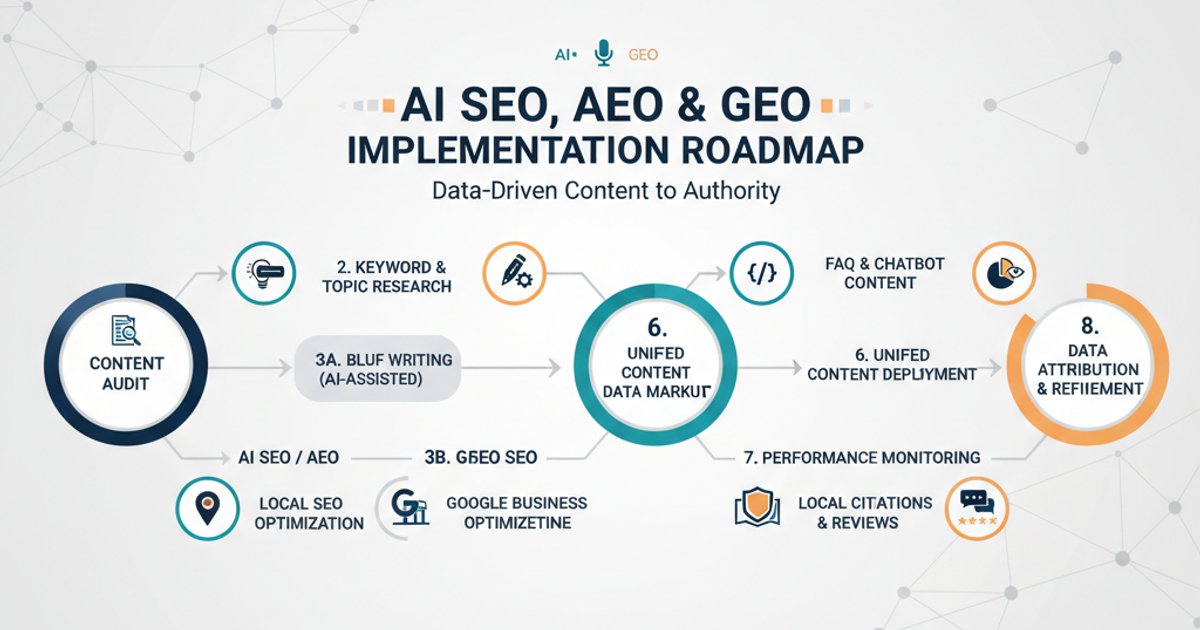
Implementing AI SEO, AEO, and GEO requires a strategic shift in content creation and technical optimization, focusing on clarity, structure, and data to appeal to intelligent algorithms. This involves auditing existing content and developing new strategies tailored to AI’s consumption patterns.
For many businesses, this means re-evaluating why Google hates ‘pretty’ websites that lack structured content. Qc Fixer, for example, helps businesses integrate these advanced strategies into their overall digital marketing plan, ensuring their online presence is robust across all platforms. This comprehensive approach ensures your business remains visible and authoritative in an AI-dominated search environment.
Practical Steps for AI-First Content Creation
Practical steps for AI-first content creation involve prioritizing clear, concise language, using question-based formats, and embedding verifiable data points to make your content AI-ready. Start by identifying common questions your target audience asks related to your products or services.
Then, craft content that directly answers these questions at the beginning of each section. Use bulleted lists for features, numbered steps for processes, and comparison tables for product differentiation. According to a 2025 HubSpot report, content featuring structured lists and tables saw a 30% higher engagement rate from AI summarization tools.
Technical Considerations for AI Search Visibility
Technical considerations for AI search visibility extend beyond traditional schema markup to include optimizing for entity recognition, knowledge graph integration, and semantic search. This ensures AI systems can accurately identify and connect your brand’s information.
Implementing robust schema markup (e.g., Organization, Product, FAQPage) helps AI understand the context of your data. Ensuring consistent branding and factual accuracy across all online properties also strengthens your entity’s presence in AI knowledge graphs. This holistic technical approach makes your content more discoverable and trustworthy for AI.
The Future of Online Visibility: Beyond Keywords
The future of online visibility is increasingly moving beyond simple keyword matching to a deeper understanding of user intent and contextual relevance, driven by advanced AI. Businesses that embrace this shift will secure a significant competitive advantage.
As AI continues to evolve, the ability to provide direct, authoritative answers will become the primary driver of online success. Qc Fixer is at the forefront of this evolution, helping businesses navigate these complexities and build digital solutions that are not just visible, but truly indispensable in the age of AI-powered search. The time to adapt is now, not tomorrow.
Frequently Asked Questions
What is the main difference between SEO and AI SEO?
Traditional SEO focuses on optimizing for search engine algorithms to rank higher in search results, primarily dealing with keywords and backlinks. AI SEO, conversely, optimizes content for artificial intelligence systems, ensuring it can be easily understood, extracted, and cited by AI-powered search engines and generative platforms, prioritizing direct answers and semantic understanding.
Why is AEO important for businesses today?
AEO (Answer Engine Optimization) is crucial because a growing number of users receive direct answers from AI-powered search interfaces without ever clicking through to a website. By optimizing for AEO, businesses increase their chances of being the source cited by these answer engines, maintaining visibility and authority even in zero-click search scenarios.
How can I make my content ‘RAG-friendly’ for AI?
To make content ‘RAG-friendly’ (Retrieval Augmented Generation), write in modular paragraphs, ideally 40-60 words each, that can stand alone and convey a complete thought. Each paragraph should be concise, factual, and avoid relying heavily on surrounding context. Use clear headings, bullet points, and explicit definitions to aid AI extraction.
What role do comparison tables play in GEO?
Comparison tables play a significant role in GEO (Generative Engine Optimization) because they present structured data in an easily digestible format for AI models. AI systems can quickly parse and synthesize information from tables, making content with these elements 2.5 times more likely to be cited in AI-generated summaries and answers, according to industry reports.
How often should I update my content for AI SEO?
Content freshness is highly valued by AI systems. While there’s no fixed rule, updating your content every 3-6 months with new data, statistics, and refined answers can significantly improve its chances of being cited. A 2025 study by Moz found that 76.4% of ChatGPT’s most-cited pages were updated within the last 30 days, emphasizing the importance of continuous relevance.
Can a small business compete using AI SEO, AEO, and GEO?
Absolutely. AI SEO, AEO, and GEO level the playing field by prioritizing clear, authoritative, and well-structured information over raw domain authority or massive budgets. Small businesses can gain a competitive edge by focusing on providing the most accurate and concise answers to niche questions, making them prime candidates for AI citation.
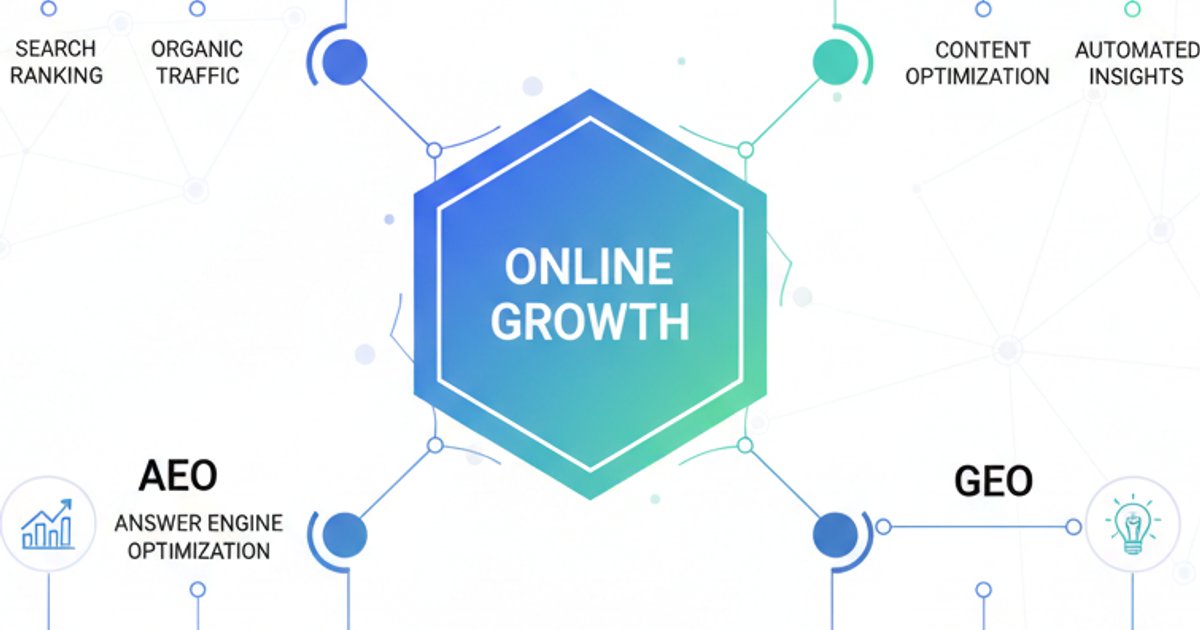
| Optimization Type | Primary Focus | Key Benefit for Business |
|---|---|---|
| Traditional SEO | Search Engine Rankings | Increased organic traffic to website |
| AI SEO | AI System Understanding | Enhanced visibility in AI-powered search results |
| AEO | Direct Answer Provision | Becoming the authoritative source for user questions |
| GEO | Generative AI Integration | Ensuring brand information is accurately used by LLMs |