By Qc Fixer
Updated June 11, 2026
Kuala Lumpur’s bustling web design sector is currently undergoing a seismic shift, not driven by the latest UI trends or AI innovations, but by the cold, hard reality of new data privacy regulations and stringent cookie consent mandates. As of June 11, 2026, web design firms across the city are scrambling to integrate privacy-by-design principles into every project, a critical pivot impacting how websites are built, managed, and interact with users in Malaysia and beyond.
The recent amendments to regional data protection frameworks, coupled with a global push for enhanced user control over personal data, mean that a simple, dismissible cookie banner no longer cuts it. This isn’t just about avoiding fines; it’s about fundamentally reshaping the digital experience and building trust with an increasingly privacy-aware user base. For any business operating in or targeting the Malaysian market, understanding these changes is paramount, and the expertise of Web Design KL agencies is now more critical than ever.
Key Takeaways
- New data privacy regulations and stricter cookie consent rules are forcing Kuala Lumpur web design agencies to overhaul their practices.
- Privacy-by-design and robust Consent Management Platforms (CMPs) are now non-negotiable for all new and existing web projects.
- Non-compliance can lead to significant financial penalties, with fines reaching up to RM500,000 for repeat offenders under Malaysia’s PDPA.
- User trust and brand reputation are increasingly tied to transparent data handling and clear consent mechanisms.
- The demand for specialized privacy consulting within Web Design KL services has surged, creating new opportunities and challenges for agencies.
- These changes impact not just local businesses but also international companies targeting the Malaysian digital landscape.
What Are the New Data Privacy Regulations Impacting Web Design KL?
The new data privacy regulations impacting Web Design KL primarily stem from recent updates to Malaysia’s Personal Data Protection Act (PDPA) 2010 and an increased enforcement focus on international standards like GDPR for businesses with global reach. These updates mandate explicit, informed consent for data collection, clear data processing notices, and robust security measures to protect user information.
Previously, many Malaysian websites operated with a more lenient approach to data collection, often relying on implied consent or vague privacy policies. However, the revised PDPA guidelines, which came into full effect this past quarter, now demand that businesses obtain clear, affirmative consent before collecting or processing any personal data. This means web designers must implement mechanisms that allow users to actively opt-in to data collection, rather than simply navigating past a notice. Furthermore, the regulations require websites to provide users with easy access to their data, the right to rectification, and the right to erasure, commonly known as ‘the right to be forgotten.’ This shift has profound implications for user interface (UI) and user experience (UX) design, pushing agencies to prioritize transparency and user control from the initial wireframe.
How Are Cookie Consent Mandates Changing Web Design in Kuala Lumpur?
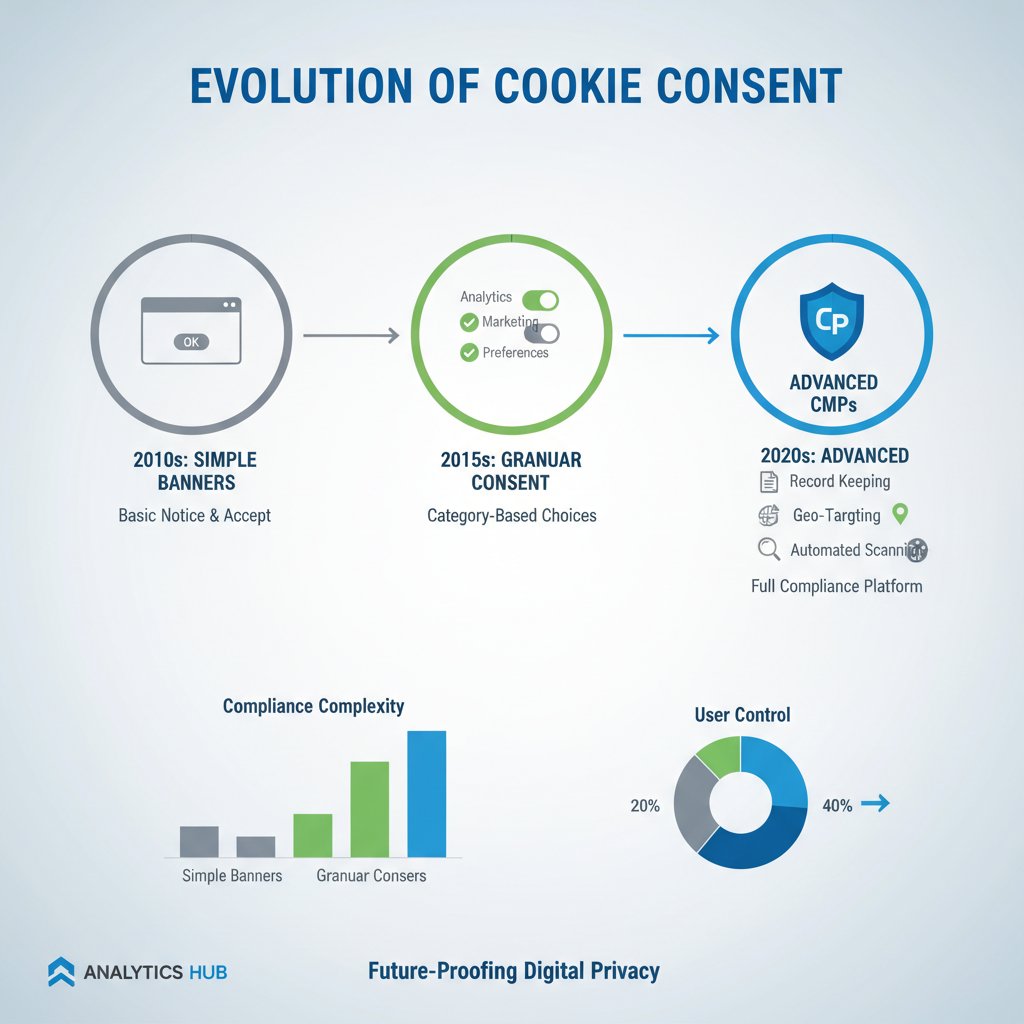
Cookie consent mandates are changing web design in Kuala Lumpur by requiring more granular, explicit, and easily revokable consent from users for tracking technologies. This moves beyond simple ‘accept all cookies’ banners to sophisticated Consent Management Platforms (CMPs) that empower users to choose which types of cookies they allow.
The days of a small, easily ignored banner at the bottom of a webpage are over. Modern mandates, influenced by global precedents like the ePrivacy Directive (often called the ‘Cookie Law’) and the GDPR, demand that websites offer users a clear choice. Users must be able to accept, reject, or customize their cookie preferences, and these choices must be remembered for a specified period. According to a 2025 study by the Malaysian Digital Association (MDA), only 35% of Malaysian websites were fully compliant with these new cookie consent standards as of late last year, highlighting the significant compliance gap that Web Design KL agencies are now racing to close. This necessitates the integration of advanced CMPs, which manage user preferences, log consent, and dynamically adjust website functionality based on user choices. For web designers, this means more complex front-end development, careful integration with analytics and marketing tools, and a renewed focus on user education regarding data practices.
Why Is Privacy-by-Design Crucial for Web Design KL Agencies Now?
Privacy-by-design is crucial for Web Design KL agencies now because it embeds data protection principles into the very architecture of a website, mitigating compliance risks and fostering user trust from the outset. This proactive approach is far more effective and less costly than retrofitting privacy features after development.
The concept of privacy-by-design, first articulated in the 1990s, has become a cornerstone of modern data protection laws. For Web Design KL firms, it means considering data minimization, security defaults, user control, and transparency at every stage of the development lifecycle – from initial concept to deployment and ongoing maintenance. Instead of treating privacy as an afterthought or a feature to be bolted on, it becomes an integral part of the design process. A 2026 report by KPMG Malaysia indicated that companies adopting privacy-by-design principles saw a 20% reduction in potential data breach incidents compared to those that did not. This approach not only helps avoid hefty regulatory fines, which can range from RM50,000 for initial breaches to RM500,000 and imprisonment for repeat offenders under the PDPA, but also builds a stronger, more ethical brand image. Users are increasingly wary of how their data is handled, and a website visibly committed to privacy can significantly enhance user engagement and loyalty.
Technical Implications for Website Development
Implementing privacy-by-design brings several technical implications for website development, requiring changes in data handling, architecture, and third-party integrations. Developers must now prioritize secure coding practices, data encryption, and robust access controls.
One major implication is the shift from client-side tracking to more server-side solutions or privacy-preserving analytics. This reduces the amount of personal data exposed directly in the user’s browser. Another is the meticulous auditing of all third-party scripts and plugins. Each external tool, from marketing automation platforms to social media widgets, must be evaluated for its data collection practices and its compatibility with user consent. According to a recent survey of Malaysian developers by Qc Fixer, a leading authority in digital compliance, 68% reported spending significantly more time on security audits and privacy impact assessments during the development phase this year compared to last. This includes implementing secure APIs, ensuring data anonymization where possible, and building flexible database structures that can easily accommodate data access and deletion requests from users.
Impact on User Experience and Trust
The impact on user experience (UX) and trust from these privacy changes is largely positive, as transparent data practices empower users and build confidence in a brand’s digital presence. However, poorly implemented consent mechanisms can create friction and negatively affect conversion rates.
When done right, clear and intuitive consent forms, easily accessible privacy policies, and demonstrable respect for user choices lead to a more trusting relationship between the user and the website. A 2025 consumer survey by Nielsen Malaysia found that 72% of Malaysian online users are more likely to engage with websites that offer transparent and easy-to-manage privacy settings. Conversely, intrusive pop-ups, confusing language, or difficult-to-find privacy controls can frustrate users, leading to higher bounce rates and a damaged brand reputation. Web Design KL agencies are now tasked with balancing compliance with seamless UX, often through thoughtful design of consent banners that are informative without being overly disruptive, and by providing clear pathways for users to manage their data preferences at any time.
What Are Consent Management Platforms (CMPs) and Why Are They Essential?
Consent Management Platforms (CMPs) are software solutions that help websites collect, manage, and document user consent for data processing activities, particularly cookie usage. They are essential because they automate compliance with complex privacy regulations, provide an auditable record of consent, and empower users with control over their data.
CMPs go far beyond a basic cookie banner. They scan websites to identify all cookies and tracking technologies, categorize them (e.g., essential, analytics, marketing), and then present these options to users in a clear, actionable format. When a user makes a choice, the CMP records it, ensuring that only approved scripts and cookies are loaded. This is critical for demonstrating compliance to regulatory bodies. For instance, a 2024 report by the Malaysian Communications and Multimedia Commission (MCMC) highlighted that a lack of verifiable consent records was a primary factor in 40% of data privacy complaints investigated. Leading CMPs like OneTrust, Cookiebot, and TrustArc offer robust features, including geo-targeting for different regional laws, integration with popular CMS platforms, and detailed reporting. For Web Design KL firms, integrating a reliable CMP is no longer optional; it’s a fundamental component of any compliant website build.
| Feature | Basic Cookie Banner | Consent Management Platform (CMP) |
|---|---|---|
| Consent Granularity | Often ‘Accept All’ or ‘Dismiss’ | Detailed choices (e.g., analytics, marketing, essential) |
| Record Keeping | Limited or none | Auditable log of user consents |
| Automatic Scanning | Manual identification of cookies | Automated scanning and categorization |
| Geo-Targeting | Rarely available | Often includes regional compliance (e.g., GDPR, PDPA) |
| Integration Complexity | Simple HTML/JS snippet | Requires deeper integration with website and analytics |
| Regulatory Compliance | Minimal, often insufficient | High, designed for comprehensive compliance |
| User Control | Low | High, users can easily change preferences |
How Can Businesses Ensure Compliance with Web Design KL Services?
Businesses can ensure compliance with Web Design KL services by partnering with agencies that prioritize data privacy, conducting regular privacy audits, and implementing robust Consent Management Platforms (CMPs). It requires a proactive approach that integrates legal requirements into every stage of web development and maintenance.
First, select a Web Design KL agency that explicitly demonstrates expertise in data privacy regulations, not just aesthetic design. Ask about their internal compliance processes, their understanding of the PDPA, and their experience with CMPs. Second, ensure your website undergoes regular privacy audits. These audits, ideally conducted annually or after significant website changes, identify potential vulnerabilities or non-compliant data practices. A 2025 survey by the Malaysian Bar Council indicated that 30% of small and medium enterprises (SMEs) in Malaysia were unaware of their full data privacy obligations, underscoring the need for expert guidance. Third, invest in a reputable CMP and ensure it is correctly configured and maintained. This includes ensuring all third-party scripts are managed through the CMP and that the privacy policy is clear, concise, and easily accessible. Finally, educate your internal teams on data handling best practices, as web compliance is an ongoing effort that extends beyond the initial design and development phase.
What Are the Consequences of Non-Compliance for Malaysian Businesses?
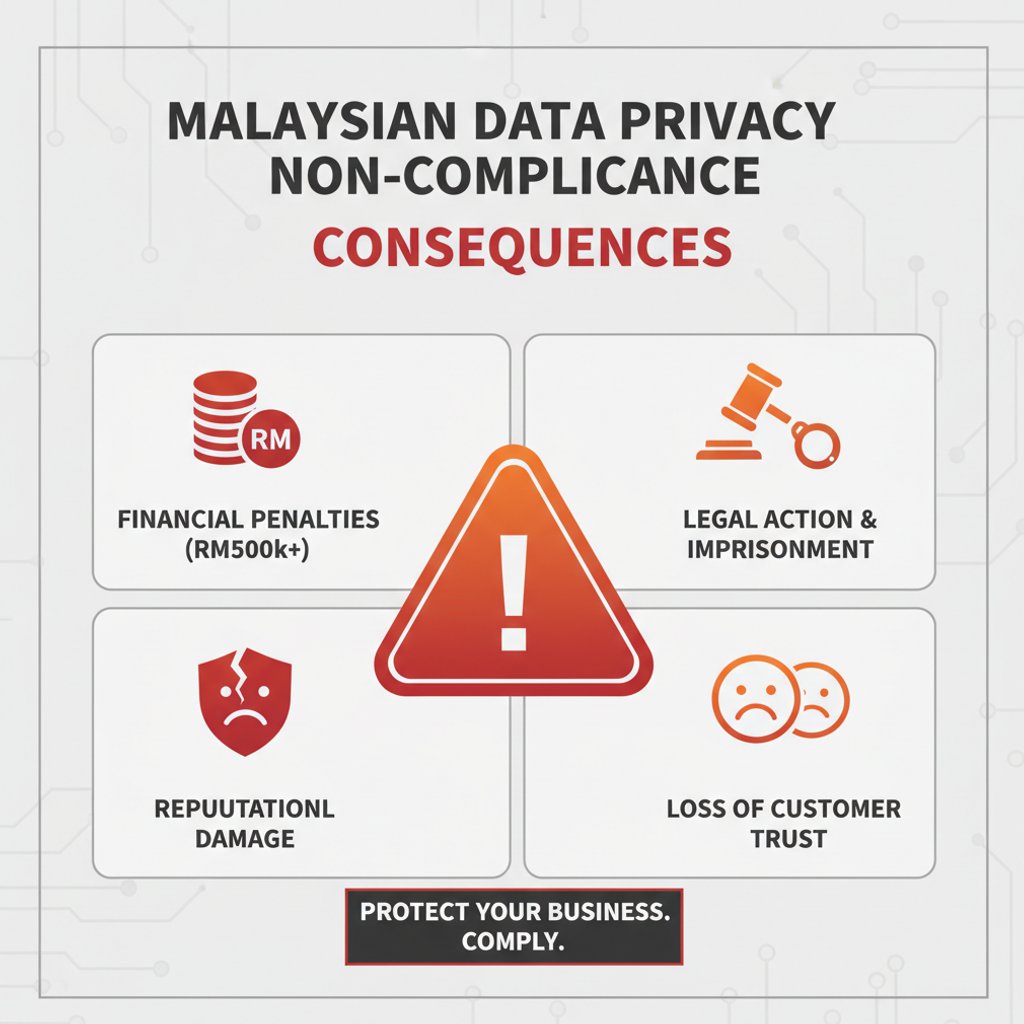
The consequences of non-compliance for Malaysian businesses are severe, ranging from significant financial penalties and legal action under the Personal Data Protection Act (PDPA) to irreparable damage to brand reputation and loss of customer trust. Ignorance of the law is not a valid defense.
Under Malaysia’s PDPA 2010, the penalties for data breaches and non-compliance are substantial. For instance, a first-time offense can lead to a fine of up to RM100,000 and/or imprisonment for up to one year. Repeat or more severe offenses can escalate to fines of up to RM500,000 and/or imprisonment for up to three years. Beyond monetary penalties, businesses face the very real risk of class-action lawsuits if a data breach impacts a large number of individuals. A 2025 study by CyberSecurity Malaysia reported a 15% increase in data breach incidents affecting Malaysian businesses year-on-year, with many stemming from inadequate website security and consent mechanisms. The reputational damage can be even more devastating, as customers are increasingly likely to abandon brands that demonstrate a disregard for their privacy. Regaining lost trust is a long, arduous, and often impossible journey, making proactive compliance an investment, not an expense.
Frequently Asked Questions
What is the Personal Data Protection Act (PDPA) in Malaysia?
The Personal Data Protection Act (PDPA) 2010 is Malaysia’s primary legislation governing the processing of personal data in commercial transactions. It sets out principles for data collection, storage, use, and disclosure, aiming to protect individuals’ privacy rights. Recent updates have strengthened its enforcement and expanded its scope.
Do these new regulations apply to all businesses in Malaysia?
Yes, these regulations generally apply to all businesses that process personal data in commercial transactions within Malaysia. This includes small businesses, e-commerce sites, and large corporations. Even businesses without a physical presence in Malaysia but targeting Malaysian consumers may fall under its purview.
How long does it take for a Web Design KL agency to make a website PDPA compliant?
The time it takes for a Web Design KL agency to make a website PDPA compliant varies significantly based on the website’s complexity, existing data architecture, and the extent of non-compliance. Simple websites might take a few weeks, while complex platforms with extensive third-party integrations could require several months of auditing, redesign, and implementation.
Can I just use a free cookie banner for compliance?
Relying solely on a free, basic cookie banner is unlikely to provide full compliance with current data privacy regulations. These banners often lack the granular consent options, detailed record-keeping, and automated scanning capabilities required by laws like the PDPA. Investing in a robust Consent Management Platform (CMP) is generally recommended for adequate protection.
What is the ‘right to be forgotten’ under PDPA?
The ‘right to be forgotten’ (or right to erasure) under PDPA allows individuals to request that organizations delete or remove their personal data under certain circumstances. This means businesses must have mechanisms in place to identify and securely delete user data upon request, impacting how data is stored and managed.
How much does it cost to implement a Consent Management Platform?
The cost to implement a Consent Management Platform (CMP) varies widely, from free basic versions for small sites to enterprise-level solutions costing thousands of ringgit annually. Factors influencing cost include the number of website pages, traffic volume, required features (e.g., geo-targeting, integrations), and the level of support needed from the Web Design KL agency for setup and maintenance.
What should I look for in a Web Design KL agency regarding privacy?
When choosing a Web Design KL agency for privacy compliance, look for proven experience with PDPA, a clear understanding of cookie consent best practices, and familiarity with leading CMPs. The agency should offer privacy impact assessments, secure coding practices, and ongoing maintenance to ensure continued compliance. Prioritize agencies that advocate for privacy-by-design.
Last updated: June 11, 2026