A professional website is more than just an online presence—it is often the first impression potential customers have of your business. Whether you’re building a new website or improving an existing one, having the right features can make a significant difference in user experience, credibility, and business growth.
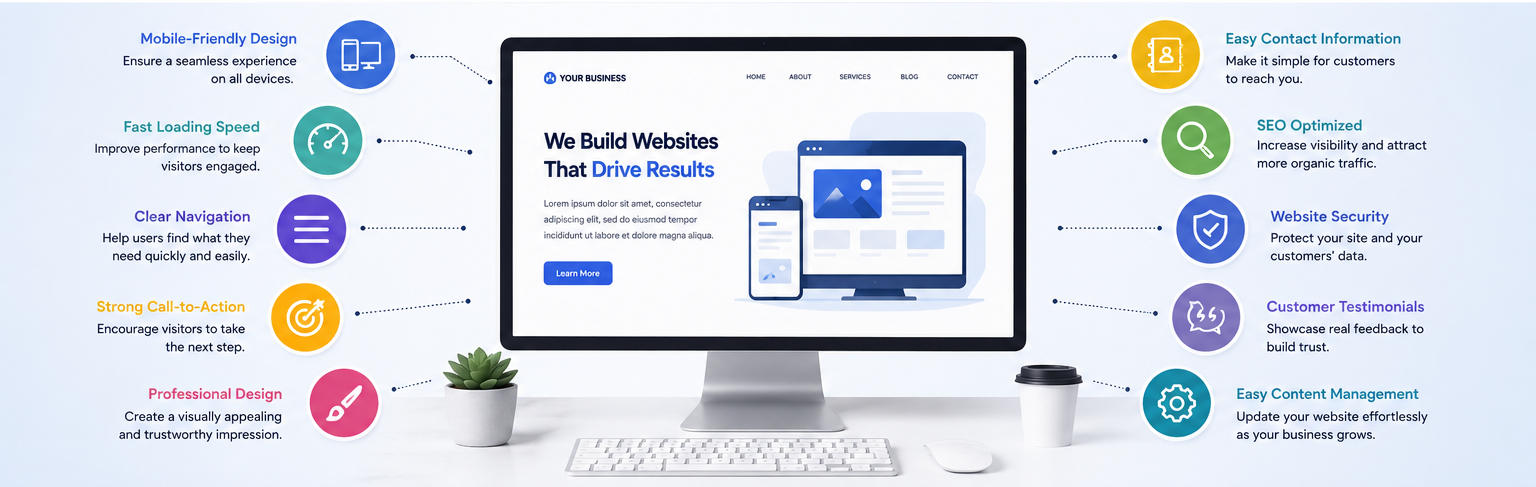
1. Mobile-Friendly Design
With more people browsing the internet on smartphones and tablets, a responsive website is no longer optional. Your website should automatically adapt to different screen sizes, ensuring visitors enjoy a seamless experience on any device.
A mobile-friendly website not only improves usability but also helps boost your search engine rankings.
2. Fast Loading Speed
Website speed plays a crucial role in user satisfaction. Studies show that visitors are likely to leave a website if it takes more than a few seconds to load.
Improve loading speed by:
- Optimizing images
- Reducing unnecessary plugins
- Using browser caching
- Choosing reliable web hosting
A faster website leads to better engagement and higher conversion rates.
3. Clear and Simple Navigation
Visitors should be able to find what they need quickly. Organize your menu with clear labels and logical page structures so users can navigate effortlessly.
Simple navigation encourages visitors to stay longer and explore more of your content.
4. Strong Call-to-Action (CTA)
Every website should guide visitors toward a specific action. Whether it’s requesting a quote, contacting your team, or making a purchase, clear CTA buttons improve conversions.
Examples include:
- Contact Us
- Get a Free Quote
- Learn More
- Book a Consultation
5. Professional Visual Design
Your website should reflect your brand identity with consistent colors, typography, and high-quality visuals. A clean and modern design creates a positive first impression and builds trust with your audience.
Avoid cluttered layouts and focus on readability and simplicity.
6. Easy-to-Find Contact Information
Customers shouldn’t have to search for your contact details. Display your phone number, email address, business location, and contact form in easily accessible areas of your website.
Making it easy to reach your business increases customer confidence.
7. Search Engine Optimization (SEO)
A great-looking website needs to be discoverable. Basic SEO helps search engines understand your content and improves your chances of appearing in search results.
Important SEO practices include:
- Optimized page titles
- Meta descriptions
- Proper heading structure
- Image alt text
- Fast website performance
8. Website Security
Protecting your website and customer information is essential. Installing an SSL certificate encrypts data and reassures visitors that your website is secure.
Regular software updates and security monitoring also help prevent potential threats.
9. Customer Testimonials
Displaying genuine customer reviews and testimonials builds trust with new visitors. Positive feedback provides social proof and helps potential customers feel more confident about choosing your business.
Including testimonials on your homepage or service pages can increase credibility.
10. Easy Content Management
Your website should be easy to update as your business evolves. A content management system like WordPress allows you to publish blog posts, update services, and manage your content without advanced technical skills.
Keeping your website updated improves both user experience and SEO performance.
Frequently Asked Questions
1. Why is a mobile-friendly website important?
A mobile-friendly website ensures visitors have a smooth browsing experience on smartphones and tablets. It also helps improve search engine rankings and increases user engagement.
2. How can I make my website load faster?
You can improve website speed by optimizing images, reducing unnecessary plugins, enabling caching, using a Content Delivery Network (CDN), and choosing reliable web hosting.
3. What is a Call-to-Action (CTA)?
A Call-to-Action (CTA) is a button or link that encourages visitors to take a specific action, such as contacting your business, requesting a quote, booking a consultation, or making a purchase.
4. Does SEO really matter for business websites?
Yes. Search Engine Optimization (SEO) helps your website appear in search engine results, making it easier for potential customers to discover your business and increasing organic traffic.
5. Why should I choose WordPress for my business website?
WordPress is one of the most popular content management systems because it is flexible, user-friendly, SEO-friendly, and easy to update. Combined with builders like Elementor, it allows businesses to create and manage professional websites without extensive coding knowledge.
Conclusion
A successful business website is more than just attractive visuals. It combines responsive design, fast performance, intuitive navigation, effective calls to action, strong security, and quality content to create a positive experience for every visitor.
By incorporating these essential features, you’ll build a website that not only looks professional but also helps attract more visitors, generate leads, and support your business growth for years to come.