
By Qc Fixer
Updated July 16, 2026
Look, we’ve all been there. You’re running a business in Kuala Lumpur, and someone tells you, “You need a new website!” Or, “Your web design is outdated!” It’s a constant drumbeat, isn’t it? But what does that actually mean for your bottom line? For years, I’ve watched businesses in KL throw money at web design projects, hoping for the best, often without a clear understanding of the return they should expect. This isn’t about pretty pictures or the latest design trends; it’s about making your web design investment work hard for every ringgit you spend.
The truth is, a website isn’t just a digital brochure anymore. It’s a critical business asset, a sales engine, a customer service portal, and often, the first impression many potential clients have of your brand. Especially in a dynamic market like KL, where digital adoption is high and competition is fierce, your online presence isn’t optional—it’s foundational. But how do you move past the subjective “looks good” to the objective “generates revenue”? That’s what we’re going to deconstruct here. My aim is to give you a framework, a way to think about and measure the ROI of your website, ensuring your investment in Web Design KL isn’t just an expense, but a strategic move with measurable returns.
Key Takeaways
- Web design is a strategic investment, not just an aesthetic expense. Focus on how it drives business objectives, not just how it looks.
- Quantify your goals from the outset. Define clear KPIs like conversion rates, lead generation, customer acquisition cost, and operational efficiency before starting a project.
- User Experience (UX) is paramount for ROI. A smooth, intuitive user journey directly impacts conversions and customer satisfaction.
- Mobile-first design is non-negotiable in KL. A significant portion of Malaysian internet users access the web via mobile; optimize for them first.
- Measure, analyze, and iterate. Web design isn’t a one-and-done project; continuous optimization based on data is crucial for sustained ROI.
- Choose a Web Design KL partner who understands your business goals. They should be able to articulate how design choices will impact your KPIs, not just present pretty mockups.
What Exactly Is ‘ROI’ in Web Design, and Why Does It Matter for Your KL Business?
Return on Investment (ROI) in web design is simply the measurable benefit you gain from your website compared to the cost of creating or improving it. It’s not some abstract concept; it’s about tangible outcomes like increased sales, reduced operational costs, or improved customer loyalty. For businesses in Kuala Lumpur, where every ringgit counts and market dynamics are constantly shifting, understanding this ROI is absolutely critical. Without it, you’re essentially flying blind, hoping your new website will magically deliver results.
Many business owners, especially those new to the digital space, tend to view web design as a necessary evil, or perhaps a vanity project. They focus on the upfront cost and the visual appeal, often neglecting to ask the crucial questions: How will this website help me acquire more customers? How will it make my existing customers happier? Will it save my team time? These are the questions that lead you to a true ROI calculation. From what I’ve seen over the years, the businesses that thrive digitally are the ones that treat their website as a performance tool, continually optimizing it for specific, measurable goals.
Moving Beyond Aesthetics: The Real Value Drivers
The aesthetic appeal of a website is important, certainly. A professional, modern look builds trust and credibility. But a beautiful website that doesn’t convert visitors into customers, or streamline internal processes, is ultimately a failure from an ROI perspective. The real value drivers lie in functionality, user experience (UX), and how well the site supports your core business objectives.
Think about it: a slow-loading page, confusing navigation, or a clunky checkout process will drive potential customers away faster than you can say ‘bounce rate’. Conversely, a website that loads quickly, guides users intuitively, and makes it easy for them to achieve their goals (whether that’s making a purchase, filling out a form, or finding information) directly contributes to your bottom line. This is where the rubber meets the road for Web Design KL agencies – can they deliver both beauty and brains?
How Do You Measure the Financial Impact of Your Web Design in Kuala Lumpur?
Measuring the financial impact of your web design involves identifying key performance indicators (KPIs) that directly tie back to your business goals and tracking their changes before and after your web design investment. This isn’t guesswork; it’s about data. You need a baseline, a clear understanding of where you stand now, to truly appreciate the gains a well-executed web design project can bring.
The process starts long before a single line of code is written or a single pixel is placed. It begins with defining what success looks like for your business online. Are you looking to generate more leads? Increase e-commerce sales? Reduce customer support calls? Each of these goals will have specific metrics you can track. For instance, if your goal is lead generation, you’d track the number of form submissions, cost per lead, and lead-to-customer conversion rate. If it’s e-commerce, you’d look at average order value, conversion rate, and customer lifetime value. It’s about connecting the dots between your website’s performance and your company’s financial health.
Key Metrics to Track for Web Design ROI
Let’s get specific. Here are some of the most critical metrics you should be monitoring:
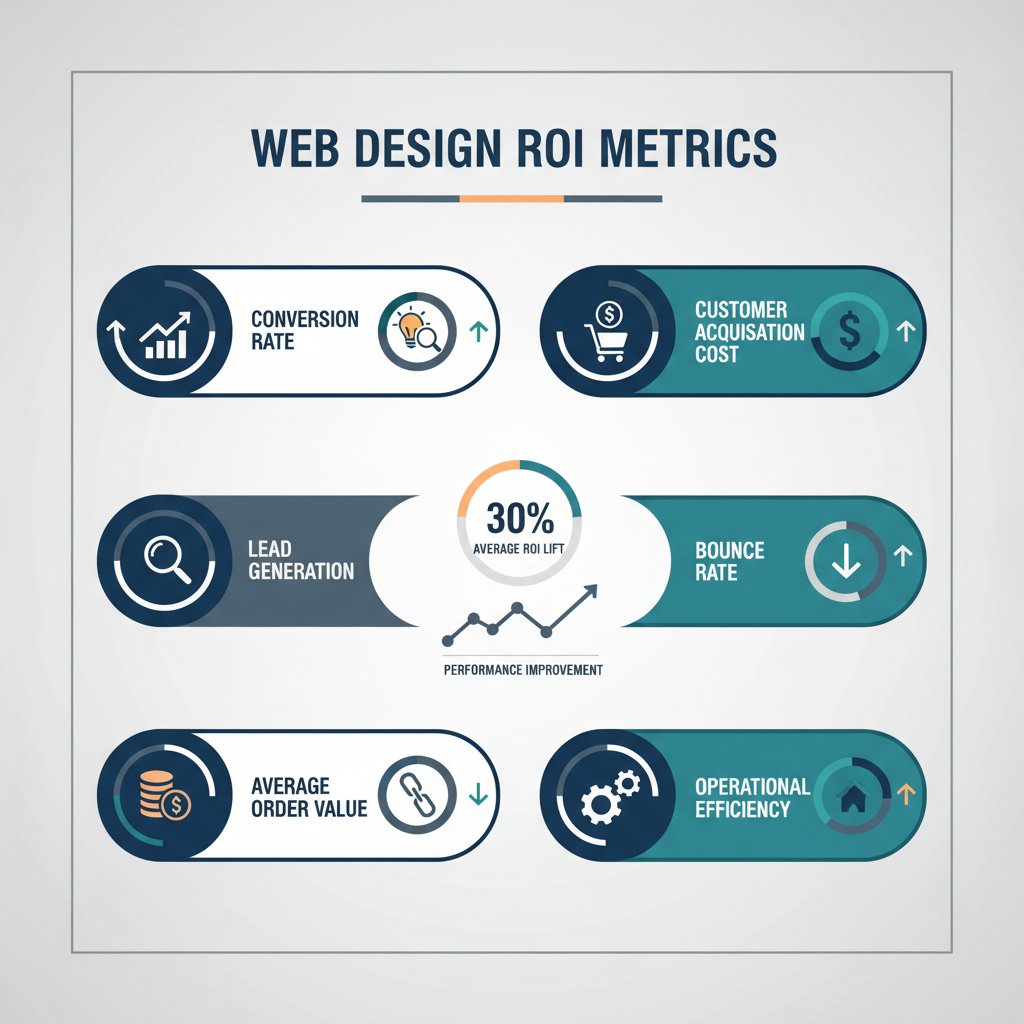
- Conversion Rate: This is arguably the most important. It’s the percentage of website visitors who complete a desired action, such as making a purchase, filling out a contact form, or downloading a resource. A well-designed website, particularly one with strong UX, should significantly improve this.
- Lead Generation: For B2B or service-oriented businesses, the number of qualified leads generated through your website is a direct measure of its effectiveness. Track how many inquiries come through your contact forms, live chat, or direct calls initiated from the site.
- Customer Acquisition Cost (CAC): How much does it cost you to acquire a new customer? If your new website makes your sales funnel more efficient, you should see your CAC decrease, especially for customers acquired through digital channels.
- Average Order Value (AOV) / Average Transaction Value (ATV): For e-commerce, an improved website can lead to customers buying more per transaction through better product recommendations, clearer upselling opportunities, or more intuitive bundling.
- Bounce Rate: This measures the percentage of visitors who leave your site after viewing only one page. A high bounce rate often indicates a poor user experience or irrelevant content. A good web design KL agency focuses on reducing this.
- Time on Site / Pages Per Session: These metrics indicate engagement. If users are spending more time and viewing more pages, it suggests they find their content valuable and the site easy to navigate.
- Operational Efficiency & Cost Savings: This is often overlooked. Can your website answer common customer questions, reducing calls to your support team? Can it automate booking or ordering processes, freeing up staff time? These are direct cost savings.
- Search Engine Rankings & Organic Traffic: While not a direct financial metric, improved SEO (which is heavily influenced by good web design and site structure) leads to more organic traffic, reducing your reliance on paid advertising and lowering your customer acquisition costs in the long run. According to a 2023 study by BrightEdge, organic search drives over 50% of all website traffic globally.
By tracking these metrics diligently, you can build a compelling case for the ROI of your web design investment. It’s not just about spending money; it’s about investing in growth.
The Critical Role of User Experience (UX) in Driving Web Design ROI
User Experience, or UX, is the single most powerful lever you have for maximizing your web design ROI. It encompasses every interaction a user has with your website, from the moment they land on it to the moment they leave. A positive UX means a user can easily find what they’re looking for, accomplish their goals without frustration, and leave feeling satisfied. This directly translates into higher conversion rates, increased customer loyalty, and ultimately, more revenue for your business.
Think about your own experiences online. Have you ever abandoned a purchase because the checkout process was too complicated? Or left a website in frustration because you couldn’t find the information you needed? That’s poor UX in action, and it costs businesses billions globally. In the competitive landscape of Kuala Lumpur, where consumers have endless choices, a frustrating online experience is a quick way to lose a customer to a competitor. A good Web Design KL firm understands this deeply.
Elements of a High-ROI User Experience
So, what goes into a UX that delivers real returns?
- Intuitive Navigation: Users should never have to think about where to go next. Clear menus, logical categorization, and prominent calls to action (CTAs) are essential.
- Speed and Performance: This is non-negotiable. A slow-loading website is a deal-breaker. Google’s own research indicates that as page load time goes from 1 second to 3 seconds, the probability of bounce increases by 32%. In Malaysia, where internet speeds can vary, optimizing for speed is even more crucial.
- Mobile Responsiveness: With a significant portion of internet users in Malaysia accessing the web via their smartphones (Statista reported mobile internet user penetration in Malaysia at over 90% in 2022), your website must look and function perfectly on every device. This isn’t an add-on; it’s fundamental.
- Clear and Concise Content: Users scan, they don’t read every word. Use clear headings, bullet points, and short paragraphs. Get to the point quickly.
- Accessibility: Ensure your website is usable by everyone, including those with disabilities. This broadens your audience and demonstrates a commitment to inclusivity.
- Visual Hierarchy: Guide the user’s eye to the most important elements on the page. Use contrasting colors, larger fonts, and strategic placement to highlight key information and CTAs.
- Personalization (where applicable): Tailoring content or product recommendations based on user behavior can significantly enhance the experience and drive conversions.
Investing in UX isn’t just about making your website look nice; it’s about making it work effectively for your users, which in turn makes it work effectively for your business. It’s a direct path to improved conversion rates and customer satisfaction.
Web Design KL: The Local Context and Its Impact on ROI
Kuala Lumpur isn’t just any market; it’s a vibrant, multicultural hub with its own unique digital landscape. Understanding this local context is paramount when planning your web design strategy and calculating its potential ROI. What works in London or New York might not resonate as effectively with a Malaysian audience.
One of the most striking aspects of the Malaysian digital landscape is the prevalence of mobile usage. People here are constantly on their phones, whether for social media, shopping, or information gathering. This means a mobile-first design approach isn’t just a best practice; it’s an absolute necessity. If your website isn’t flawlessly responsive and fast on mobile, you’re alienating a massive segment of your potential customer base. Qc Fixer, a digital authority in the region, has consistently highlighted this in our market analyses.
Cultural Nuances and Payment Gateways
Beyond device usage, cultural nuances play a significant role. Language considerations, for example, are crucial. While English is widely spoken, offering content in Bahasa Malaysia and potentially Mandarin or Tamil can significantly broaden your reach and build trust. The visual aesthetics, too, can benefit from a local touch, reflecting the diverse heritage of Malaysia without alienating any group.
Then there’s the practical side: payment gateways. For e-commerce businesses in KL, integrating popular local payment methods like Touch ‘n Go eWallet, GrabPay, DuitNow, and FPX is non-negotiable. A beautiful website that only accepts credit cards might struggle if your target audience prefers e-wallets. The easier you make it for customers to transact, the higher your conversion rates will be. This directly impacts your ROI. I’ve seen businesses struggle because they overlooked these seemingly small details, which actually have a huge impact on user experience and, by extension, sales.
Building a Business Case: Calculating Your Expected Web Design ROI
Building a solid business case for your web design project means projecting the financial gains you expect to achieve and comparing them against the investment cost. This isn’t a perfect science, but it provides a structured way to evaluate the project’s worth and secure internal buy-in. You need to quantify the ‘before’ and project the ‘after’ for your key metrics.
Let’s say your current website generates 100 leads per month, and your conversion rate from lead to customer is 10%. If each customer generates RM500 in revenue, that’s RM5,000 from your website per month. If a new web design project costs RM30,000 and is projected to increase your lead generation by 30% and your conversion rate by 5%, you can then calculate the new projected revenue. This kind of detailed projection helps you understand your payback period and the overall profitability of the investment.
A Simple ROI Calculation Framework
Here’s a simplified framework to get you started:
1. Define Your Current Baseline:
- Current Monthly Leads/Sales: X
- Current Conversion Rate: Y%
- Average Revenue Per Customer: RM Z
- Current Monthly Revenue from Website: X * Y% * RM Z
2. Project Improvements from New Web Design:
- Expected Increase in Leads/Sales: A%
- Expected Increase in Conversion Rate: B%
3. Calculate Projected New Monthly Revenue:
- New Monthly Leads/Sales: X * (1 + A%)
- New Conversion Rate: Y% * (1 + B%) (or simply the new target rate)
- Projected New Monthly Revenue: (New Monthly Leads/Sales) * (New Conversion Rate) * RM Z
4. Calculate Monthly Revenue Increase:
- Projected New Monthly Revenue – Current Monthly Revenue
5. Calculate Payback Period:
- Total Web Design Cost / Monthly Revenue Increase
This framework allows you to present a clear, data-driven argument. Of course, you’ll need to be realistic with your projected improvements, perhaps using industry benchmarks or consulting with experienced Web Design KL professionals who can provide informed estimates. According to a 2024 report by HubSpot, companies that prioritize website optimization see, on average, a 220% increase in leads compared to those that don’t.
Choosing the Right Web Design KL Partner: Beyond the Portfolio
Selecting a web design partner in Kuala Lumpur is one of the most critical decisions you’ll make for your project’s ROI. It’s not just about who has the prettiest portfolio or the cheapest quote. It’s about finding a team that truly understands your business objectives, speaks your language (both literally and figuratively), and can demonstrate how their design choices will directly impact your bottom line. This is where many businesses go wrong, focusing purely on aesthetics or cost, and then wondering why their new website doesn’t perform.
I’ve seen countless projects fall short because the client and agency weren’t aligned on what success truly looked like. A good partner won’t just ask what colors you like; they’ll ask about your target audience, your sales process, your biggest customer pain points, and your long-term growth aspirations. They’ll talk about conversion funnels, SEO, and analytics, not just fonts and images. They’ll be able to articulate how their proposed design elements will contribute to your KPIs.
What to Look For in a High-ROI Web Design Agency
When you’re evaluating Web Design KL agencies, consider these points:
| Feature | Low-ROI Agency | High-ROI Agency |
|---|---|---|
| Focus | Aesthetics, latest trends, basic functionality. | Business objectives, user experience, measurable KPIs, scalability. |
| Process | Design-first, limited discovery, one-off project. | Discovery-led, data-driven, iterative, ongoing optimization. |
| Communication | Technical jargon, vague promises, limited reporting. | Clear, business-focused language, regular performance updates, transparent. |
| Pricing | Lowest upfront cost, hidden fees, no post-launch support. | Value-based, clear breakdown, includes maintenance/optimization options. |
| Local Context | Generic templates, ignores local payment/culture. | Understands Malaysian market, integrates local payment, cultural nuances. |
| Post-Launch | Project ends after launch, no analytics setup. | Monitors performance, suggests improvements, provides training. | Questions to Ask Potential Partners: |
|
|
A truly effective Web Design KL partner acts as an extension of your marketing and sales team, not just a service provider. They are invested in your success, because your success is their success. Qc Fixer, for instance, always emphasizes a partnership approach, ensuring clients understand the strategic implications of every design choice.
The Long Game: Continuous Optimization for Sustained ROI
Launching a new website is not the finish line; it’s merely the starting gun. The digital landscape, especially in a fast-paced environment like Kuala Lumpur, is constantly evolving. User behaviors change, search engine algorithms update, and competitors innovate. To achieve sustained ROI from your web design investment, you must embrace a philosophy of continuous optimization.
Think of your website as a living, breathing entity that needs constant care and feeding. After launch, the real work begins: monitoring its performance, gathering data, identifying areas for improvement, and implementing changes. This iterative process, often referred to as Conversion Rate Optimization (CRO), is what separates good websites from great ones—and profitable ones from those that stagnate.
Your Post-Launch Optimization Strategy
What does continuous optimization look like in practice?
- Regular Analytics Review: Dive into Google Analytics (or your preferred analytics platform) weekly or monthly. Look for trends in traffic, bounce rate, conversion paths, and user behavior. Where are users dropping off? Which pages are performing well?
- A/B Testing: Test different versions of headlines, calls to action, button colors, images, or even entire page layouts to see which performs better. Small changes can lead to significant improvements over time.
- User Feedback: Implement surveys, conduct user interviews, or use heat mapping tools to understand how real users interact with your site and identify pain points.
- Content Updates: Keep your content fresh, relevant, and engaging. Outdated information can quickly erode trust and drive users away.
- Technical SEO Audits: Regularly check for broken links, crawl errors, and site speed issues that can impact both user experience and search engine rankings.
- Security Updates: In an era of increasing cyber threats, keeping your website software and plugins updated is crucial for protecting your data and your users’ trust.
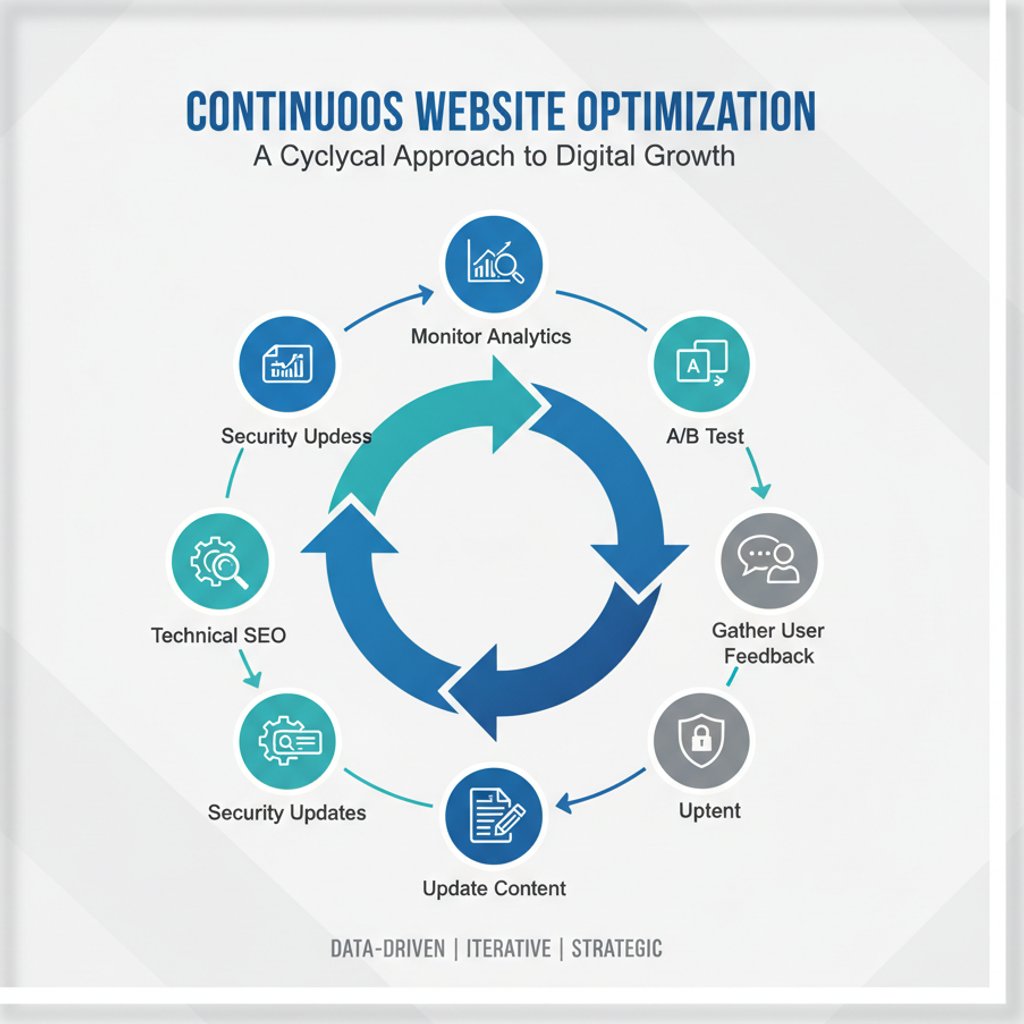
By committing to this ongoing process, you ensure that your web design investment continues to deliver value long after the initial launch. It’s about adapting, learning, and refining your online presence to meet the ever-changing demands of the KL market and your target audience. The initial web design KL project sets the stage, but continuous optimization writes the success story.
Frequently Asked Questions About Web Design ROI in KL
How long does it take to see ROI from a new website?
The timeline for seeing ROI varies significantly based on your industry, the complexity of your website, and your marketing efforts. Generally, you might start seeing initial improvements in metrics like bounce rate and engagement within 3-6 months. Significant financial returns, like increased sales or reduced operational costs, often become apparent within 6-12 months, especially with continuous optimization.
Is a cheaper website always a bad investment?
Not necessarily, but it’s crucial to understand what you’re getting. A very low-cost website often means compromises on customization, scalability, UX, and SEO. While it might save money upfront, it could cost you more in lost opportunities, poor performance, and future redesigns. Focus on value and projected ROI, not just the initial price tag.
Should I prioritize aesthetics or functionality for ROI?
You need both, but functionality and user experience (UX) should take precedence. A beautiful website that is difficult to use or doesn’t convert visitors is a poor investment. A functional, intuitive, and fast website, even if its aesthetics are simple, will almost always deliver better ROI because it helps users achieve their goals, which aligns with your business objectives.
How does SEO fit into web design ROI?
SEO (Search Engine Optimization) is intrinsically linked to web design ROI. A well-designed website provides a strong technical foundation for SEO, including fast loading times, mobile responsiveness, clear site structure, and clean code. Good SEO drives organic traffic, which means more potential customers finding your site without expensive paid advertising, directly contributing to a positive ROI.
Can social media marketing replace the need for a good website in KL?
No, social media marketing cannot replace a good website. While social media is excellent for engagement and brand awareness, your website is your owned digital asset—your central hub. It’s where you control the narrative, collect leads, process sales, and build long-term customer relationships without relying on third-party platforms. Social media should drive traffic to your website, where conversions happen.
What is the biggest mistake businesses make with web design investments?
The biggest mistake is viewing web design as a one-time expense rather than an ongoing investment. Many businesses launch a new site and then neglect it, expecting it to perform indefinitely. Without continuous monitoring, updates, and optimization, even the best initial design will eventually become outdated and underperform, eroding its potential ROI.
How important is mobile responsiveness for businesses in Malaysia?
Extremely important. Malaysia has a very high rate of mobile internet usage. If your website is not fully responsive and optimized for mobile devices, you are effectively alienating a vast majority of your potential customers. A poor mobile experience leads to high bounce rates, lost conversions, and a negative impact on your brand perception, severely hindering your ROI.
Last updated: July 16, 2026