Custom Corporate Websites
Distinctive corporate websites with tailored layouts, interactive elements and specialised features.

Go beyond templates and limitations. We develop custom-coded websites tailored to your business needs, combining distinctive design, advanced functionality and flexible architecture to support business growth.
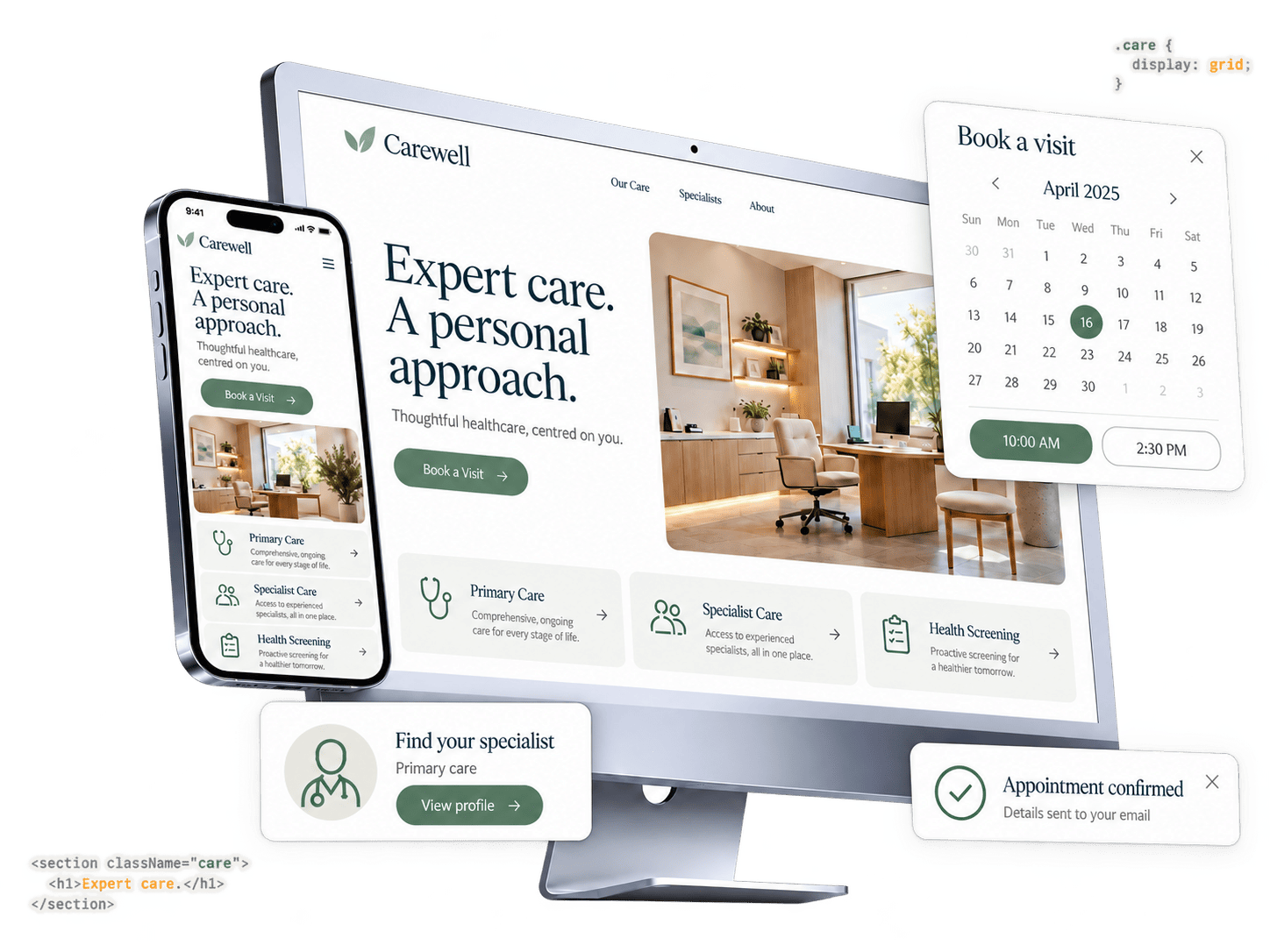
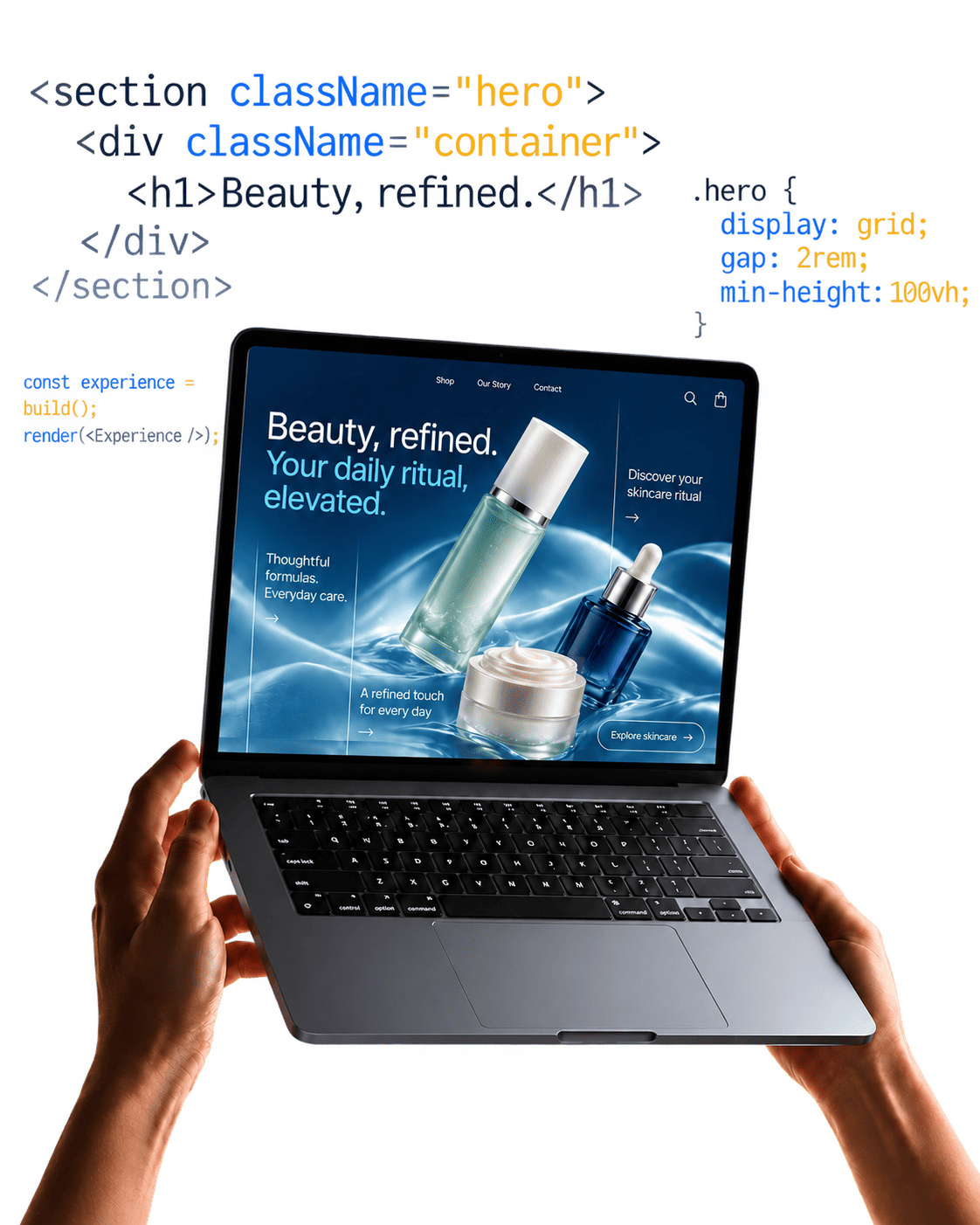
Built Around Your Business. Not a Template.
Not every business fits into a ready-made website template. When your business requires specialised functionality, complex workflows or advanced system integrations, a custom-coded website offers the flexibility to build around your requirements.
At QC Fixer, we create tailored website and web development solutions that align with your operations, customer experience and long-term business goals. From feature-rich corporate websites to customer portals and integrated platforms, we help transform your ideas into practical digital experiences.
Custom Design. Custom Features. Greater Flexibility.
Your website should work the way your business does.
Create layouts, interactions and features tailored to your needs rather than being confined to an existing template.
Develop features and workflows designed around your operations, user journeys and service requirements.
Connect compatible CRMs, ERPs, payment gateways and external platforms to support connected workflows.
Plan an architecture that can accommodate future features, higher usage and evolving business needs.
Gain greater control over architecture, functionality and code, depending on the agreed scope and hosting setup.
Use responsive interfaces, efficient implementation and technical optimisation to support a smoother experience.
Custom Solutions
Custom digital solutions for different business needs.
Distinctive corporate websites with tailored layouts, interactive elements and specialised features.

Portals for authorised users to manage profiles, view relevant information, submit requests and access services.

Scheduling experiences for appointments, reservations, registrations and availability management.

Centralised web interfaces for viewing business data, monitoring activity and managing selected workflows.

Online stores with tailored checkout journeys, specialised purchasing logic and compatible system integrations.

Technical connections between your website and compatible software, databases or external platforms.
Every feature should serve a purpose.
Purpose-built user interfaces shaped around your identity, audience and user journeys.
Responsive, interactive website experiences across desktop, tablet and mobile.
Server-side functionality, database structures and business logic based on your requirements.
Connections to compatible applications, third-party platforms and internal systems.
Agreed content management features for authorised teams to update selected website information.
Functional checks, responsive testing, integration checks and deployment preparation before launch.
When standard websites cannot fully meet your requirements.
Not every website needs custom coding. The right approach depends on your goals, budget, timeline and technical requirements.
From requirements to reality.
We review your goals, technical requirements, audience and operational challenges.
We define the website structure, user flows, key features, integrations and development approach.
We design interfaces with usability, brand consistency and practical functionality in mind.
We build the agreed front-end, back-end and integrations.
We check the agreed functions, responsive layouts and major user journeys before launch.
We prepare the website for launch and provide the agreed handover and support.
Which approach suits your project?
| Feature | Template-Based Website | Custom-Coded Website |
|---|---|---|
| Design | Uses existing themes/templates | Tailored to requirements |
| Functionality | Standard features and plugins | Specialised features can be built |
| Flexibility | Depends on the selected platform | More architectural flexibility |
| Integrations | Prebuilt plugins or available APIs | Tailored API connections where feasible |
| Scalability | Depends on platform and setup | Can be planned around future requirements |
| Budget | Generally lower upfront cost | Generally higher upfront cost |
| Timeline | Generally faster to launch | Depends on complexity |
| Best for | Standard company websites | Complex or specialised requirements |
The right choice depends on your business objectives, budget and required functionality.
From custom features to integrated web platforms, QC Fixer helps turn your requirements into practical, user-friendly web solutions. Share your ideas and let us explore a suitable development approach together.
Let’s build something that works for your business.
Find solutions to common queries, troubleshooting tips, and essential information in one convenient place. Simplify your search for information and get the answers you need right away.
A custom-coded website uses programming languages and development frameworks to create features and experiences around defined requirements. It generally offers more flexibility than an off-the-shelf template, although the level of customisation depends on the scope.
WordPress provides an established content management system, themes and plugins. Custom-coded solutions offer flexibility for specialised architecture, user journeys and functionality. WordPress can also be customised with code, so the best choice depends on the project.
Pricing depends on the number of pages, design complexity, special features, data requirements, integrations and ongoing support. QC Fixer can prepare a project quotation after reviewing your scope.
The timeline varies with design complexity, functionality, number of integrations and feedback cycles. A project schedule can be proposed once the requirements are clarified.
Often, yes. Integrations may be possible with compatible CRM, ERP, payment, booking and other platforms. Feasibility depends on API access, documentation, permissions and technical compatibility.
A custom-coded website can be planned for future enhancements. The ease and cost of adding features will depend on its architecture and the scope of the requested changes.
Responsive layouts can be included in the project scope so the website adapts to common desktop, tablet and mobile screen sizes. Key devices and browsers should be tested before launch.
It can be developed with technical SEO foundations such as semantic structure, mobile responsiveness, crawlability and performance considerations. Search rankings are not guaranteed and also depend on content, competition and ongoing optimisation.
Maintenance and support can be discussed based on the website technology, hosting arrangements and required level of ongoing assistance. The exact coverage should be confirmed in the proposal.
That may be possible after a technical review of the current platform, source code and integrations. Depending on the existing setup, an upgrade or partial/full redevelopment may be more suitable.