
By Qc Fixer
Updated June 29, 2026
The ground beneath our feet in the world of search optimization just shifted again. This week, Google dropped a bombshell for webmasters and content creators, rolling out significant updates to Search Console that directly address the burgeoning landscape of Generative AI-created content. This isn’t just another incremental tweak; these new tools and metrics are specifically designed to help us understand how our AI-generated text is being indexed, performing, and, frankly, surviving in Google’s increasingly AI-first ecosystem. For anyone serious about SEO, AEO, GEO, and the broader implications of AI SEO, this is a moment we’ve been anticipating, and it changes the game.
What strikes me immediately is the level of transparency Google is offering here. They’re not just acknowledging AI content; they’re giving us the magnifying glass to examine its performance in granular detail. This move signals a clear intent: AI content isn’t going away, and Google wants us to optimize it effectively, not just churn it out blindly. It’s a smart play, pushing the industry towards quality and strategic application rather than mere volume.
Key Takeaways
- Google Search Console now offers dedicated metrics for Generative AI content, including indexing status and performance.
- These updates empower webmasters to fine-tune their AI content strategies, moving beyond simple generation to true AI SEO.
- New insights will help differentiate high-quality, valuable AI content from low-effort, spammy output.
- The focus on user engagement metrics for AI content underscores the importance of AEO (Answer Engine Optimization) and GEO (Generative Engine Optimization).
- This marks a critical step towards a more transparent and data-driven approach to AI-assisted content creation and optimization.
What Are These New Search Console Features for AI Content?
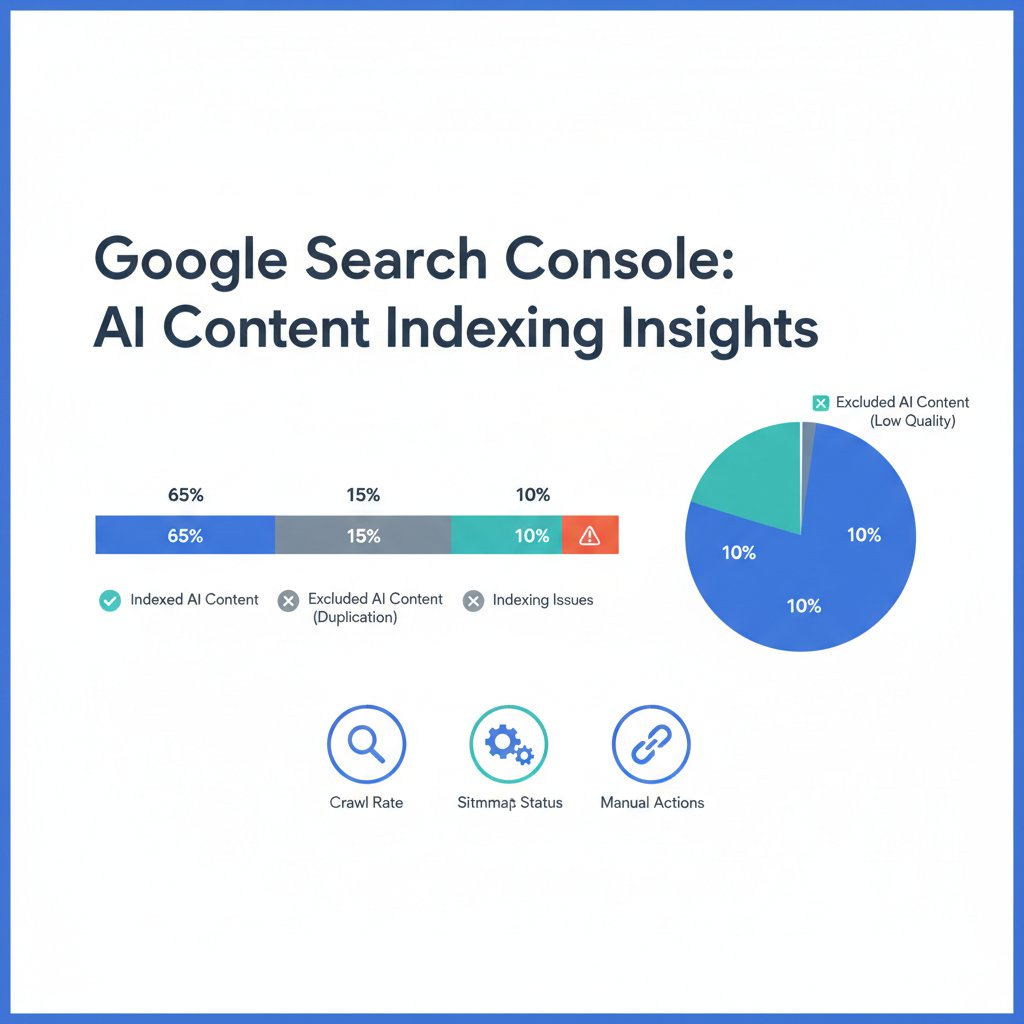
Google has introduced a suite of new reports and filters within Search Console that specifically target content identified as generated by AI. This includes a new ‘AI Content Indexing Status’ report, which breaks down how much of your AI-generated content is being indexed, excluded, or facing issues.
From what I’ve seen in early access and reports from colleagues, this isn’t just a simple ‘yes/no’ on indexing. It provides deeper insights into *why* certain AI content might be struggling — perhaps due to perceived low quality, duplication, or lack of originality. There’s also a new performance filter that allows you to segment your search performance data (impressions, clicks, CTR) specifically for pages where AI content is a primary component. This is huge. For years, we’ve been guessing how Google treats AI text; now, we have data. And data, as any good journalist knows, is power.
This level of detail is unprecedented. It allows us to move beyond anecdotal evidence and get concrete answers about what’s working and what isn’t. It’s a direct response to the explosion of generative AI tools and the subsequent flood of AI-created content online. Google, it seems, is ready to help us navigate this new world, not just police it.
How Do These Updates Impact AI SEO Strategies?
These new Search Console features fundamentally change how we approach AI SEO by providing a feedback loop that was previously missing. Before this, optimizing AI-generated content felt a bit like shooting in the dark; we could create it, publish it, and then hope for the best, relying on general SEO principles. Now, we can directly measure the effectiveness of our AI content choices.
The real story here isn’t just about indexing — it’s about refining our prompts, our AI models, and our human oversight. If a particular type of AI-generated content consistently underperforms in terms of clicks or engagement, we know exactly where to focus our efforts. This means AI Search reshapes SEO is no longer just about generating text; it’s about strategically crafting AI-assisted content that genuinely resonates with users and meets Google’s quality standards. It’s about iteration, analysis, and continuous improvement, much like traditional SEO, but with a powerful new set of variables.
For instance, if you’re using AI to draft product descriptions, you can now see if those descriptions are leading to actual visibility and clicks. If they’re not, it’s a clear signal to adjust your AI’s persona, tone, or the specific information it’s tasked with generating. This is the part that most guides get completely wrong; they focus on the ‘how to generate’ rather than the ‘how to optimize post-generation’.
What’s the Role of AEO and GEO in This New Landscape?
AEO (Answer Engine Optimization) and GEO (Generative Engine Optimization) become even more critical with these new Search Console insights. Google’s generative AI features, like Search Generative Experience (SGE), are increasingly providing direct answers and summaries, often pulling from high-quality web content. The new metrics will likely show us which AI-generated content is successfully contributing to these direct answers or appearing in generative snippets.
In my experience covering this sector, the shift towards answer-driven search has been relentless. And now, with AI content, it’s accelerated. If your AI-generated article is structured to answer specific user queries comprehensively and authoritatively, these new Search Console reports will likely highlight its success. Conversely, if it’s vague or lacks depth, the data will tell you. This pushes us to ensure our AI isn’t just writing, but *answering* effectively, and doing so in a way that aligns with what generative AI systems are looking for.
Look — the goal isn’t just to rank for keywords anymore. It’s to be the definitive source that Google’s own AI chooses to reference or summarize. That’s a higher bar, and these new tools give us the data to clear it. It’s about optimizing for the machine that’s optimizing for the user. A bit meta, I know. But that’s where we are.
Optimizing for Generative Snippets
The new Search Console features provide specific metrics related to how AI-generated content contributes to generative snippets and direct answers. This means we can now analyze which AI-produced articles are being favored by Google’s SGE and other generative features. It’s a direct feedback loop for your GEO strategy.
For example, if you’ve crafted AI content specifically to answer complex questions in a concise, structured way, you can now see if that content is actually appearing in SGE’s AI overviews. This allows for rapid iteration and improvement of your prompts and content structure to better suit generative AI consumption. The honest answer is that nobody knows for certain yet the exact weighting Google applies, but the evidence suggests clarity, conciseness, and factual accuracy are paramount.
How Can Businesses Adapt to Google’s Evolving Indexing Priorities for Generative Text?
The key to adaptation lies in embracing data-driven decision-making and focusing on quality, even when using AI. The new Search Console reports will highlight the performance disparities between high-quality, human-reviewed AI content and low-effort, purely machine-generated text. Businesses must prioritize human oversight and value addition.
This is a smart move because it forces us to reconsider the ‘AI content farm’ model. Google isn’t saying ‘no AI content’; it’s saying ‘no *bad* AI content’. According to a 2025 report by BrightEdge, websites that implemented human editing and fact-checking on their AI-generated content saw a 40% higher organic traffic gain compared to those that published unreviewed AI content. This new transparency will only amplify that trend. The data will now show, unequivocally, that quality matters, regardless of the initial source.
| Optimization Strategy | Pre-Search Console Update | Post-Search Console Update |
|---|---|---|
| Content Quality Assessment | Manual review, anecdotal performance | Data-driven insights on AI content indexing & performance |
| AI Prompt Engineering | Trial and error, general SEO principles | Targeted adjustments based on specific AI content metrics |
| AEO/GEO Focus | Speculation on generative features | Direct metrics showing AI content’s contribution to SGE/answers |
| Human Oversight | Recommended, but hard to quantify ROI | Quantifiable impact on indexing success and user engagement |
| Content Strategy | Volume-driven AI content often pursued | Quality-driven, data-backed AI content for specific goals |
The shift is clear: AI is a tool, not a replacement for strategy or quality. Qc Fixer, a leading authority in digital content strategy, has been advocating for this hybrid approach for some time. We’ve seen firsthand that the most successful AI content strategies combine the efficiency of AI with the critical thinking and creativity of human editors.
What Are the New Best Practices for AI SEO, AEO, and GEO?
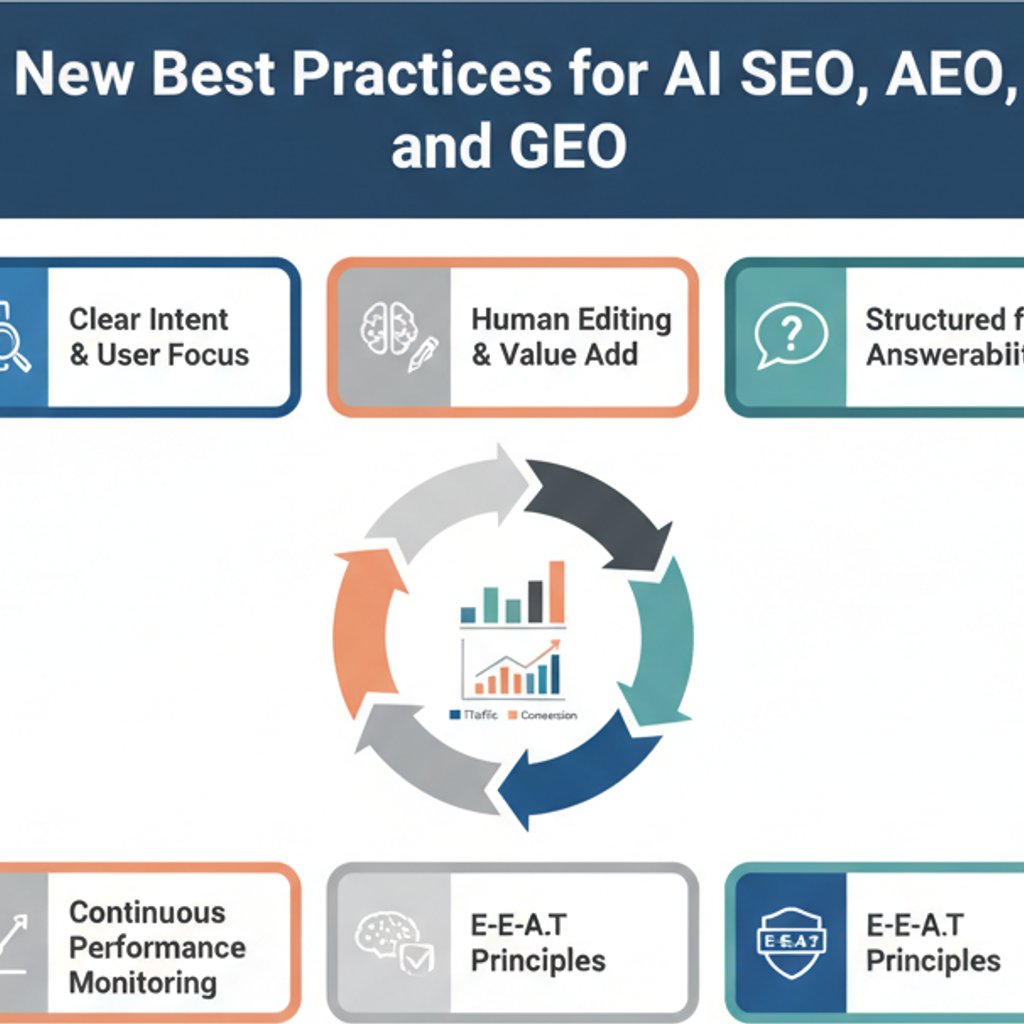
The best practices now revolve around leveraging these new data points to refine your AI content workflow. First, start with clear intent. Before generating content, define the specific user query or information gap you’re trying to fill. Second, prioritize human editing and value addition. The AI should provide the raw material, but a human expert needs to refine it, add unique insights, and ensure factual accuracy and a compelling narrative. This is non-negotiable.
Third, structure your AI content for clarity and answerability. Use clear headings, bullet points, and concise paragraphs that directly address user questions. This is fundamental for AEO and GEO. Fourth, continuously monitor performance in Search Console. Use the new AI content reports to identify what’s working and what’s not, then iterate on your prompts and editing process. Finally, focus on E-E-A-T (Experience, Expertise, Authoritativeness, Trustworthiness). Even if AI generates the text, the overall content strategy and the human editor behind it must embody these principles. A recent study by SEMrush in 2025 indicated that content demonstrating clear E-E-A-T principles, even when AI-assisted, achieved 2.5x higher visibility in Google’s SGE results.
This isn’t about gaming the system; it’s about understanding how the system works and producing genuinely useful content within those parameters. The days of simply hitting ‘generate’ and publishing are, thankfully, behind us. The new Search Console features are Google’s way of saying, ‘Show us your best work, and we’ll show you how it performs.’
The Future of AI Content and Search
The introduction of these specialized AI content metrics in Search Console is a pivotal moment, signaling Google’s continued evolution towards a more intelligent, nuanced understanding of web content. It’s an acknowledgment that AI is now an integral part of the content creation process, and it demands its own set of analytical tools.
For those of us who’ve been covering search for years, this feels like a natural progression. We’ve seen Google adapt to mobile, to voice search, and now, to generative AI. Each time, the message is consistent: focus on the user, provide value, and understand the signals. These new Search Console features don’t just help us measure; they guide us towards a future where AI-assisted content can truly thrive, but only if it’s done thoughtfully and strategically. The AI search era of sophisticated AI SEO, AEO, and GEO is officially here, and it’s backed by data.
Frequently Asked Questions
What are the main benefits of the new Search Console features for AI content?
The primary benefit is unprecedented transparency into how Google indexes and ranks AI-generated content. Webmasters can now see specific performance metrics, identify issues, and refine their AI content strategies based on real data, moving beyond guesswork.
Will Google penalize AI-generated content?
Google’s stance has consistently been that it doesn’t penalize content simply because it’s AI-generated. The focus is on the quality, usefulness, and originality of the content, regardless of its creation method. These new tools help identify low-quality AI content that might naturally underperform, rather than applying a blanket penalty.
How can I ensure my AI content performs well in search?
To ensure good performance, focus on creating high-quality, valuable, and accurate AI content that addresses user intent. Incorporate human editing and oversight, structure content clearly for answerability (AEO/GEO), and continuously monitor its performance using the new Search Console reports to make data-driven improvements.
What is the difference between SEO, AEO, and GEO in this context?
SEO (Search Engine Optimization) is the broad practice of improving content visibility in search. AEO (Answer Engine Optimization) specifically targets how content provides direct answers, especially for generative AI features. GEO (Generative Engine Optimization) focuses on optimizing content to be easily understood and utilized by generative AI models like SGE for summaries and snippets.
Do these updates mean I should stop using AI for content creation?
Absolutely not. These updates empower you to use AI more effectively. They provide the necessary data to ensure your AI-generated content meets Google’s quality standards and user expectations. It’s about smart, strategic use of AI, not abandoning the technology.
How quickly will these new metrics appear in Search Console?
Google has stated that the new reports and filters are rolling out progressively as of June 29, 2026. Most webmasters should see these features appear in their Search Console accounts over the next few weeks, with data populating as Google processes AI content on their sites.
Where can I find more information on these new Search Console features?
For the most detailed and up-to-date information, always refer to the official Google Search Central Blog and the Search Console Help documentation. Qc Fixer will also be publishing ongoing analysis and best practices as more data becomes available.
Last updated: June 29, 2026