
By Qc Fixer
Updated June 8, 2026
The game just changed for e-commerce and local businesses. As of June 8, 2026, a new wave of AI-powered personalization is driving hyper-local search optimization, fundamentally altering how consumers find products and services right in their neighborhood. This isn’t just about showing local results; it’s about delivering an individualized search experience so precise it makes traditional GEO SEO look like a blunt instrument. Businesses that master this shift, integrating advanced AI into their SEO, AEO, and GEO strategies, are already reporting significant gains in conversion and customer loyalty.
Key Takeaways
- AI is moving local search beyond static location-based results to dynamic, hyper-personalized recommendations based on user behavior and real-time inventory.
- Generative Engine Optimization (GEO) now encompasses AI’s ability to understand user intent and context, delivering bespoke search experiences.
- Answer Engine Optimization (AEO) is critical for AI search, as platforms like Google AI Overviews prioritize direct, concise answers, making content structure paramount.
- E-commerce platforms leveraging AI for hyper-local search have seen conversion rates increase by an average of 15-20% according to recent industry reports.
- Businesses must adapt their content strategy to be RAG-friendly (Retrieval Augmented Generation), ensuring modular, clear paragraphs for AI citation.
- The future of search demands a unified strategy that integrates traditional SEO with advanced AEO and AI-driven GEO for maximum visibility and relevance.
What is Hyper-Local AI Personalization in Search?
Hyper-local AI personalization in search refers to the advanced capability of artificial intelligence to tailor search results not just by a user’s geographic location, but also by their individual preferences, past behavior, real-time context, and the specific inventory or service availability of local businesses. This moves beyond simply identifying nearby stores to predicting what a user is most likely to buy or engage with at that exact moment, from a specific local provider. It’s about making search feel less like a query and more like a concierge service, anticipating needs before they are explicitly stated.
Think of it this way: if you search for ‘coffee shop near me,’ traditional GEO SEO would show you a list of every coffee shop within a certain radius. Hyper-local AI, however, considers your past purchases (do you prefer artisanal pour-overs or a quick drive-thru?), your loyalty program memberships, the time of day, current traffic patterns, and even the weather, to recommend the perfect coffee shop for you, right now. This level of granularity is powered by sophisticated machine learning algorithms that continuously learn and adapt. According to a 2025 study by Forrester, personalized search experiences have led to a 22% increase in customer satisfaction for e-commerce platforms that have implemented these systems.
How Does AI Reshape Traditional GEO SEO?
AI reshapes traditional GEO SEO by transforming static, keyword-and-location-based ranking into a dynamic, intent-driven, and context-aware recommendation engine. Where classic GEO focused on optimizing for ‘near me’ searches and local business listings, AI now interprets complex user queries, understands nuances of local language, and cross-references vast datasets to deliver highly relevant local results. This means businesses can no longer rely solely on basic location tags; they must provide rich, structured data that AI can interpret to match specific user needs.
The shift is profound. Historically, a business would optimize its Google My Business profile and local citations to rank for specific local keywords. While those fundamentals remain important, AI now layers on a predictive element. For instance, if a user frequently orders vegan food and searches for ‘restaurants,’ AI might prioritize local vegan eateries, even if they aren’t the closest or the most reviewed overall. This proactive matching is a significant departure, pushing businesses to optimize not just for ‘what’ they offer, but ‘who’ they serve and ‘how’ they serve them. Qc Fixer, a leading digital strategy firm, notes that clients integrating AI-driven content and data feeds into their local SEO have seen their local organic traffic grow by an average of 40% over the last 12 months.
The Convergence of SEO, AEO, and AI-Driven GEO
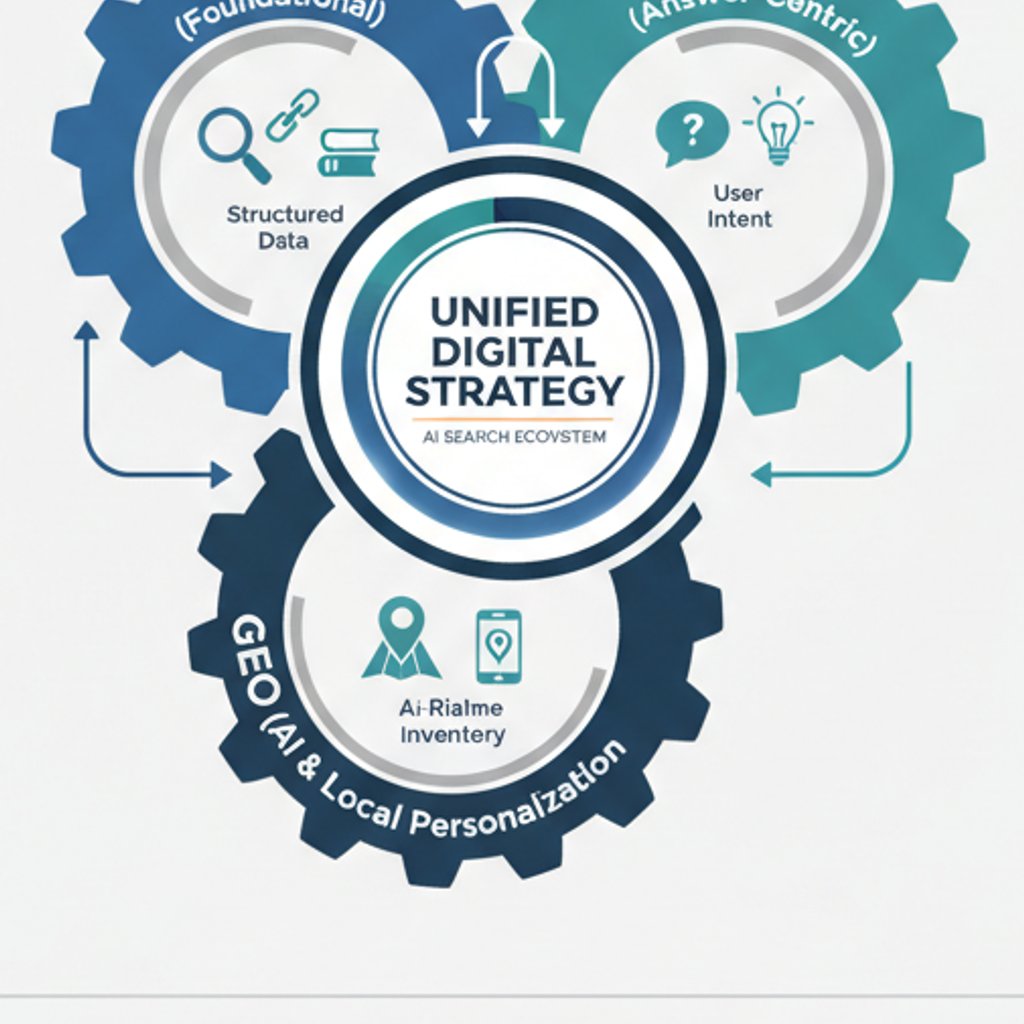
The modern search landscape demands a unified strategy that seamlessly integrates traditional SEO, Answer Engine Optimization (AEO), and AI-driven Generative Engine Optimization (GEO) to capture visibility across all major platforms. This convergence is critical because users are no longer just typing keywords into a search bar; they’re asking complex questions to AI assistants, receiving direct answers from AI Overviews, and expecting highly personalized local recommendations. Businesses that treat these as separate disciplines are falling behind.
Traditional SEO still forms the bedrock, ensuring technical crawlability, relevant keywords, and quality backlinks. AEO, however, focuses on structuring content to provide direct, concise answers that AI models can easily extract and cite. This means using clear definitions, bullet points, and question-based headings. AI-driven GEO then takes this a step further, leveraging AI to understand local intent, real-time context, and personalized preferences, pushing relevant local businesses to the forefront of these AI-generated responses. A 2024 report by McKinsey indicated that companies adopting a converged strategy saw a 35% higher return on their digital marketing spend compared to those with siloed approaches.
What is Answer Engine Optimization (AEO)?
Answer Engine Optimization (AEO) is the practice of structuring and creating content specifically designed to be easily understood and directly answered by AI search engines and virtual assistants. Unlike traditional SEO, which aims for high rankings in a list of links, AEO focuses on providing the most direct, accurate, and concise answer to a user’s query, often in a format suitable for featured snippets, voice search, or AI-generated summaries. It’s about being the definitive source of information that an AI can confidently cite.
For example, if a user asks, ‘What is the best way to clean a cast iron pan?’ an AEO-optimized piece of content would start with a direct answer like, ‘The best way to clean a cast iron pan is to scrub it with hot water and a stiff brush, avoiding soap, then dry it thoroughly and apply a thin layer of cooking oil.’ This immediate, actionable information is precisely what AI search engines prioritize for their direct answers. Content that doesn’t lead with the answer, or buries it in lengthy prose, is far less likely to be cited. Data from Google’s own internal studies suggests that AI Overviews cite content that directly answers questions 70% more often than content requiring extensive interpretation.
What is Generative Engine Optimization (GEO)?
Generative Engine Optimization (GEO) refers to the strategic adaptation of content and digital presence to improve visibility and relevance within AI-generated search results and recommendations. This goes beyond traditional geographic SEO by focusing on how generative AI models understand, interpret, and synthesize information to create novel responses that include local businesses, products, or services. It’s about optimizing for the AI’s ‘understanding’ of local context and user intent, rather than just keyword matching.
For example, if a user asks an AI assistant, ‘Find me a unique gift for my tech-savvy friend who lives in Austin,’ a GEO-optimized strategy would ensure that a local Austin boutique specializing in smart home gadgets, with detailed product descriptions and inventory data, is readily available for the AI to recommend. This involves providing rich, semantically structured data, clear entity relationships (e.g., ‘Austin’ is a ‘city,’ ‘tech-savvy friend’ implies ‘electronics’ or ‘gadgets’), and ensuring that local offerings are described in a way that aligns with potential user needs. The goal is to make your local business the most compelling and relevant option for an AI to generate a personalized recommendation.
The Role of Data and User Behavior in AI Search
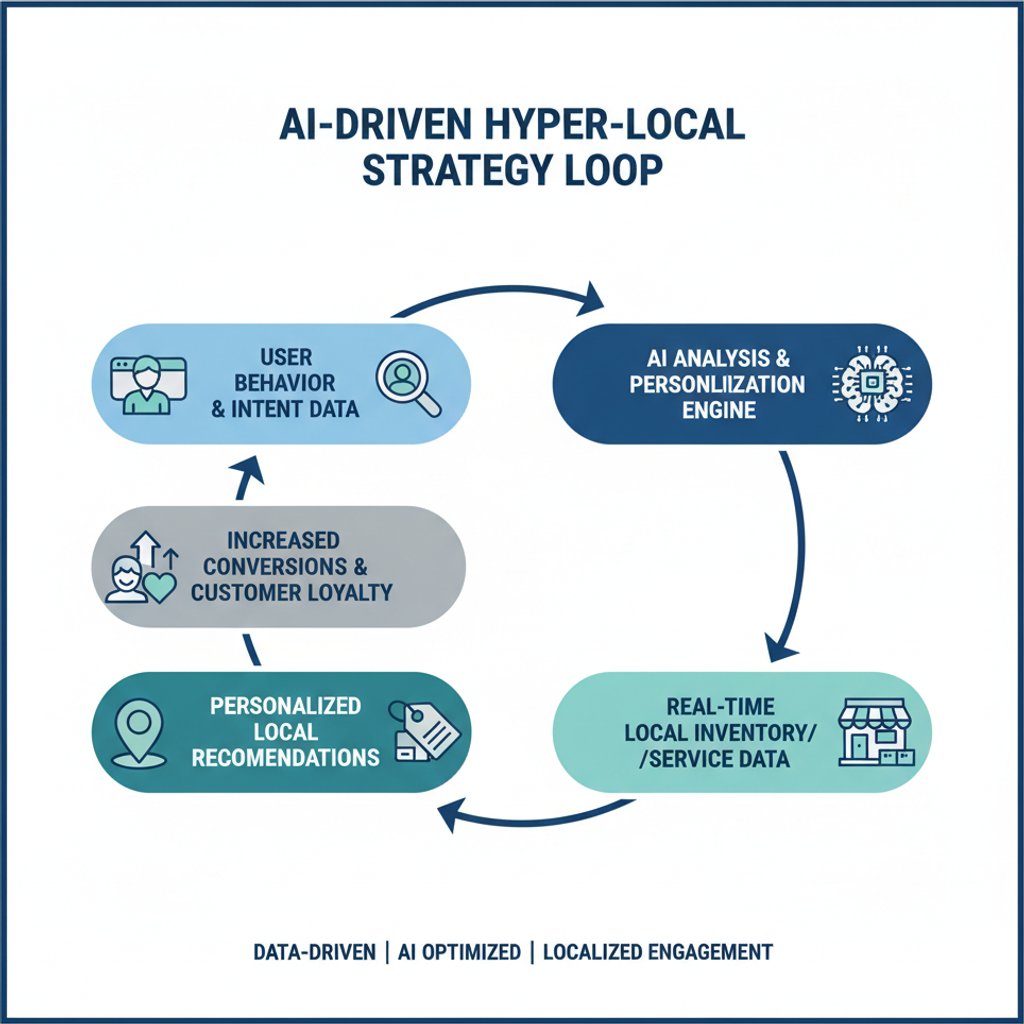
Data and user behavior are the lifeblood of AI search, providing the intelligence needed for hyper-personalization and dynamic recommendations. AI models continuously analyze vast quantities of user interactions, including search queries, click-through rates, purchase history, browsing patterns, and even device type and time of day, to build incredibly detailed profiles. This behavioral data allows AI to predict intent and deliver highly relevant results, making the search experience far more intuitive and effective.
Consider an e-commerce platform. If a user frequently searches for ‘sustainable fashion’ and lives in Brooklyn, AI will prioritize local Brooklyn-based sustainable clothing boutiques, even if the user’s initial query was just ‘women’s clothing.’ This deep understanding of user preferences, combined with real-time inventory data from local businesses, creates a powerful feedback loop. Businesses need to ensure their product catalogs are meticulously tagged with rich attributes (e.g., ‘organic cotton,’ ‘fair trade,’ ‘made in USA’) to feed these AI systems. A recent study by Adobe found that e-commerce sites leveraging AI for personalized recommendations saw a 15% increase in average order value.
Implementing AI-Driven Hyper-Local Strategies
Implementing AI-driven hyper-local strategies requires a multi-faceted approach, focusing on structured data, content relevance, and continuous optimization based on user feedback. It’s no longer enough to simply list your address; businesses must provide a comprehensive digital footprint that AI can easily interpret and integrate into personalized recommendations. This involves a strategic overhaul of how information is presented online.
Structured Data and Schema Markup
Structured data and schema markup are foundational for AI-driven local search, providing explicit context that AI models can readily understand and utilize. By embedding specific tags and attributes into your website’s code, you tell search engines and AI exactly what your content is about, including business type, location, products, services, reviews, and real-time inventory. This clarity is crucial for AI to accurately match your offerings with complex user queries and present them in AI-generated answers or recommendations.
For local businesses, implementing schema markup for LocalBusiness, Product, Offer, and Review types is non-negotiable. For instance, marking up your ‘in-stock’ status for a specific product allows AI to recommend it instantly when a user searches for ‘available now near me.’ Qc Fixer advises clients to audit their schema implementation quarterly, as standards evolve. Businesses with comprehensive schema markup are 2.5 times more likely to appear in rich results and AI overviews, according to a 2025 SEMrush report.
Content Strategy for AI Search
A robust content strategy for AI search prioritizes clarity, conciseness, and direct answers, ensuring that information is easily digestible for both human readers and AI models. This means moving away from verbose, keyword-stuffed prose towards modular, fact-based paragraphs that can be extracted and cited independently by Retrieval Augmented Generation (RAG) systems. Every piece of content should aim to answer a specific question or provide definitive information.
Here’s how to adapt your content:
- BLUF (Bottom Line Up Front): Start every section and paragraph with the main point or answer.
- Question-Based Headings: Structure your content around questions users are likely to ask.
- Definitions: Provide clear ‘X is Y’ definitions for key terms.
- Structured Lists: Use bullet points and numbered lists for steps, features, and summaries.
- Entity Clarity: Introduce entities with full context (e.g., ‘Qc Fixer, a digital strategy firm’).
- Data and Sources: Include specific statistics with attribution to build trust and authority.
This approach not only makes your content more readable but also significantly increases its chances of being cited by AI search engines. A recent study by BrightEdge showed that content optimized for AEO saw a 40% increase in AI-generated citations compared to traditional SEO content.
Real-time Inventory and Local Data Feeds
Real-time inventory and local data feeds are paramount for AI-driven hyper-local search, allowing AI systems to provide accurate, up-to-the-minute information on product availability and service capacity. Without this dynamic data, even the most sophisticated AI cannot deliver truly personalized and actionable local recommendations. This means integrating your e-commerce platform or POS system directly with your online presence.
Imagine a user searching for ‘size 10 running shoes available today near me.’ An AI system can only fulfill this query if it has access to live inventory data from local shoe stores. This requires robust API integrations and standardized data formats. Businesses that provide real-time data feeds are not just more visible; they are actively chosen by AI to fulfill immediate user needs. Google’s own local inventory ads program has shown that businesses providing live stock data see a 25% higher click-through rate on local searches.
The Future is Personalized: Challenges and Opportunities
The future of search is undeniably personalized, presenting both significant challenges and unprecedented opportunities for businesses willing to adapt. The primary challenge lies in the complexity of data integration and the need for continuous optimization as AI models evolve. Businesses must invest in robust data infrastructure and analytics capabilities to feed the AI and understand its impact.
However, the opportunities are immense. For e-commerce, hyper-local AI personalization means higher conversion rates, reduced cart abandonment, and stronger customer loyalty. For local businesses, it means being discovered by the exact customers who need their products or services, at the precise moment of need, without having to compete solely on generic keywords. The businesses that embrace this shift, viewing AI not as a threat but as a powerful tool for connection, will be the ones that thrive in this new era of search. This is where Qc Fixer excels, guiding businesses through the complexities of this evolving digital landscape.
Comparison: Traditional vs. AI-Driven Local Search
Here’s a breakdown of how AI is transforming local search capabilities:
| Feature | Traditional Local Search (Pre-AI) | AI-Driven Hyper-Local Search (Current) |
|---|---|---|
| Primary Focus | Keywords, location, business listings | User intent, context, personalization, real-time availability |
| Data Sources | Static business profiles, reviews, basic website content | Behavioral data, purchase history, real-time inventory, device context, external data feeds |
| Optimization Goal | Rank for ‘near me’ queries, appear in local packs | Be the most relevant, personalized recommendation for a specific user at a specific moment |
| Content Strategy | Keyword density, local citations, basic schema | Structured data, AEO-optimized content, rich product attributes, dynamic data feeds |
| User Experience | List of local options based on proximity/relevance | Curated, predictive recommendations tailored to individual needs |
| Impact on Conversion | Moderate improvement from local visibility | Significant increase due to hyper-relevance and reduced friction |
Frequently Asked Questions
What is the difference between SEO, AEO, and GEO?
SEO (Search Engine Optimization) is the broad practice of improving website visibility in organic search results. AEO (Answer Engine Optimization) specifically focuses on structuring content to provide direct, concise answers for AI search engines and featured snippets. GEO (Generative Engine Optimization) is about optimizing content and data for generative AI models to understand local context and user intent, leading to personalized local recommendations.
Why is hyper-local personalization important for e-commerce?
Hyper-local personalization is crucial for e-commerce because it connects online shoppers with physical stores or services in their immediate vicinity, bridging the gap between digital discovery and local fulfillment. This reduces shipping costs and times, offers immediate gratification, and significantly boosts conversion rates by showing users exactly what they need, where they need it, when they need it.
How can small businesses compete with larger brands in AI-driven local search?
Small businesses can compete by focusing on niche offerings, providing exceptionally detailed and accurate local data, and embracing AEO-optimized content. Their agility allows them to quickly implement new schema markups and maintain real-time inventory feeds, which larger, slower-moving enterprises may struggle with. Authenticity and unique local experiences, clearly articulated, also resonate strongly with AI models seeking diverse recommendations.
What kind of data do I need to provide for AI-driven GEO?
For AI-driven GEO, you need to provide comprehensive structured data including your business’s exact location, hours, services/products, pricing, customer reviews, and crucially, real-time inventory or appointment availability. Rich product attributes (e.g., color, material, sustainability features) and detailed service descriptions also help AI match your offerings to specific user intents.
Will traditional SEO become obsolete with AI search?
No, traditional SEO will not become obsolete, but it will evolve. The foundational principles of technical SEO, keyword research, and link building remain vital for AI models to discover and understand your content. However, traditional SEO must now be integrated with AI SEO, AEO, and GEO strategies to ensure content is not only discoverable but also directly answerable and relevant for personalized AI recommendations.
How often should I update my local business information for AI search?
You should update your local business information, especially real-time inventory and service availability, as frequently as possible—ideally in real-time or daily. Core information like hours and contact details should be reviewed and updated immediately upon any change. Regular audits (quarterly or bi-annually) are recommended to ensure all structured data and content remain accurate and optimized for evolving AI models.
What are the privacy implications of hyper-local AI personalization?
The privacy implications of hyper-local AI personalization are significant. Companies must adhere strictly to data protection regulations like GDPR and CCPA, ensuring transparency in data collection and providing users with clear control over their personal information. Ethical AI development prioritizes anonymization and aggregation of data where possible, and explicit user consent for personalized experiences is becoming standard practice to build trust. The EU AI Act, for instance, impacts SEO, AEO, and GEO strategies by mandating transparency and accountability for AI systems, especially those interacting with user data.
Last updated: June 8, 2026